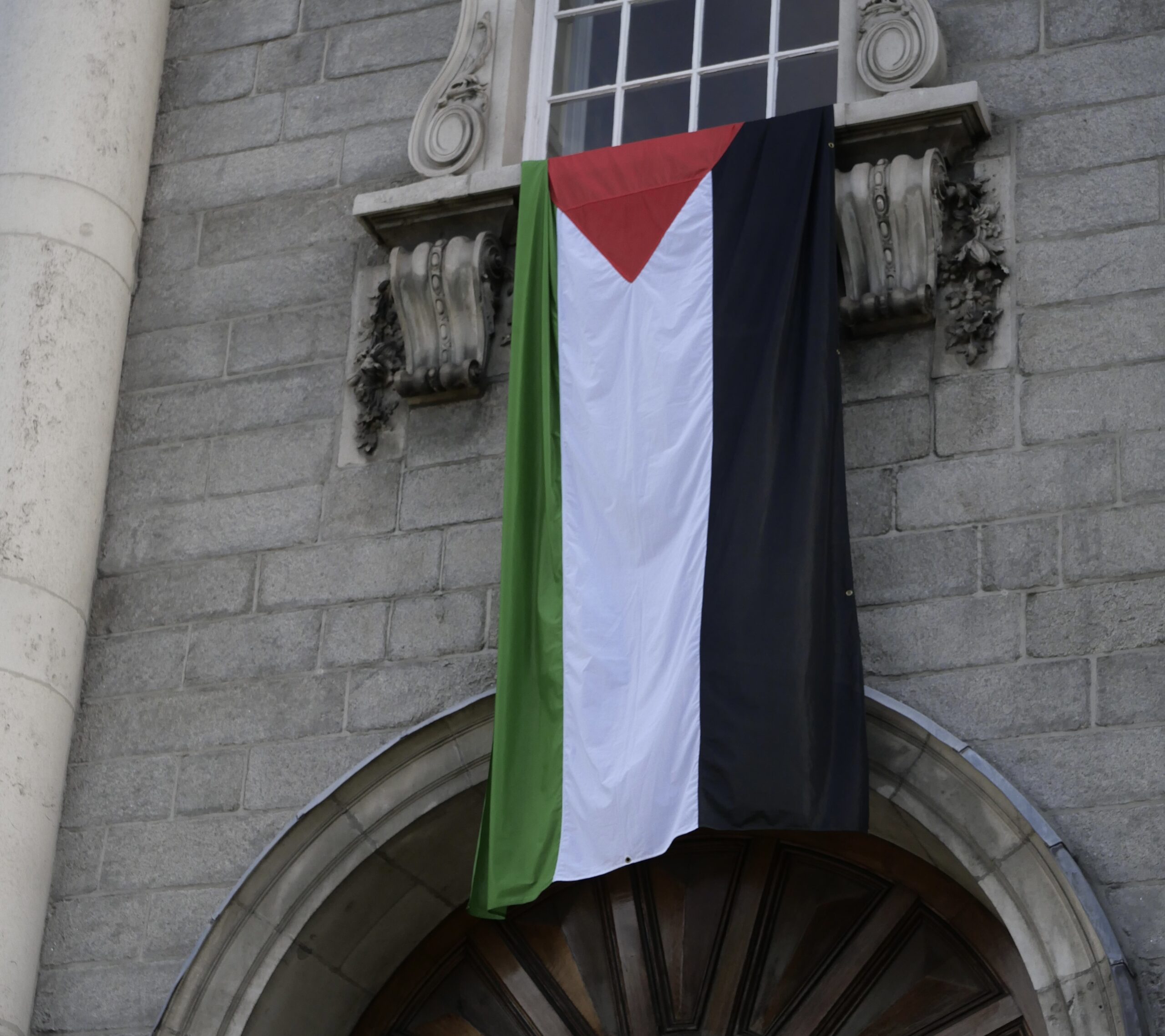

June 4th, 2025 was a celebratory day for all students who have spent the last two years tirelessly fighting for Trinity’s divestment from Israeli institutions. This historic day saw the board of Trinity College Dublin decide to formally cut ties with Israeli universities and divest from all companies headquartered in Israel, accepting the recommendation of the university taskforce created as a result of the 2024 encampment’s final recommendation on divestment. But what does this decision mean for the future of the college?
Concerning future investment, Trinity will continue to divest from all Israeli companies listed in the UN blacklist (as agreed in 2024) and will begin to fully divest from all companies headquartered in Israel in the coming year. Trinity has no current supply contracts with Israeli companies, but has agreed to enter no future supply contracts or commercial relationships with Israeli entities.
Regarding research collaborations, Trinity takes part in numerous EU-funded research consortia which include Israeli institutions. While the taskforce accepted that the university “cannot readily extract itself from these agreements”, Trinity has agreed to no longer renew or agree to take part in new institutional research groups which include Israeli institutions. The taskforce implored the college to “align itself with like-minded universities” in an attempt to influence other universities in the EU, which continue to work alongside Israeli institutions, to fall in lockstep with Trinity’s divestment policy.

Furthermore, in an effort to sever academic ties with Israel, Trinity will not renew the Erasmus+ exchange programmes formerly offered to two Israeli universities — Bar Ilan University and the Hebrew University of Jerusalem. However, the existing agreements between the institutions will be honoured until their final expiration dates in 2026.
These divestments have broadly been considered a success among students and the wider Irish population, but Trinity has faced challenges globally to its reputation after the acceptance of the taskforce’s recommendations.
Attacks upon the board’s decision quickly followed from Zionist organizations and lobbyists, notably through an open letter towards the Chair of the College Board, Paul Farrell, written by the Chair of the Jewish Representative Council of Ireland, Maurice Cohen, and former Irish Minister for Justice Alan Shatter, according to The Irish Times.
Shatter and Cohen believe that divesting from Israeli universities and academics, a majority of whom are Jewish, amounts to “anti-Semitism”, according to the controversial definition of the International Holocaust Remembrance Alliance. This definition has faced severe criticism from anti-Zionist and non-Zionist Jews for labelling attacks on Israeli policy as attacks on the global Jewish community at large. Shatter and Cohen argue that through divestment, Trinity’s board holds Israeli research institutions “collectively responsible for actions of the Israeli state”. Additionally, Shatter and Cohen accuse the board of violating the Equal Status Acts, which prohibits discrimination in the provisions of goods and services.
Likewise, Jane Mahony, a researcher currently working on a joint Trinity College Dublin/Royal Irish Academy project, has critiqued the decision to sever ties with Israeli universities in an article for the transphobic “anti-woke” campaign group Academics for Academic Freedom. Mahony described the divestment from collaborative work with Israeli research institutions as “years of academic endeavour [wasted] … [causing] millions of euros of funding [to] be lost”, raising concerns that Trinity will suffer as an academic institution by losing Israeli research colleagues. Additionally, she highlights the existence of unanswered questions on the details of how exactly Trinity’s academics must act in accordance with the boycott.
In spite of these critiques, Trinity and its student activists have stood resolute in their commitment to sanctioning Israel for their genocide in Gaza. As it stands, according to the Gaza Health Ministry, at least 64,000 Palestinians have been killed in Israeli attacks on Gaza since 2023. The vast majority of these have been civilian deaths, with leaked internal Israeli estimates revealing a likely civilian death ratio of 83%, compared to a 57% ratio of the Bosnian genocide. The total death toll is considered to be significantly higher, as it only includes verified deaths in hospitals which have been continually targetted by Israeli attacks throughout the genocide. The United Nations Special Committee, Amnesty International, B’Tselem, and many other human rights organisations have affirmed that Israel’s presence in Gaza is not a war but a genocide.
Trinity is the first Western university to comprehensively cut ties with Israel and its sanctions are intended to act as a precedent for other universities who may follow suit in an effort to halt the ongoing genocide in Gaza. However, some parties continue to criticise Trinity’s lack of neutrality in the face of Israel’s violations of international law and see Trinity’s withdrawal from relationships with Israeli universities as an infringement on academic freedom. Trinity’s commitment to divestment is a strong disavowal of Israel’s genocide, but the college will have to accept that this decision, in its severity, will largely be considered controversial worldwide, where opinions on Israel and Israeli sanctions continue to be contentious.