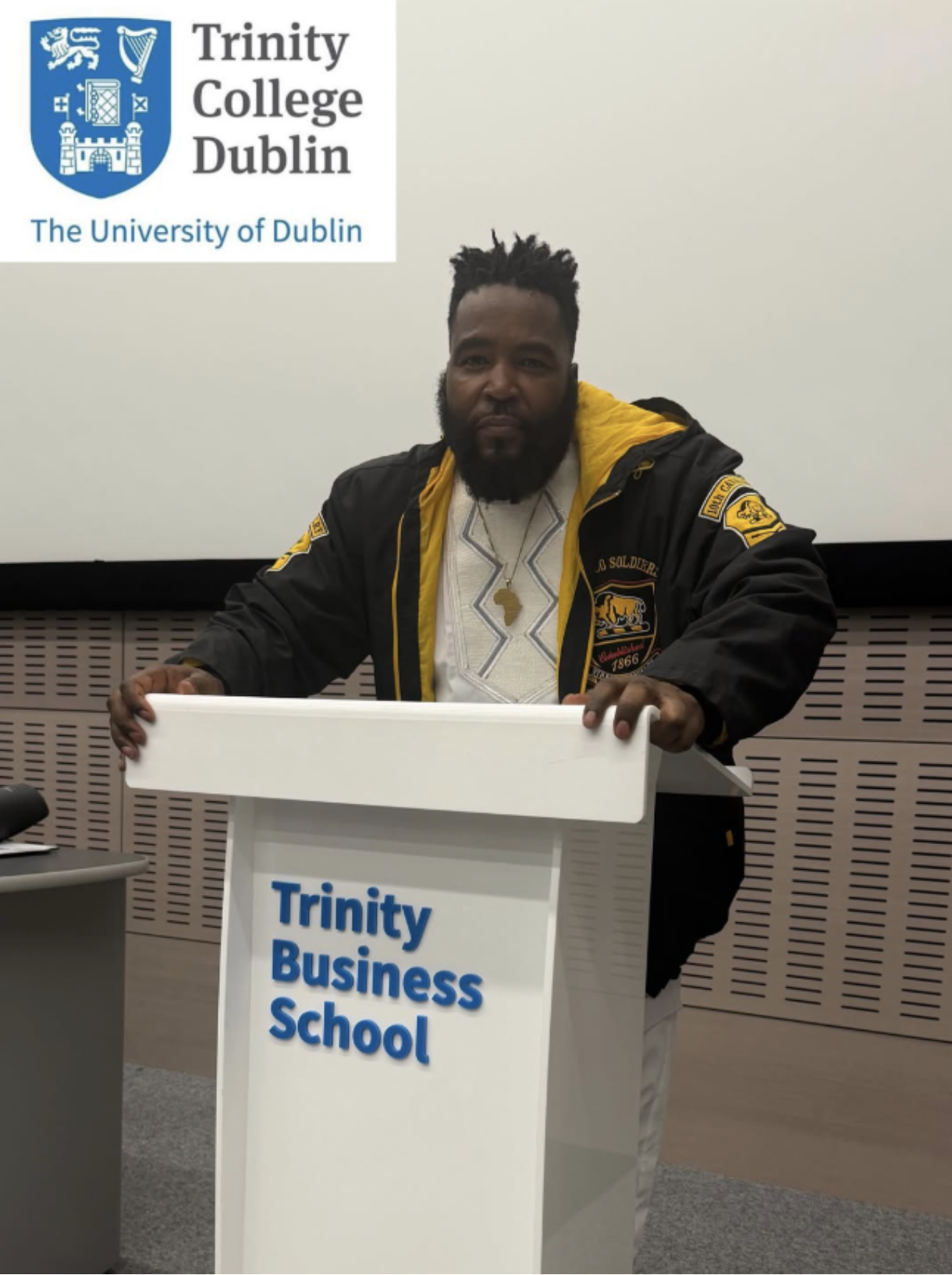
Ava Tuohy is a final year postgraduate student completing a Higher Diploma degree in Psychology. She previously completed a BSc in Education Studies from Marino Institute of Education in 2024 and is now running for Graduate Officer at Trinity. While at Marino, Tuohy served as a class representative and worked as a student library assistant. During her time at Trinity, she has held a choral scholarship at TCD chapel choir and served on the chapel choir committee as Public Relations Officer. Alongside these roles, Tuohy is registered with the Irish Teaching Council and works as a substitute teacher.
At Marion, Tuohy said, she experienced what it was like to “have practically no representation”, with “basically” no student union at all. She added that as a postgraduate at Trinity, she has similarly felt there was no “proper representation”, pointing out that the Graduate Officer role “has only been established this year” and that the “Graduate Students’ Union was dissolved in 2022”.
Hence, Tuohy said she was “pretty excited” when Trinity announced there was to be this new sabbatical role. Although she has not previously held a position with the SU, Tuohy believes she is qualified for the role because she has experienced the “issues that postgrads are facing on campus firsthand” and therefore wants to “give it a shot”.

In her manifesto, she states her strategy as Graduate Officer would be to “give intense focus to specific, solvable day-to-day issues that impact the postgrad experience”. As a disabled postgraduate student, Tuohy says, she is “familiar with the frustration of having to fight for recognition of LENS reports across all classes, labs, and placements”. She promises that she will “fight to ensure that LENS reports are recognised and respected by all teaching and supervision staff who work with postgrads”. She wants to expand LENS Services to include “pregnant and breastfeeding students”, and to make postgraduate spaces more accessible.
Tuohy said that many postgraduates work part-time; her work as substitute teacher allows her to “relate to the postgrad community a lot”. In her manifesto she describes it as “completely unacceptable” that PhD researchers in particular often have to resort to working part-time jobs “on top of already-packed schedules” because they cannot “live on stipends below the minimum wage”.
To address these conditions, Tuohy plans to “work with the union and the Postgraduate Workers’ Organisation to fight for the rights of all postgraduate workers”, and “campaign for a guaranteed living wage, sick leave, parental leave, and fair, respectful treatment in the workplace”. She added that, if necessary, she would be willing to take direct action.
Tuohy is a member of TCD BDS and Teachers for Palestine, and has participated in several pro-Palestine demonstrations and protests this year. She plans to elevate the postgraduate student support for Palestine, she told us, by working with TCD BDS to “ensure more places for postgraduate students who have had their studies interrupted by Israel’s genocide” and “work alongside TCD BDS in their campaigns for Trinity to cut all ties with Israel”. She also said she would support campaigns for Israel’s suspension from the Horizon EU research funding program, work to end Trinity’s Coke-brand-only product policy, and assist in creating a human-rights-based procurement policy for Trinity.
Tuohy noted that Provost Linda Doyle, before she was elected, committed in her 2021 manifesto to invest in and upgrade the 1937 Postgraduate Reading Room, but said this promise has not been fully realised. She mentioned several ongoing issues with this space, including “really, really bad” mould and “foul odour” in the bathrooms, problems with heating and general upkeep of the kitchen, and a lack of working plug sockets.
She added that the building is completely inaccessible to wheelchair users, suggesting part of the problem is that the College is not fully aware of these issues. She said she plans to raise awareness, talk with the College Board about these issues and put “pressure on College in general about the 1937 Reading Room”, demanding that “Linda follows up on her promises”.
Tuohy noted that the Postgraduate Common Room and the 1937 Reading Room are the only two dedicated spaces for postgrads on campus. She called the Common Room a “very valuable space for the postgrad community” as a “dedicated social space just for postgrads”, making it a perfect spot for postgraduates to “eat, chat, unwind and use its kitchen facilities”. However, she criticised the fact that the space is currently bookable by individual postgraduate students and authorised groups such as the CSC, Trinity Publications, and the SU. Tuohy argues that this creates “a bit of a gray area of who is allowed to book the space for private use”, and she believes that there is a way unauthorised groups may be able to book it through the College systems.
She argued that when the common room is booked by individual students or by groups for private use then postgrad students are left without a designated social space on campus. “I don’t think it’s fair to take one of the only two spaces for postgraduates and use it as a bookable space,” she said, adding that she “would like it to see it being available at all times, for anyone to be able to come in”. She said she intends to work with the SU to come up with a plan to solve this issue, but is “willing to compromise” and if needed “make it so that maybe we keep the bookings to the evenings on the weekends or off-peak times”.
On top of advocating for postgraduate student spaces, Tuohy wants to ensure students have access to welfare resources. She intends to work with the SU to make practical welfare supports and resources available, such as vouchers for groceries and day-to-day essentials in order to mitigate against the cost-of-living crisis for postgraduate students.
Because Tuohy explains postgraduate students have been “without representation or proper representation”, it is currently unclear which welfare supports are most urgently needed by postgraduate students. As such, she plans to conduct a survey at the beginning of the next academic year to “get an idea of where the problems currently lie”.
Tuohy noted that most of the current sabbatical team are undergraduates, which she says is “fair” to ensure they understand the undergraduate experience, but added they cannot necessarily understand the postgraduate experience. Because postgraduates don’t really have representation, she said, many are currently “very disengaged from union activities, and they can often kind of feel like outsiders to college life”.
Therefore, she considers the job of the Graduate officer to encourage postgraduate engagement with union activities and with College in general.