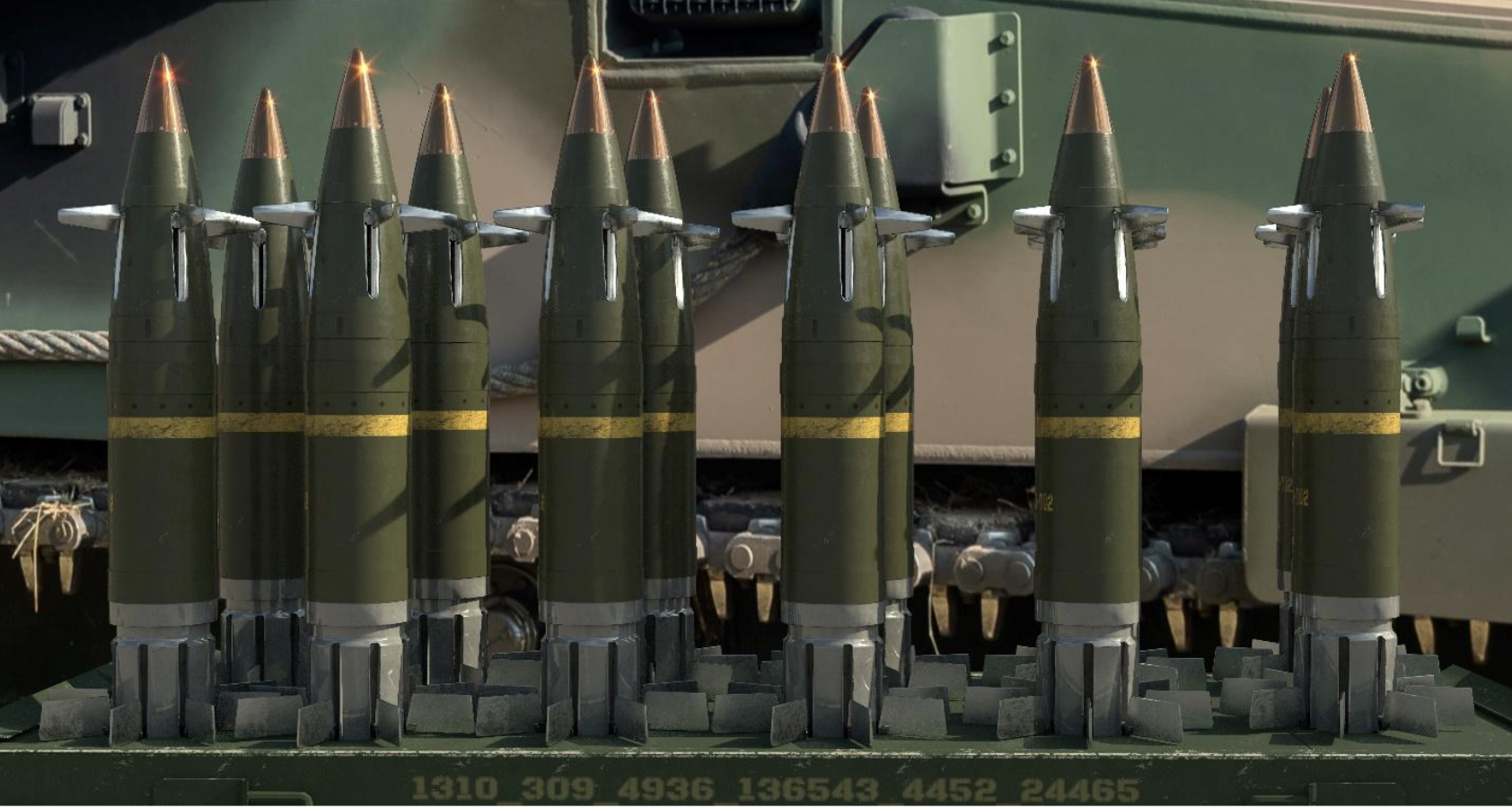

In recent years, and especially in response to the war in Ukraine, the European Union has made strong commitments to increase the provision of military aid and expand defense production․ While these promises appear ambitious, the reality is substantially more complicated than it may first appear․ Many of the plans and targets set by European institutions have been delayed or adjusted‚ raising doubts on their effectiveness not only related to shortages of requested weapons but also regarding the ability to deliver them on time․ One of the most visible examples is the EU plan to supply 155 mm artillery shells as part of their military support program for Ukraine which did not meet its original timeline․ This suggests that the problem may be deeper and affect the entire European defense industrial base․
In 2023, the EU announced an ambitious plan to deliver one million shells within a year, aiming to provide support for Ukrainian Armed Forces while strengthening its own defense capacity․ However‚ this goal was difficult to achieve in practice, as production levels across European countries were not able to be accelerated enough and meet this level of demand‚ resulting in the project timeline being extended․
As reported by Reuters, the initial deadline was missed due to limited industrial capacity and lack of coordination between EU member states. While deliveries continued and progress has been achieved‚ gaps between expectations and actual outputs have also been highlighted․ This issue shows that it is not simply a question of the availability of financial resources, but also of the ability to organise production and to respond to urgent demand․

Importantly, this is not an isolated case. The delays in 155 mm shell production highlight a broader pattern, where ambitious defence commitments are announced, but implementation struggles to keep pace. This raises concerns about how reliable such targets are in practice.
The reasons behind these delays reflect the multiplicity of deep structural issues within Europe’s defence industry. One of the main problems is the fragmentation of production across different member states of the EU․ Unlike more centralised production systems‚ the European defence sector is divided between national industries, which are focused on their own needs‚ rules and procurement processes that make it harder to coordinate joint production effectively, especially under pressure․
Another important factor‚ as it was shown by the difficulties in meeting production targets, is the limited ability to quickly expand industrial capacity․ To manufacture defense systems, you need special facilities‚ skilled labor and a long-term capital investment‚ all of which cannot be developed in a short period of time․ Even in cases when governments considerably increase funding, manufacturing capacity still needs time to adjust, resulting in a gap between political commitment and delivery of products.
Additionally, supply chain dependencies play a significant role, as many components related to ammunition production rely on complex international supply chains, which can create bottlenecks and production delays․ An analysis by the Centre for European Policy Analysis (CEPA) found that logistical and industrial constraints can slow delivery down even when financial and political support is available․
Finally, coordination at the EU level remains a challenge. While joint initiatives exist, member states, as well as different industries, may prioritise national interests over collective goals. This further complicates efforts to meet common targets. Taken together, these factors suggest that delays are not accidental, but rather the result of systemic limitations within the current structure of Europe’s defence production.
The delays do not only affect the achievement of objectives but also have direct impact on European security and on the EU’s credibility as an international strategic actor․ One of the most immediate consequences, again, can be seen in the provision of ammunition to Ukraine, where timelines linked to production and supply chain remain critical and delays in support delivery may negatively affect the situation on the battlefield. As reported by Reuters, delivery times have already had to be adjusted, which again proves that the gap between commitments and real production capacity still exists․
Furthermore, the challenges are not limited to short-term operational problems․ It is also important to emphasize that the failure of the EU to reach high-level targets in a timely manner will weaken the credibility of its defense planning and its ability to respond effectively to future crises․ It is especially important in a geopolitical environment where speed and coordination are essential‚ as if production cannot fulfill the current demand, future responses to similar situations may face the same issues․
In a broader sense, the problem also affects Europe’s long-term strategic autonomy. The ability to produce and deliver military equipment efficiently is a key element of reducing dependence on external partners. Still, persistent and repeated delays suggest that changes will be difficult to achieve in practice. If these structural challenges are not addressed specifically, the EU’s industrial capabilities may continue to fail to meet its political ambitions.
To sum up‚ the challenges surrounding 155 mm artillery ammunition production has shown that the problem within European defense industry is not only focused on shortages‚ but the ability to meet ambitious targets on time․ While the EU continues to set new goals and increase investments‚ structural limitations still remain and play a significant role․ It was also highlighted that another primary challenge is the critical shortage of skilled labor and raw materials which prevents a rapid shift from prototypes to large scale mass production. Addressing these issues will not only require greater resources but also may force the EU to reconsider its policy regarding organisation and cooperation across member states.