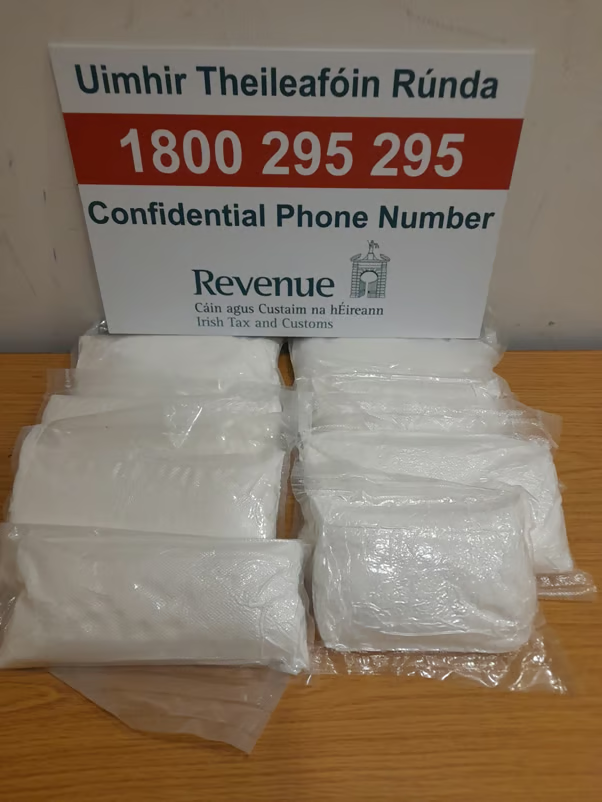

Since the early 2000s, Ireland has been dealing with a persistent and evolving drug crisis, largely driven by the use of illegal substances like opiates and cocaine. It was recorded that the number of drug-related deaths rose by 71 per cent from 2004 to 2016, with opiates identified as the primary contributor. Ireland first began surveying drug use in 2002, and by the 2019/2020 survey, 31 per cent of respondents, aged 15 to 64, reported having used an illegal drug in their lifetime, a notable 13 per cent increase from the 2002/2003 findings.
More recently, the use of ketamine has emerged as a growing concern both globally and within Ireland. Data from the European Union Drug Agency (EUDA), which examined wastewater samples across 115 European cities, including Dublin, highlights the scale of this shift. Between March and May 2026, daily wastewater samples were collected over a one-week period and tested for drug byproducts. Findings from the Ringsend Wastewater Treatment Plant in Dublin revealed a 42 per cent increase in the presence of ketamine residues.
The local data aligns with broader European patterns. Across the 66 cities with comparable data from 2024 and 2025, 61 per cent reported increases in ketamine residues. Dublin ranked 20th on a global scale for the highest ketamine levels of the 134 global cities sampled for this drug.

As a whole, the EUDA data indicates rising levels of both ketamine and cocaine usage across Europe, alongside a decline in MDMA traces. Dublin’s results partially mirror this pattern: MDMA levels dropped 19 per cent, consistent with the rest of Europe. However, unlike many other cities, Dublin experiences an 18 per cent decrease in cocaine detections, implicating a divergence from continental patterns.
On weekends, there was a 50 per cent increase in the ketamine levels, strongly indicating its role as a recreational drug associated with nightlife and party settings. In response to these developments, the Health Service Executive (HSE) issued warnings, particularly in advance of major social events like St Patrick’s Day. These warnings not only highlight the presence of ketamine but also the risks associated with various crystal and powder forms circulating.
The HSE has been making an effort to raise further awareness and harm reduction, emphasising the long-term health effects: “Chronic ketamine use can cause irreversible damage to the bladder and urinary tract, and [Urology] departments have seen an increase in patients, with many of those treated being young adults and teenagers”. Hospitals have reported a rise in related cases, with many patients being young adults and teenagers. As access to ketamine becomes more accessible and popular, the HSE will likely continue to release warnings, information and efforts for harm reduction.
Beyond the individual health concerns, the spike in ketamine use reflects broader issues within international drug supply chains. A separate EUDA analysis has identified a significant increase in imports and seizures of ketamine across Europe. Over the past decade, the medical and veterinary demand for ketamine has continued at relatively low and stable levels, which fails to explain the high number of imports and seizures. Most of these seizures pertain to concentrated areas. Ketamine trafficking involves deep criminal networks that operate across diverse international routes and supply chains. The lack of fluctuation in the legitimate European demand for ketamine, compared to the increase in imports, points to vulnerabilities within national controls, policy and operational challenges.
Taken together, this data illustrates a shifting drug landscape in Ireland. While the use of cocaine and opiates remains a consistent issue, the sharp spike in ketamine consumption is increasingly at the forefront of governmental and healthcare concerns.