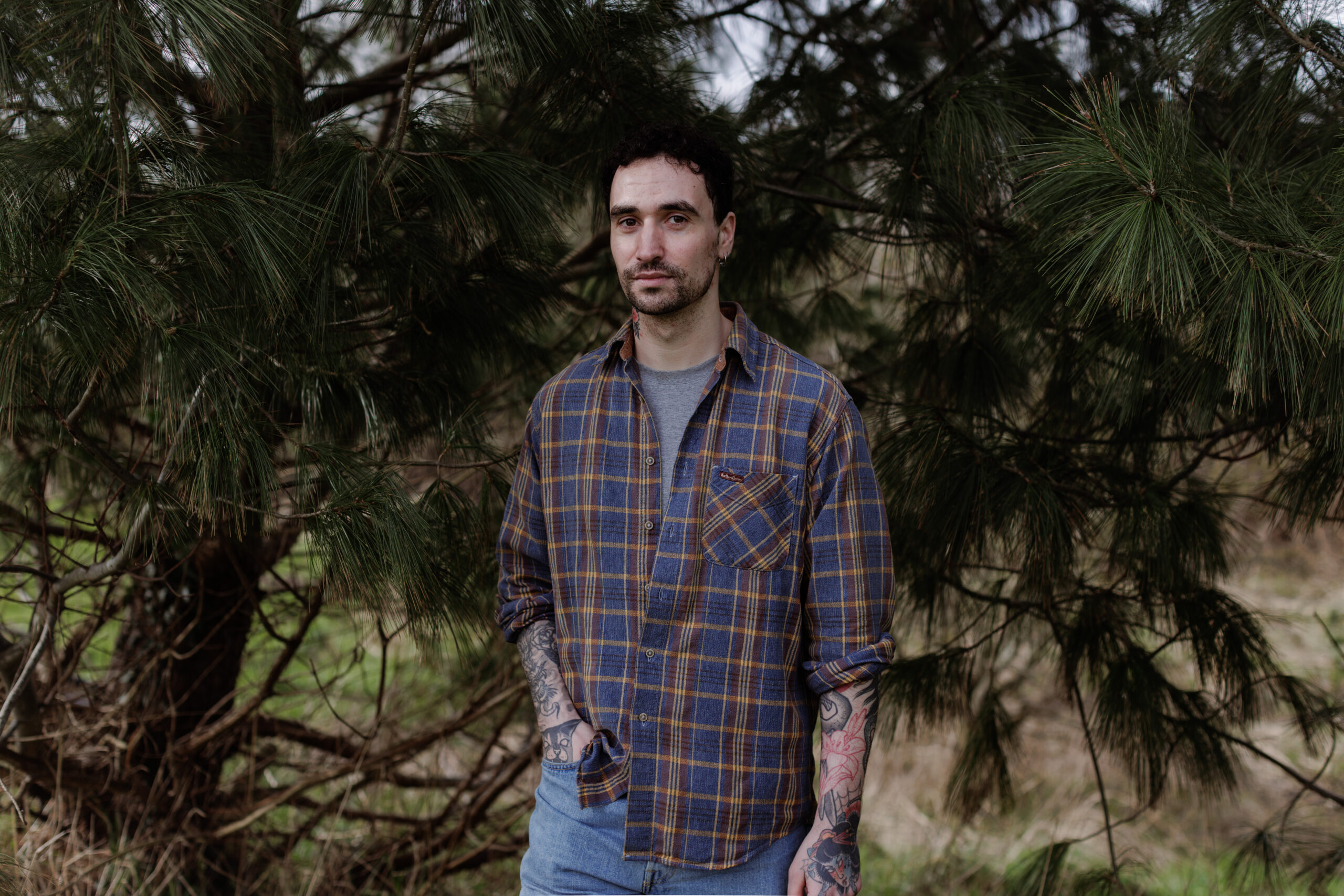

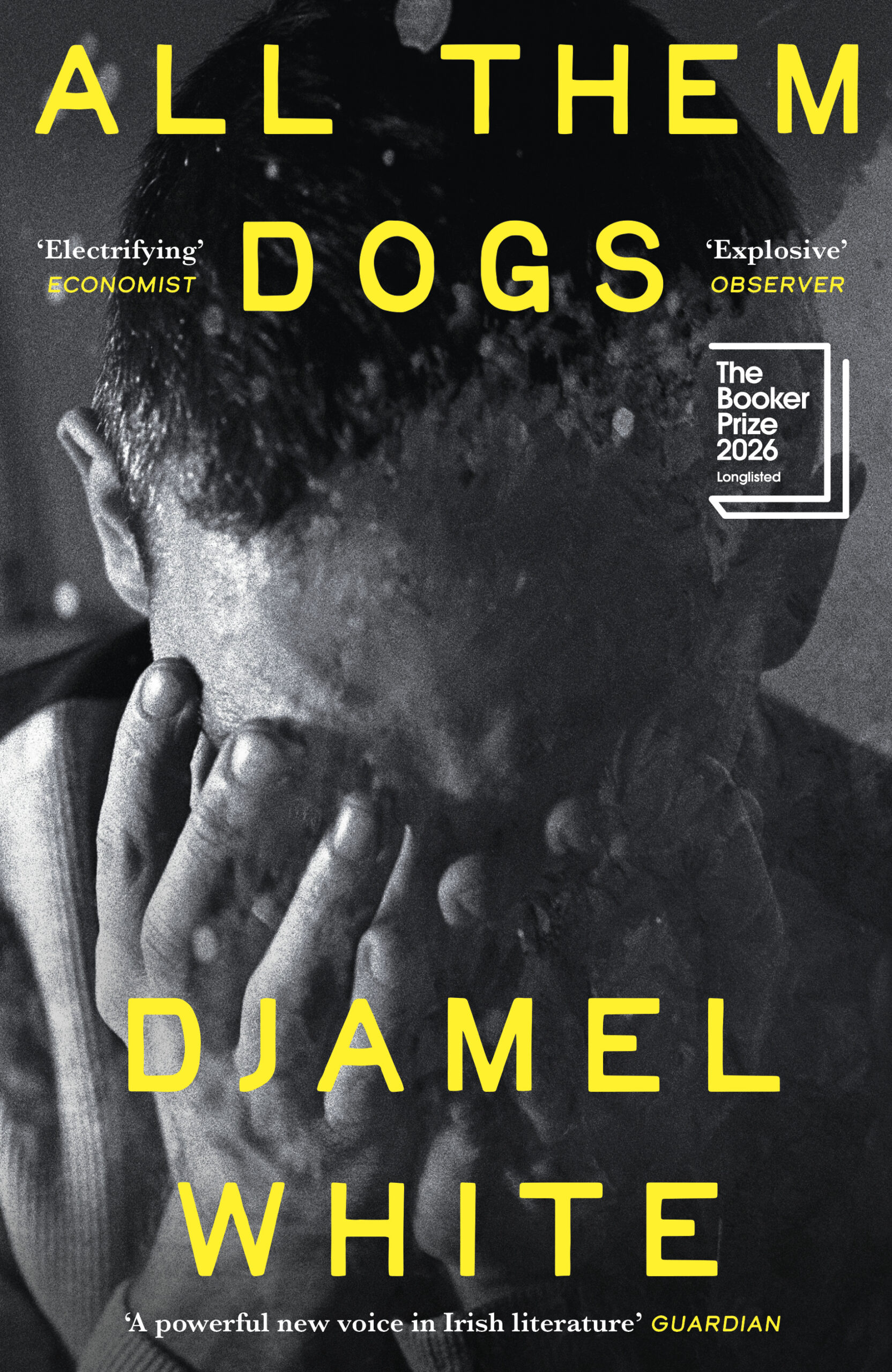
On July 26th, Irish author Djamel White was officially longlisted for the Booker Prize for his debut novel All Them Dogs. Literature Editor, Jes Paluchowska, sat down with White to discuss his work and the prestigious award.
Introductions and on the Booker Prize Longlist
JP: Hi Djamel, just wanted to first of all, congratulations. Booker longlist, this is such a big deal.
DW: Thank you so much.
JP: So, I’m just going to start us off. As you know, we are a student newspaper, so while we are trying to familiarise our readers with what’s happening in the Dublin literary scene, some of them have unfortunately not read your book yet. Can you tell them, in a few words, what to expect from it?
DW: Yeah, so All Them Dogs is a literary gangland thriller about a young man called Tony Ward who gets embroiled in an, I suppose, queer romance inside of the gangland scene that he is trying to work his way back into.
JP: Very exciting! This is your debut novel, right?
DW: It is, yeah.
JP: And how did you feel when you heard you were nominated? I read in one of your other interviews that you received the email ahead of time.
DW: Well, it wasn’t an email, it was a phone call.
JP: Oh, sorry, my bad!
DW: Which makes all the difference, because you hear it and you don’t really hear it and you go ‘okay’. And I suppose with an email, you’d read it a few times until it sinks in, but you’re on the phone and you have to answer it and you’re like ‘okay, great, brilliant, amazing.’ But yeah, your brain feels the emotions before your body does. That’s what I found anyway. So, you know, all of my thoughts were like ‘this is incredible.’ But my body was kind of just like still in the same kind of mode I was in before having answered the phone. It wasn’t really until some time elapsed before it really started to build up. And then of course I have to keep it a secret, which was even harder. But then the announcement came out that, that’s when it really felt real.
JP: Were you expecting it at all?
DW: Was I expecting it at all? Jesus, no. God. Like, I knew it was coming up, and it’s like having a lottery ticket. You’re like ‘oh, that would be good’. You’re also like ‘I’m not going to win.’ Like, you’re not going to hedge your bets on winning the lottery. So no, I wasn’t expecting it. There was a distant dream of ‘imagine,’ you know, that I had shelved. Which is why it’s so amazing to have it made real, you know?
JP: Of course. There are a lot of really exciting people listed along with you this year. There is Marlon James, there is Douglas Stuart, those real hard-hitters. When going against them, is there anyone, if it’s not you, of course, who you would like to see win?
DW: That’s tough. I share an agent with Douglas, I share a publisher with Marlon, and I’m a big fan of Elizabeth Strout. But as a fellow underdog, I’m sure you wouldn’t mind me saying this, I would like to see Luke Kennard get in, at least. No, I’d be delighted for him to win. I think Black Bag is a wonderful book. It’s hilarious, it really captures the moment in a really accurate way without hammering the reader over the head with these kind of done to death tropes of masculinity. It takes it from an angle that feels, you know, earned. And he’s a terrific writer and a terrific guy. So I’d be delighted to see him proceed.
The Act of Writing and Education
JP: Brilliant. This again comes from us being a student paper, we have a lot of readers who are still on their journey. They want to become writers, get published. Is there any advice you’d give them? Anything you feel is important at this stage?
DW: To be writing. That’s a really, really important thing. It’s very easy to kind of put it aside as a hobby, as something you’ll get around to. But it is like playing an instrument or working out a muscle. It is something that you just need to be doing. And it helps to be read at the same time. Community is hugely helpful. Having, you know, just a selection of people whose opinions you value. Not everyone, it doesn’t need to be this wide. You try to please everyone, you won’t write a good book or a good story or whatever. But like yeah, you know, you’ll find the people whose tastes you want to impress upon. That’s the major advice – to really kind of work the muscle.
JP: Who would you say those people were for you? The people you were trying to impress while writing.
DW: All my classmates and my tutors. I did an undergrad in creative writing in UCD and then I did my MFA. And yeah, having those guys around, kind of knowing that the work was going to be read and also having the pressure of ‘It’s going to be great. It’s going to affect my GPA and what level honours I get when I graduate.’ It added an extra kind of element of it being work and not just a hobby, which I think is a valuable way to think about it, provided you don’t then resent it for being work which can happen.
JP: You mentioned your degree. You came into higher education in a non-traditional way. You did school-leaving courses…
DW: That’s right.
JP: How would you say it impacted your writing process?
DW: Well it kind of slowed it for a while. I wrote as a kid and I wrote as an early teenager and then in my late teens it kind of fell off. It was still something I identified as, which is where the advice comes from. It’s like, ‘no, you need to keep doing it.’ And as an early school leaver, I was just kind of happy to be getting an allowance and knowing that there’s a possibility of me progressing at some point. But, at the time, I didn’t have to worry about it. At 18, which is after my school leavers course, where I was surrounded by people who love books again… Actually, for the first time, really, I was surrounded by them. Which kind of, you know, it was immersion therapy in that sense. I was constantly around it and constantly thinking about it and working on those stories with these kids and teenagers. And then I went on to a PLC in creative writing and then the rest, it just became from that point on for the last 10 years, just part of the daily fabric of my life.
JP: Was it something you always wanted to do or do you think you realised it later?
DW: No, I always wanted to do it. I wanted to do it since I was a little boy. Yeah, since I could read, I wanted to write. And I was writing as a kid and getting lots of praise for it because it’s wonderful when a child does anything, you know. And that’s what made me feel special. So it was the first kind of talent so to speak, that I felt like I had, because I wasn’t really gifted at anything else.
JP: Haha, I’m sure that’s not true.
DW: Well, I didn’t exercise it like a muscle like I did anything else, you know.
Future Projects and the Inception of All Them Dogs
JP: You mentioned in another interview you’re currently working on a second book. Is there any chance we can hear a few words about that?
DW: Unfortunately not. Because, I don’t know, it’s hard to know. I’ve got a lot of words, but I don’t know if that’s half of what I’m writing or if I’m near the end. It’s going to definitely go through a lot of changes. Nobody else has looked at it. It could be something completely different in six months’ time. So there’s no point talking about it.
JP: Well, we’ll keep our eyes peeled in that case. All Them Dogs, your novel we are currently discussing, originated as a short story, right?
DW: It did, yeah. It started as, well, what developed into a 10,000 word short story. And I think when you have a 10,000 word short story you might want to consider maybe you have a novel.
JP: Did you always want to expand it or was it like an after the fact realisation?
DW: It was, it was an opportunity. I kind of realised what I had was an opportunity to develop something at MFA level. I hadn’t applied for the MFA initially. I was working in publishing, and I thought “this is nifty, I can work with books while I write and I’m sure eventually a novel will materialise”. But then, the kind of feedback I was getting on Blue Opal, that’s the short story, kind of led to a realisation that, oh, this is a project and this is an opportunity to develop that project in a space where I can focus. I can give it my full attention. It was kind of serendipitous. And I was coming to the end of my undergrad and the final kind of round applications for the MFA were still open. And I had material.
JP: What do you think inspired you for it? Were there any particular events, or people, or writers that you thought like “oh, this is the person I really want to channel in this particular work”?
DW: No. I think everybody I’ve ever read and admired will come true in one way or another, but no, not in an intentional, decision-making aspect. Like, it’s really just like you catch an impulse and you follow the impulse and as you write you might think “oh, this is kind of like x and this like y,” but I’m not setting out to do what somebody else is doing. I accept that inevitably those comparisons are going to materialise because I am influenced by everything around me. But I didn’t have my comps ready from the first line.
JP: All right, haha. It wasn’t like “upmarket, inspired by this and this and this.”
DW: No, I think people get too caught up in that before they’ve even written a line and they’re thinking about how they’re going to market their book or their story. And it’s like, that’s not your job to begin with. You don’t have to worry about that stuff. Maybe when you’re pitching a query letter it helps, but I think, you know, when you’re writing you should focus on the writing.
Marketing and the Publishing Industry
JP: Very fair. On that note actually, the marketing process is famously evil when awards are involved. As a writer who is debuting and already getting pitched into this rather active situation, how are you finding that whole landscape?
DW: It’s fine. It’s tiring. I’m saying yes to as much as possible now, just because this is probably only going to last a few weeks and then it’ll go quiet again. I’m looking at the most likely outcomes. Of course, you always hold out hope and stuff. But yeah, you know, it’s a lot on my plate all at once. And it’s a bit overwhelming. There are people talking about me and I have no input. Which is fine. But sometimes things come across my screen that I wasn’t necessarily looking for and didn’t necessarily need to know.
JP: Any examples of that?
DW: No, I mean, nothing nefarious. But just sometimes I don’t want to hear people’s opinions about my book. Because it’s already out there. I can’t do anything about it.
JP: Of course. Those are the main things I wanted to cover with you. But is there anything you would like to say to our readers?
DW: Well, know that there is never really going to be a feeling of arrival or having arrived. As soon as one big thing happens, there’s always the next thing, you know. There’s the longlist and then there’s the shortlist and then the prize and then there’s the next book, you know, so life is relentless. It is a rat race. So just where you are now, I hope you’re enjoying it and focus on enjoying it. Keep your worries of the future to a minimum because they don’t go away. There’s always something else. That sounds quite grim, but it’s supposed to be quite positive.