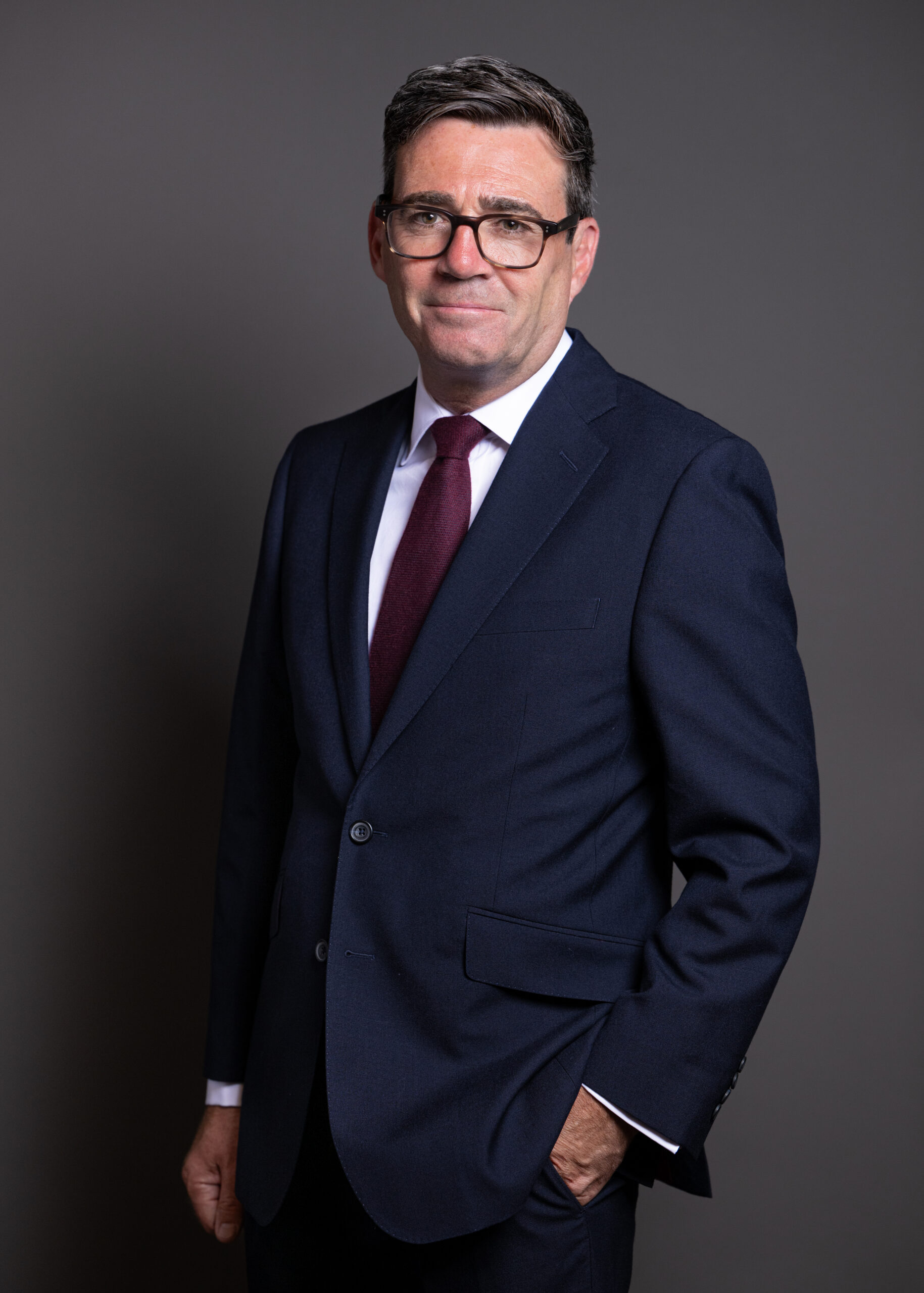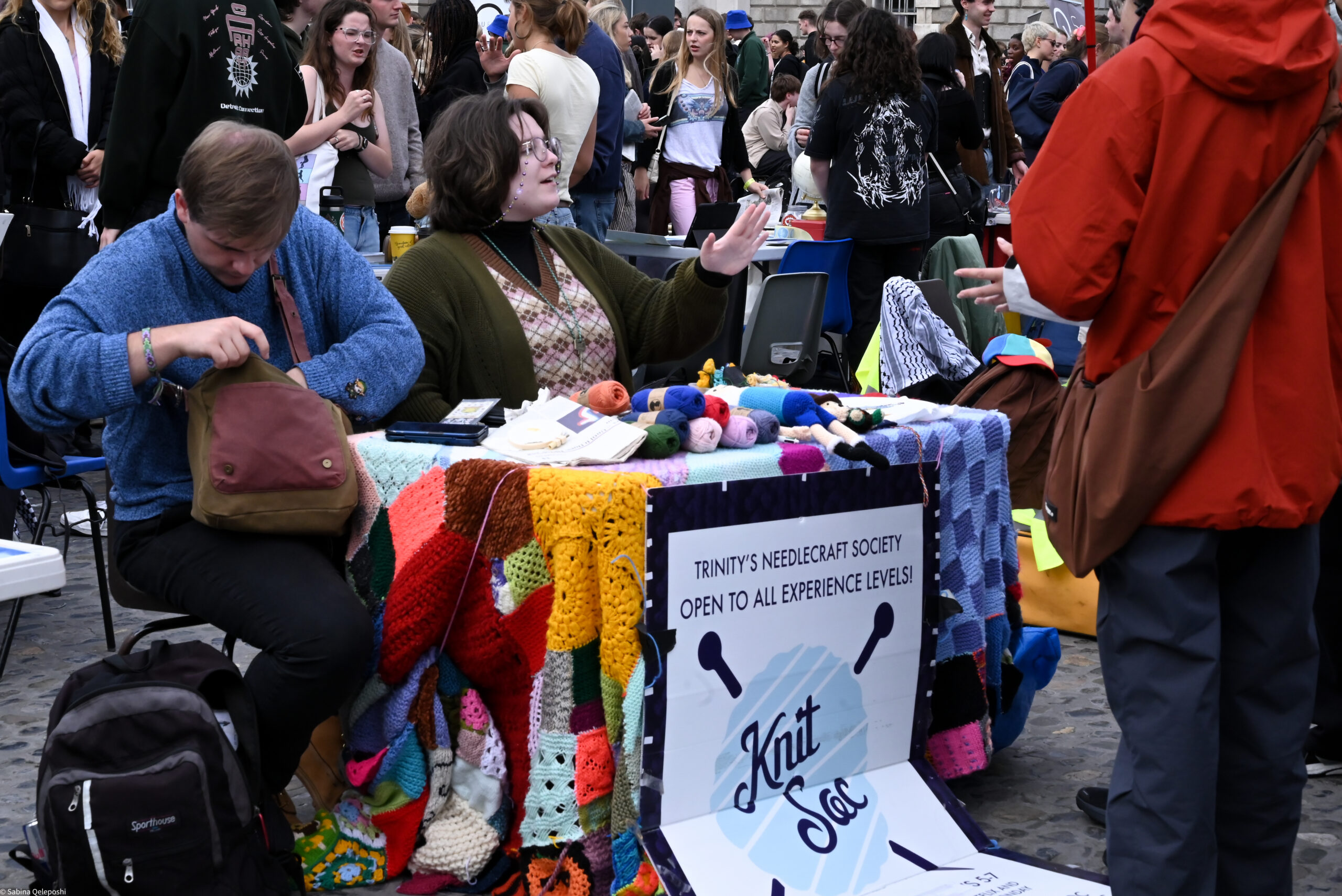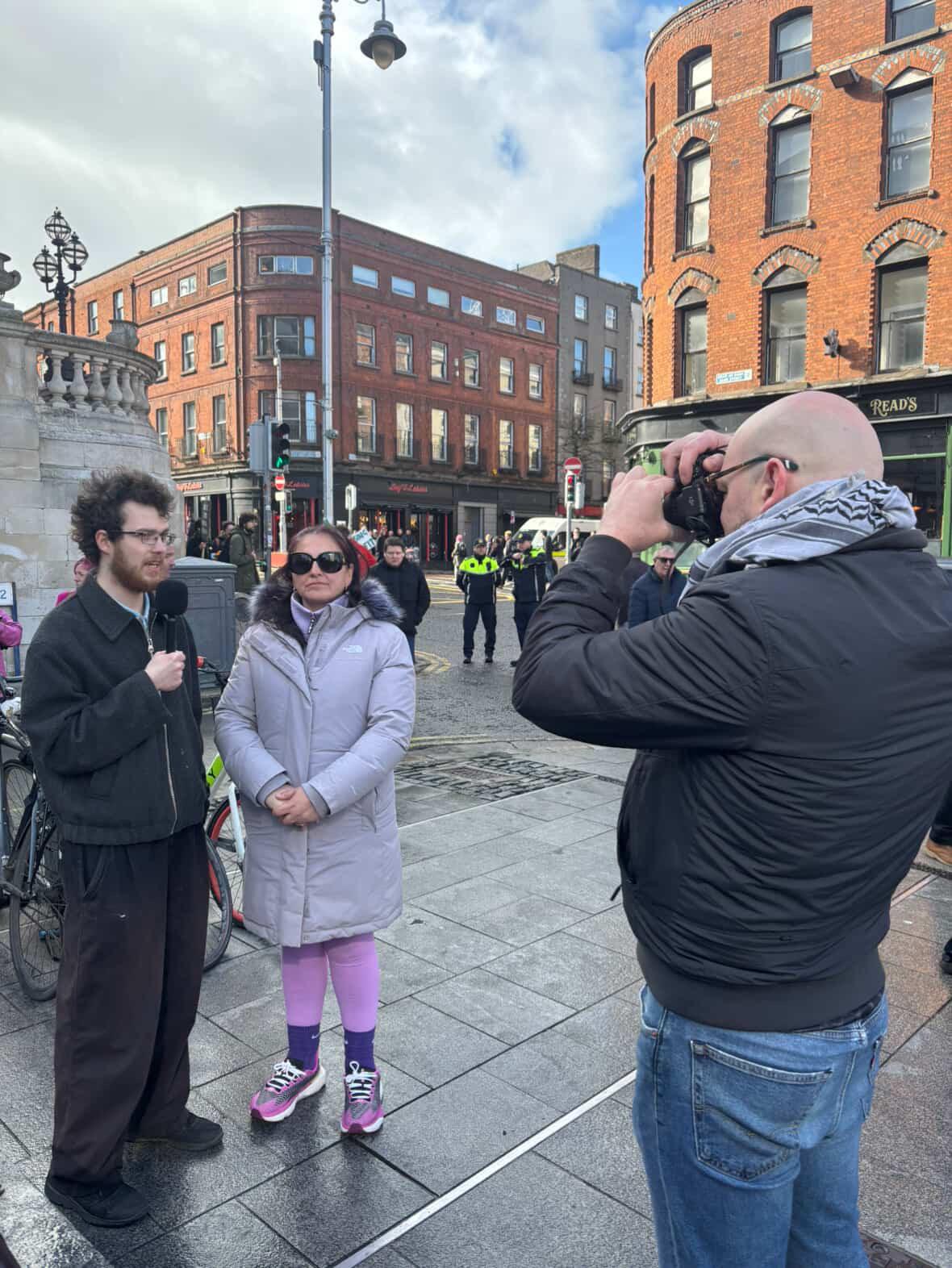

László Molnárfi is the former (2023-24) president of the Trinity College Dublin Students’ Union and left behind an institutional legacy in 2024 that culminated in lifetime honorary membership for transforming the union “into a vehicle for radical collective action”. At the time, then-President Jenny Maguire said, “Now [thanks to László], if you don’t at least pretend to know what direct action means you will get RON-ed — or at least almost”.
Aontacht Media appears to be his latest (collaborative) project and a continuation of Molnárfi’s penchant for transforming organisations into “vehicles for radical collective action”.
Molnárfi’s presidency was arguably the most successful in recent history. The Union frequently garnered national attention for its (successful) efforts to force college to cut ties with Israel, laid the groundwork for major changes in the campus overnight guests policy, changed Buttery policy so students could bring in outside food, created the full-time Sabbatical position of Oifigeach na Gaeilge, worked on the (successful) abolition of the so-called apolitical clause in the TCDSU constitution, and had a major presence on campus throughout the year complete with town halls, protests, letters, and direct outreach.

Since Molnárfi’s presidency, the union’s momentum and continued progress on his radical line have been in question. As Maguire rightly pointed out, campaigns (especially for president) emphasise radicalism and direct action, and students have consistently voted for “a radical grassroots approach to union politics” (Maguire), “collective action” (Seán Thim), “grassroots..fighting” (Grace McNally) and “activism and organising” (Amy Kennedy). However, in conversation with the University Times, Molnárfi said: “I think that the TCDSU has slipped back into liberalism and performative activism to an extent, although not as bad as it was before us in 2024”.
Having moved on from student politics (though not without completing one more year at Trinity doing a Master’s in Comparative Social Change), Molnárfi is expanding his horizons. Speaking to the University Times, Molnárfi said, “It’s only when I came out of the TCDSU and as I’m leaving university that I can begin to see another perspective…which is, you know, bread and butter issues that need to be tackled in the lives of working class people.” He added, “I personally, when I was in the TCDSU, had not really considered, for instance, the Trinity encampment…was not such a massive deal to the working class communities outside of it.”
Aontacht traces its lineage back to the Irish Student Left Online, which was started in 2010 in tandem with the anti-austerity movement. In 2021, it was restarted by Molnárfi and a friend, having got permission to use their archives. In 2025, “We restarted Aontacht as a general, non-party affiliated publication for the socialist left.”
David Wolfe, who is a Master’s student at Trinity in International Peace Studies and the former Editor of Trinity News (2024-25), has also played a part in the creation of Aontacht. Speaking to the University Times, Wolfe said he joined in September of 2025, working on redesigning the website by October and going all in on the publication afterwards.
According to both Wolfe and Molnárfi, the paper began to “catch wind” following Molnárfi’s speech in March at the University Philosophical Society on the motion “This House Believes the Left Has Failed the Working Class”, which he subsequently posted online on his own channels. Molnárfi characterised his stance as an indictment of the current left that “must change if it is to capture back the working class and those segments of the working class who are currently lost to the right-wing and far right”. Wolfe corroborated this, saying that by March they had begun to “really develop the brand”, and he has now taken the lead on social media.
Speaking on the mission of Aontacht as a specialised left publication, Molnárfi said, “There’s no such thing as objective journalism”. Adding, “What makes it unique is that we are not affiliated with a party…we offer people the opportunity to write about working class issues from a socialist perspective, yes, but from a diverse socialist perspective”. He explained that it ties to “the growing movement of citizen journalism” that has so far been “dominated by the far-right”, adding “we’re kind of a left-wing Gript, really”.
Wolfe echoed these sentiments from the supply-side: “We are focused on building a readership and building an alternative to…existing left-wing media and liberal left media.” He added, “What we are trying to do is not specifically challenge the liberal left for the sake of it, but to challenge the existing left because it has been ineffective in preventing the rise of…a very sinister far right.”
From a Trinity perspective, Aontacht appears to be capturing the group of highly engaged students that defined Molnárfi’s presidency. Molnárfi said his year “was the generation who came into university during COVID and were radicalised by October 7th”. He said, “In my year, we had to set up alternative structures to keep the student union on a more radical track because the Council already offers an in-group feeling and then Union Forum further intensifies that.” “Any top-down structure eventually leads to a form of bureaucratic inertia.” Both Molnárfi and Wolfe, however, pushed back on the idea that Aontacht was only capturing Trinity students. Wolfe said, “It is definitely happening across Ireland”.
The structure of Aontacht is unique, Wolfe said: “There’s not really formal titles, like there’s not necessarily an editor-in-chief by any means…it is kind of naturally collective.” Molnárfi said the same: “Aontacht is very horizontal. We don’t have an editorial board as such because we want to limit the concentration of power.” Speaking to the observed tendency of infighting in left-wing organisations, Molnárfi said: “We try to keep egos at bay…everyone is just sort of working for the collective.”
Efforts from Aontacht to avoid infighting while remaining pluralistic have been very public. In November of 2025, Molnárfi wrote a piece for the Burkean, a right-wing publication, called “For a Sovereign Ireland, the Left and Right Must Unite Against Israel”, where he argued that the left and right should form a temporary anti-Zionist alliance based on Irish sovereignty. Molnárfi faced significant criticism following its publication, from a Reddit thread on r/IrishPolitics to Trinity History Professor Brian Hanley calling it “a rehash of cut and paste antisemitic tropes”. Now, these disputes are almost entirely in-house.
Molnárfi’s opinions on the political treatment of International Protection Accommodation Services (IPAS) centres came under scrutiny from an anonymous anarchist who wrote “László and Enablers, Cop Yourselves On!” in Aontacht: “The articles you’s have published on asylum, [sic] are either incredibly unprincipled or overtly reactionary, Which [sic] is particularly odious when the issue materially impacts some of the most marginalized [sic] people in our society. “Working class have a say on immigration Argues Socialist Republican Group”. No… If you do that, your [sic] not socialists.” This was followed by “A Response to a Fellow Anarchist’s Letter” in Aontacht from writer Alexander Rakhmetov who analysed the root of the issues identified by the first anarchist: “László (the first crankster) has been up to some bullshit which my fellow contributors and I have busted his balls over many times. He has long since copped on, but the legacy persists.” This was in tandem with a tweet from Molnárfi, which read “The anarchist makes some valid points. A lot of our issues come from an overcorrection to liberalism. I have developed a framework which downplays race/gender/sexuality. I will work to correct this deviation and I will work to engage in a politics of care.”
The example is illustrative, not exceptional. Aontacht publishes articles like “University Debates, Myself and László Molnárfi”, “László Molnárfi is Wrong about Antifascism” and “The Populist Pandora’s Box: A Reply to László Molnárfi”, and it seems actually constructive.
Speaking on splits and disagreement, Wolfe plainly stated that there were “disagreements about immigration and migration that caused some issues among people”. Molnárfi said, “We have had some criticism that some of our articles might have been too sensationalist or even went too far to the right on immigration.” He added, “When you correct against something like liberalism…if you overcorrect against that, then you might fall into the trap of repeating the rhetoric of the right, right? So you have to find a balance.” “We tend towards an anti-Trotskyist socialist left…we tend to report on the socialist republicans in order to prepare the ground for some sort of unity…it’s the socialist republicans who have the ability to mobilise the working class and the youth towards the end of the socialist revolution in Ireland.”
Molnárfi said that Aontacht is trying to “suture together a political subject”, citing widespread but “splintered” protest and left groups “doing their own thing”. “The mainstream media reports from the perspective of the capitalists or the trade union bureaucrats or ministers because that’s where they get their news from.” “The newspaper is a collective organiser, as Lenin said.”
Ending, Wolfe said he believes in the lasting power of Aontacht “because it is filling a niche that nobody else is right now…there is simply a need for it”. Molnárfi was similarly hopeful. However, on the Students’ Union, Molnárfi is “wait[ing] for the next upsurge”.