Riccardo Savona
Fire. Tears. Devastation. Fear. Death. All of these adjectives could not even come close to describe the dreadful nightmare in which Japan is finding itself at the moment. The only thing that proves to be more extraordinary in this situation is the behaviour of the Japanese, truly courageous and hard-workers, ready to fight with whatever means. In the wake of the recent events however, a fear has spread around the world and Europe, concerning the debate on the use and safety of nuclear energy. The chaos brought about, caused not only a lot of distress and anxiety but also a lot of uninterrupted speculation. In Europe, two countries amongst the others seem to be accelerating towards the closure of nuclear power plants: Germany and Switzerland. The first in particular, is heading towards a striking change of plan, considering that an agreement in September was set to prolong the lifespan of the older nuclear power plants by twelve years.
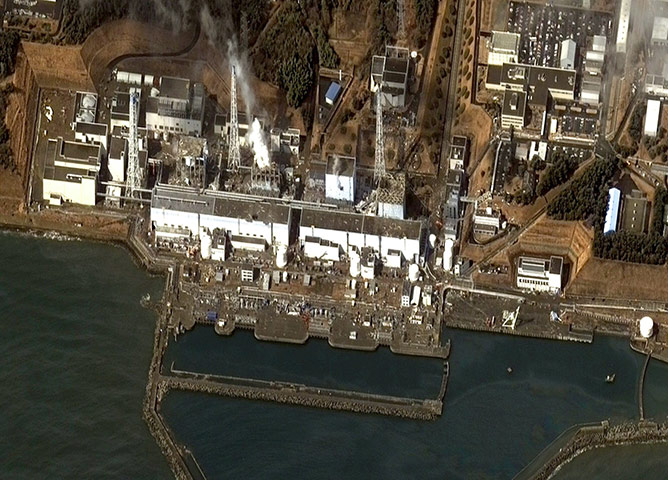
An aerial photo of the Fukushima disaster
Switzerland has decided to abandon the plans of building three new nuclear stations. Austria not only is strongly opposed but has pressurised neighbouring Slovenia and Slovakia to close their power-plants. Belgium and France, the nuclear giants of Europe, have said to have been shocked by the images of Japan, and the Green party of the latter, wants a referendum to be held on the use of nuclear energy. In this hysterical pandemonium, what is Ireland’s position?

After the few plans to build a nuclear power plant in Carnsore Point in the 1970’s, there were opposing views, predominantly leaning towards the rejection of any type of nuclear power station and a ban set on the ESB. It seems that after the explosion of the Fukushima power plant in Japan there definitely will not be any changes any time soon. Nuclear disasters and their subsequent suppression of nuclear energy’s advantages in following debates though, have been recurring instances. For example, after Chernobyl disaster in 1986, a referendum held in Italy, excluded any type of agreement on the use of nuclear power in that country.
But those were different times, and the next-generation, updated, nuclear power stations, with a paramount interest in safety, were considered to be not only feasible but also a very attractive solution to the problem of energy resources. Or so it seemed.
What most people find most frightening is the fact that the country in question, this time, is a developed, technologically advanced one like Japan. So if a country like Japan was affected, then, in the minds of most people, no one is really safe.
Yet if one stops a minute and thinks about it, other things have to be considered, like the fact for example that Japan is a country in one of the most violent seismic areas in the world. What is to be feared in this hysteria is also the ghostly shadow of political and electoral consensus, that could be playing a role in the decisions made by politicians in the weeks, months and (who knows?) maybe years to come.
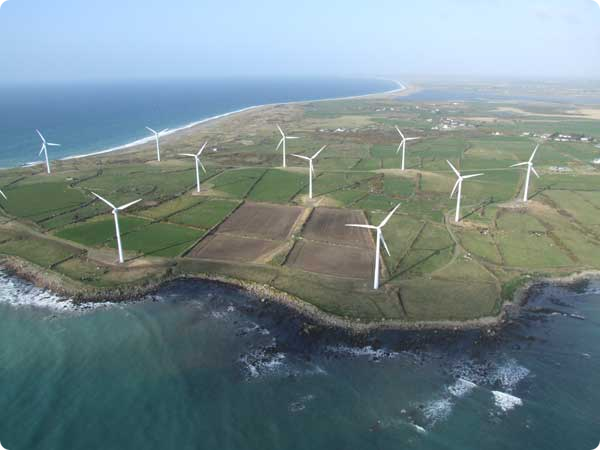
The better alternative?
And yet there is a final point to consider. There are broader and more philosophical reasons behind these recent fears; this is not only a conflict or discussion relating to the use of nuclear and its safety, this is part of the more general, everlasting “conflict”, that has arisen with phenomena such as Global warming, between man and technology and man and nature. Between what we think we can control, and the unexpected, the unforeseeable.
And nothing terrifies us more than the uncertain, uncontrollable unfolding of events, as Japan has shown.