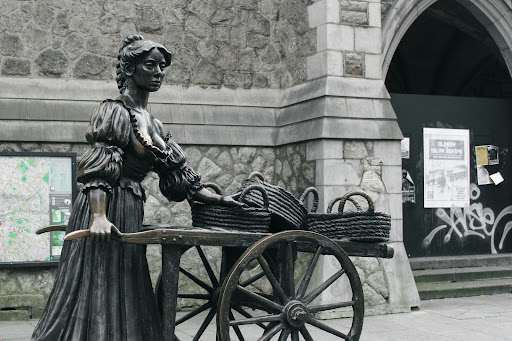

A recent decision has been made to install a flowerbed around the Molly Malone statue on Suffolk Street. District Magazine describes this as an “effort to prevent tourists from rubbing the statue’s breasts”.
The flower beds will be “installed to act as a low-level barrier, making it harder for visitors to approach and touch the figure”. The statue has shown “visible wear” in the chest area, which is being attributed to the recent tourist trend “that claims the gesture brings good luck”.
According to BBC News, this practice is believed to have originated with a local tour guide. They mention that “the sculpture has been in Dublin since 1988 in tribute to a woman who sold shellfish on the streets of the Irish capital”, which is stated “to represent the city’s working people, and many believe, Molly Malone deserves more respect.”

In May, BBC News further reported that stewards were stationed next to the statue following complaints made to the City Council. Stewards were intended to “have a “conversation” with people about touching Molly Malone”. Ray Yeates, the Arts Officer for Dublin City Council, has stated that the stewards were “not guards or police, but used to gently confront this behaviour”.
It was reported that while Stewards were standing next to the statue, music activist Tilly Cripwell, placed a sign over the statue displaying the name of her campaign, “Leave Molly mALONE”. However, the sign was “quickly removed by a passer-by.
Cripwell argues that Molly deserves more respect “for being such an iconic woman in Irish Culture”. She adds that she is “bored of seeing this kind of misogynistic behaviour normalised in culture” and believes that this behaviour sets an example to “younger generations”.
While Yeates notes that “some people see no harm in this whatsoever and think it’s a very trivial matter for council to be involved in”, he understands the concern that “we’re mimicking behaviour we don’t want to see in public”.
Yeats acknowledges that it is a “worldwide phenomenon that statues are touched or rubbed and it becomes a custom”. This understanding is shared by some tourists. Visitors from New Jersey, for example, state that while they “see the vulgarity” of touching Molly Malone’s breasts, they believe it is “just a tradition”.
Others, however, disagree. Dublin resident Clodagh Keating states that just because this behaviour has been normalised, “doesn’t mean it’s right” She adds, “for years people have been coming here and what they’re doing is groping Molly’s breasts”.
Some tourists share this opinion. For example, Cala from Minnesota remarks, “I think it’s pretty rude that it’s obviously been rubbed clear in one area”. Seth, another visitor from Minnesota, says that it is “not the most respectful way to treat an historical figure”.
Yeates explains that the resulting damage to the statue costs the city “several thousand euro every month”. The stewards were put in place for just one week, to manage the damage, costing ‘€350 per day, per steward.
The statue will be temporarily covered until the flower beds, estimated to cost €20,000, are installed.