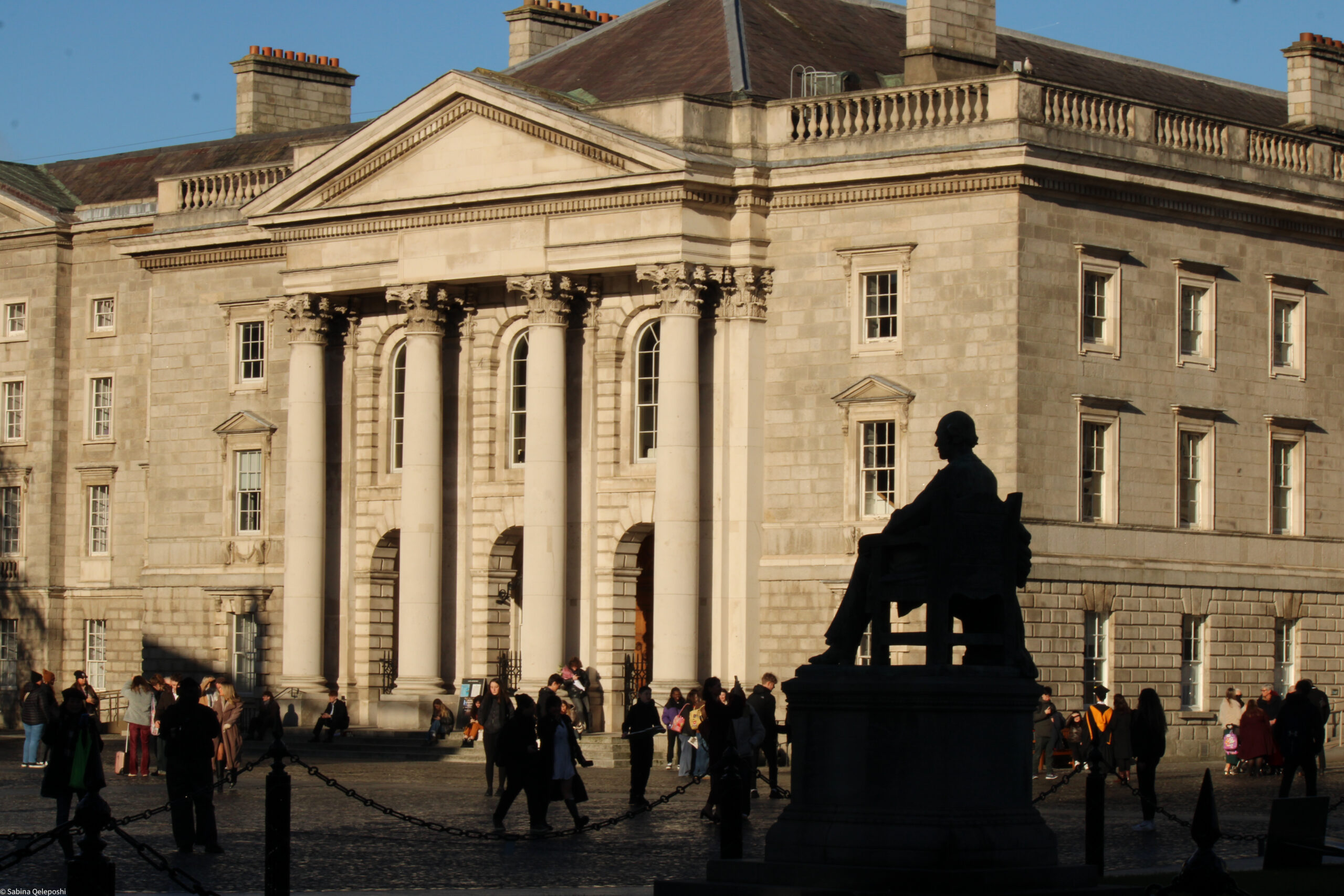
I recently learned a new word: sonder. Sonder is that empathetic feeling you get when you realise that every passerby has a life as vivid and complex as your own, complete with their own unique experiences, challenges, and nuances. It describes how everyone is the main character in their own narration of life. Sonder always hits me when I’m sitting in my favourite seat in the Boland library – it’s by one of the big windows, which I say I like for the natural light, but it’s truly due to the impeccable people-watching view. Looking down at the little people below, observing their style and stride, and imagining the world through their eyes – it’s a truly enthralling pastime, and almost always more entertaining than the law reading that’s open on my laptop.
These strangers that I notice are full of mystery, with so many blanks for the imagination to fill. My mind often wanders – when they leave campus today, what will they get up to? Where will they go? Perhaps they’ll go home, or to work, or maybe to a third space.
The term ‘third place’ was coined in the 1980s by Ray Oldenburg, an American sociologist. Oldenburg describes home as the first place, the workplace as the second, and the third place as, well, anything else. Ideal third places are comfortable, accessible, and affordable spaces that facilitate public gathering, social interaction, and the formation of community bonds. As the Third Space Smithfield defines them, they are “local gathering places, where people who live and/or work in the area gather regularly, informally, inexpensively and comfortably”.

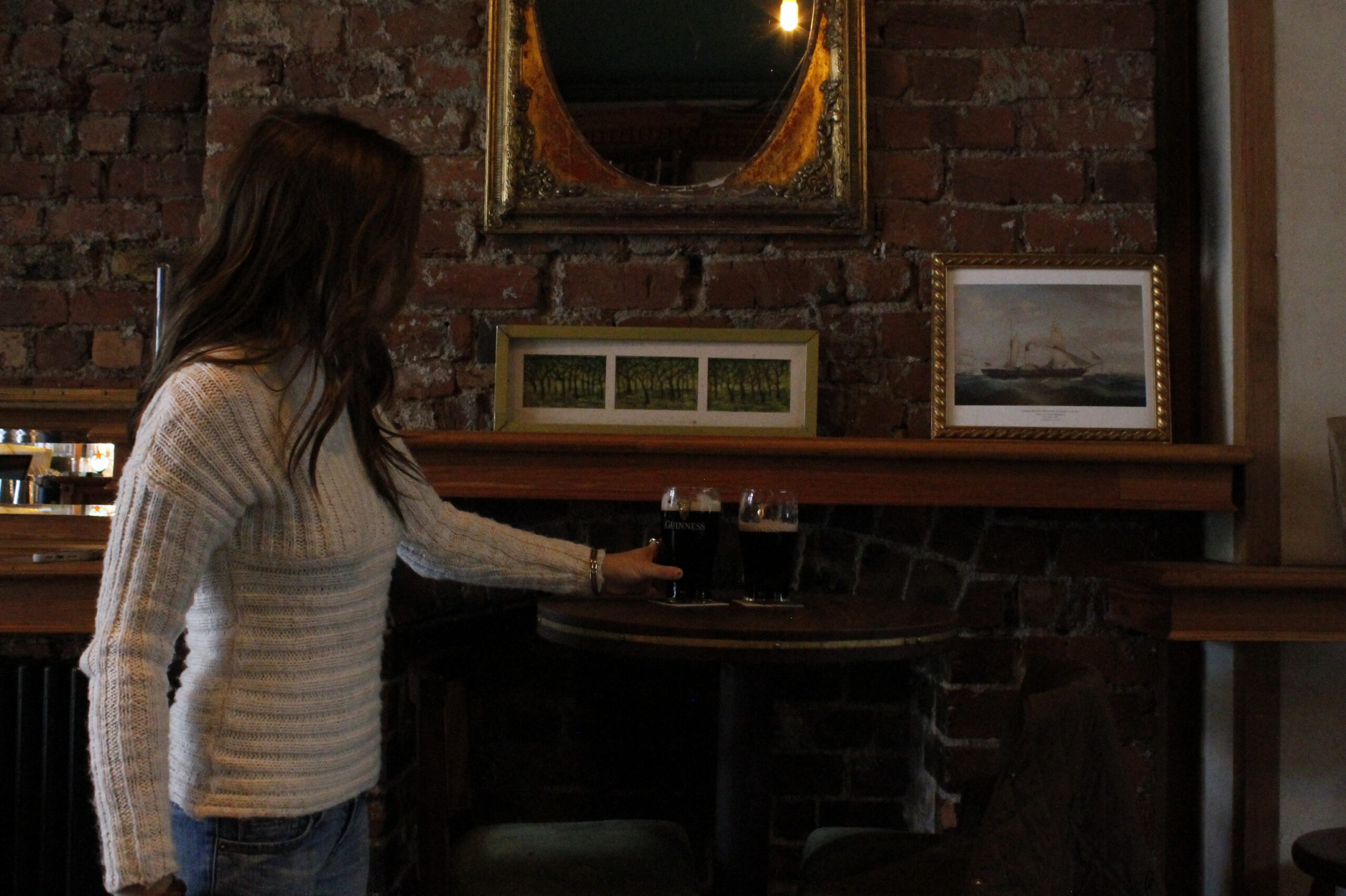
A key aspect of Oldenburg’s categorisation of third spaces is that they should be places that people can go to without the requirement to spend, or, at least, with an expectation to only spend very little. Traditional third spaces include public libraries, national galleries, parks, places of worship, cafes, restaurants, and even pubs.
Lucy is a second-year BESS student who sees third spaces as “anywhere to just socialise and talk” with friends. “The third spaces I use are generally just coffee shops”, she shared. “Or sometimes me and my friends will go to a bookshop and look around […] and exchange what we read and why we like it and stuff like that”. Lucy spoke of how most of the third spaces around Dublin are not free to spend time in: “If you go to a coffee shop, you can’t just sit in the coffee shop – you have to buy something. I know people living in Sandymount and they always mention places that the community has set up, but obviously Sandymount is a very affluent area, so I’m not too sure about other places in the city”.
There has been much discussion, both online and in the political sphere, about the lack of third spaces in Dublin. Some political parties, opposition parties especially, have been campaigning for an increase in community and cultural spaces in Dublin – claiming that the government’s focus on housing infrastructure is coming at a cost to public spaces. Labour’s Darragh Moriarty, councillor for Dublin City Council, believes that “people don’t just need housing – they need places to gather, learn, create, and build community”.
Generally speaking, Dublin appears to have an abundance of third spaces. Parks are scattered all over the city, every street has a quaint little café on its corner, and sometimes it feels like bars and restaurants outnumber people. In truth, a city can never be lacking in third spaces, as virtually anywhere can act as one. But many students have expressed that Dublin’s numerous third spaces are inaccessible and inadequate. So why is that the case?
Weather plays a large role in all of this. Although ideal on a warm summer’s day, Dublin’s parks and outdoor spaces are not fit for purpose during the rainy months, especially as evenings shorten and people find themselves leaving work or college in darkness. In Mediterranean and Latin countries, their warm, dry climate means that anywhere outdoors can serve as a third space. Year-round, the elderly play chess on park benches, young people socialise on the beach, and neighbours gather on the streets in the evenings to dance, eat, and connect with their community. Using the outdoors as a third space in this way lessens the need for purpose-built community infrastructure. However, with Ireland’s often cold and rainy weather, our reality is simply not the same.
Money also plays a role. As students in one of Europe’s most expensive cities, going to a café can easily set you back a fiver, and not to mention the price of pints nowadays. It can feel impossible to spend time in Dublin city without parting with a small fortune, leading people to study at home instead of a café, or to have a night in rather than a social night out with friends.
Alia is an international student studying law and political science, who expresses frustration over the lack of free third spaces in the city. “A third space is a public space meant for socialising without the pressure to purchase something”. She goes on to add that “it’s unbelievable that you have to buy overpriced drinks in pubs to enjoy an evening with friends. At the moment, most third spaces available to the public are centred around specific activities and limited age groups. I love going to parks, but I would also love not to have to spend around €10 just to go out in the evening”.
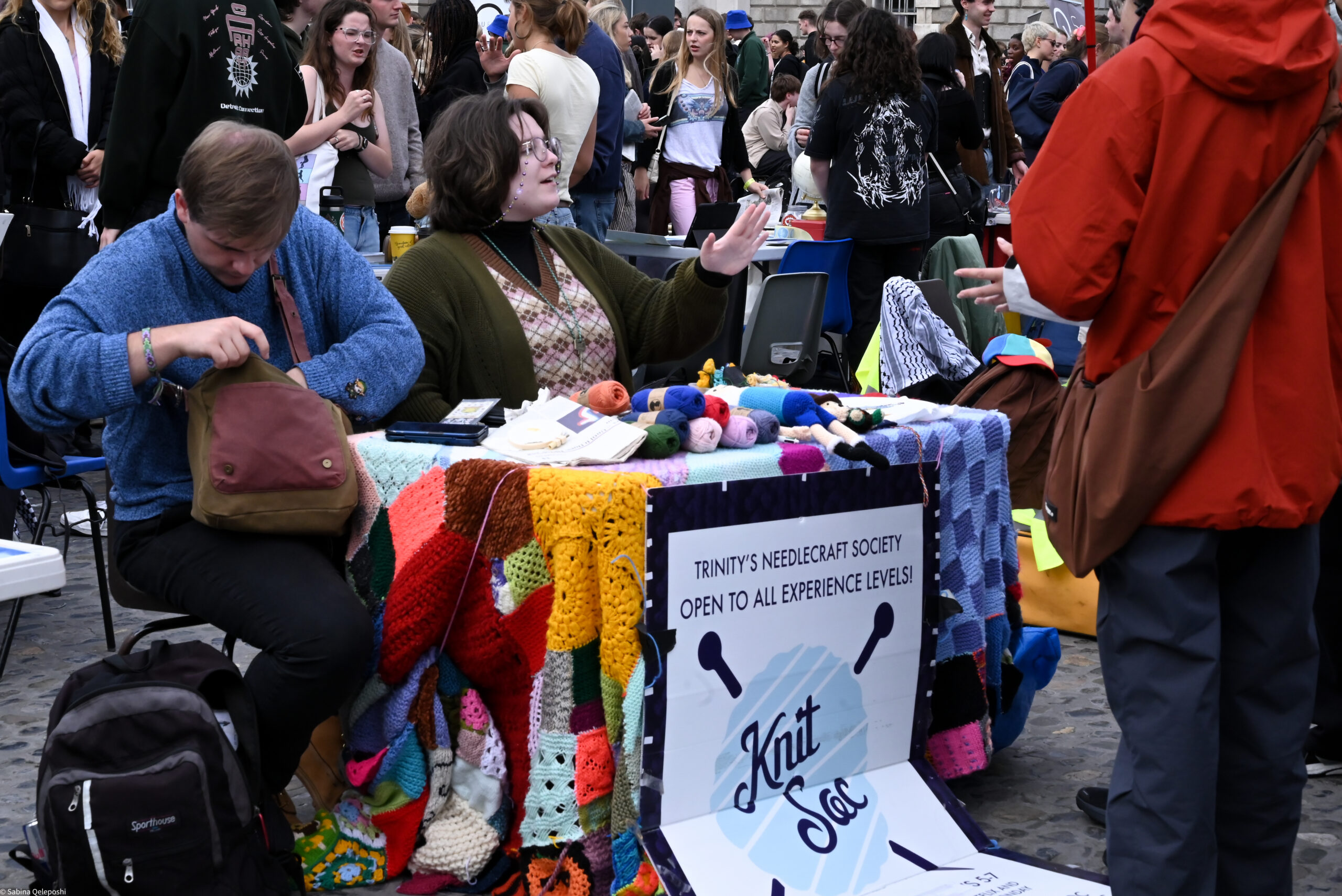
“There are also a few places on campus that I would consider third spaces, such as the DUGES committee room, the Global Room, and the Buttery”, Alia shares. Indeed, free communal spaces on campus serve as solutions to a lack of affordable third spaces in the city. Finding a free seat in the Goldsmith Café or Arts Block during the day is a difficult task, a testament to the importance and also to the shortage of free third spaces for students to socialise and relax in.
According to a 2022 survey conducted by the European Commission, 20% of Irish people feel lonely most or all of the time, a figure significantly higher than the EU average of 13%. Considering the demand for more third spaces, it’s easy to see how the two may be correlated.
The evidence suggests that Dublin is lacking in affordable and accessible third spaces for students, impacting our social lives, community bonds, and mental health. With a new student centre to be established on campus next year and a push for more community spaces being made on a political level, the future may present a brighter picture.
In the meantime, I’ll keep on people-watching from my favourite seat in the Boland library, wondering where in our little city these strangers go for their ‘third space’ fix.