As of 09:00 yesterday, October 9th, the Israeli military has ceased its campaign in Gaza. Israel has begun to withdraw, allowing civilians to return to the previously depopulated north of the Strip, and for Hamas and its allies to prepare the remaining hostages to be released across Israeli lines. In the 48 hours since the ceasefire deal’s announcement, much hay has been made by leaders around the world, praising the diplomatic prowess of the Trump administration and a deal which many claim is a path to peace. However, it is important not to suffer under any illusions on what this ceasefire deal is and what it will mean for Palestine and the Arab world more broadly: it is the creation of a tenuous new status quo and the offloading of the occupation of Gaza to the same powers which have spent the last two years aiding and abetting the genocidal campaign of an apartheid regime. The question now is not whether the war will continue, but when.
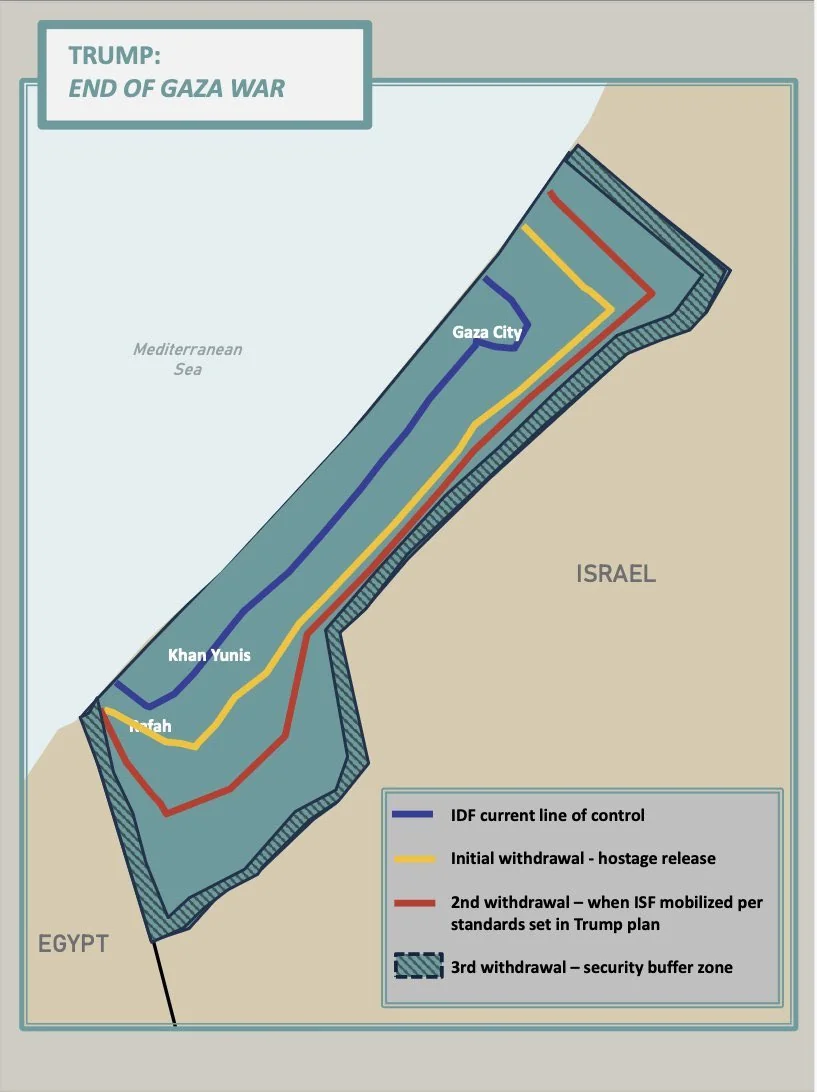
The accepted peace deal will see Hamas and its allies release the 20 remaining living hostages and the bodies of 28 more, while the Israelis have agreed to release 1,722 Palestinians imprisoned during the war alongside 250 other prisoners, the list of which remains an outstanding issue. Aid has been promised to surge into the strip with the supervision of the UN and the Palestinian Red Crescent, though no mention was made of the American-Israeli Gaza Humanitarian Foundation, which has been described by Palestinians as a “death trap”. Palestinians will be allowed to leave Gaza through the Rafah border crossing with Egypt, subject to Israeli approval and with the oversight of the EU, though no mechanism has been put in place to allow those who leave to return and all border crossings will remain occupied by Israeli troops indefinitely. Israeli troops will withdraw in three stages, the first of which is ongoing, with the disarmament of Hamas and its allies being managed by Turkey, Qatar, and Egypt. Hamas and its allies’ militia members will be granted amnesty on a case-by-case basis, with all who are not granted amnesty being forced into exile in “neighbouring states”, likely Egypt, though the number which Egypt is prepared to accept is unknown and probably very low.
While Hamas, Palestinian Islamic Jihad (PIJ), and the Popular Front for the Liberation of Palestine (PFLP), the three largest parties in Gaza in that order, all agreed to the ceasefire deal on Wednesday with the Israeli negotiating team, it was unclear whether the Israelis would agree. While Netanyahu’s Likud party was quick to get behind the deal following President Trump’s outburst on Wednesday, “I don’t know why you’re so fucking negative. This is a win. Take it.”, others in power were quick to reject it. The fundamentalist Religious Zionist Party of Finance Minister Bezalel Smotrich and the more traditionally fascist Otzma Yehudit (Jewish Power) party of Minister of National Security Itamar Ben-Gvir both voted against the deal in a contentious cabinet meeting two nights ago, in which they both stated that they would leave the government if it were followed in its current form. The next election, which could be forced at any time by Smotrich and Ben-Gvir, could see significant gains for Ben-Gvir specifically, once the jubilation of the hostages’ return wears off and Israelis are forced to confront the fact that their victory is not as complete as Netanyahu is attempting to portray it as.
Rest assured, this deal, if implemented, will be a disaster for the Palestinian people. But for every Palestinian killed by the Israeli military, be they civilian or soldier, there will be five desperate for revenge and justice. The political entity known as “Hamas” can be banned, its leaders can be exiled, and its weapons can be seized, but the conditions that drove so many Palestinians to support armed resistance to Israeli occupation have not been removed: they have been intensified. A generation of Palestinians has been permanently traumatised, and across the Arab world, thousands more have been radicalised both against the Israeli occupation and their own governments’ complicity in its crimes. Just as the US-led invasion of Iraq led to the destabilisation of the entire region, the shockwaves of the war on Gaza, while not immediately visible, will echo through the Arab world for decades and will remain a part of the collective memory of the Arab people. The Arab people have not forgotten their dismemberment by the West in Sykes-Picot, have not forgotten the tragedy of the Nakba, the humiliation of the Naksa, the failure of the Oslo accords, and will not forget this. To the people of Gaza, rule by foreign powers is nothing new, be they Israeli fascists, Egyptian dictators, Turkish Islamists, or British imperialists. The Palestinian people have survived far worse than Tony Blair and have continued to resist; the responsibility is ours in the West to ensure that our martyrs have not died in vain. More bodies will be unearthed every day that this truce lasts, more men, women, and children who have died at the whims of those who seek to deny the Palestinian people and the entire Arab world the liberty and equality that the West claims to be universally endowed.

The war may be over, but the occupation continues. The genocide continues. The complicity of the Irish government continues. Our resistance must continue.