
Immediately after watching “Steve”, I walked to The Winding Stair. There’s only so many films that have made me want to read the books they are based on. Steve joins that list, but not for the reasons you’d think.
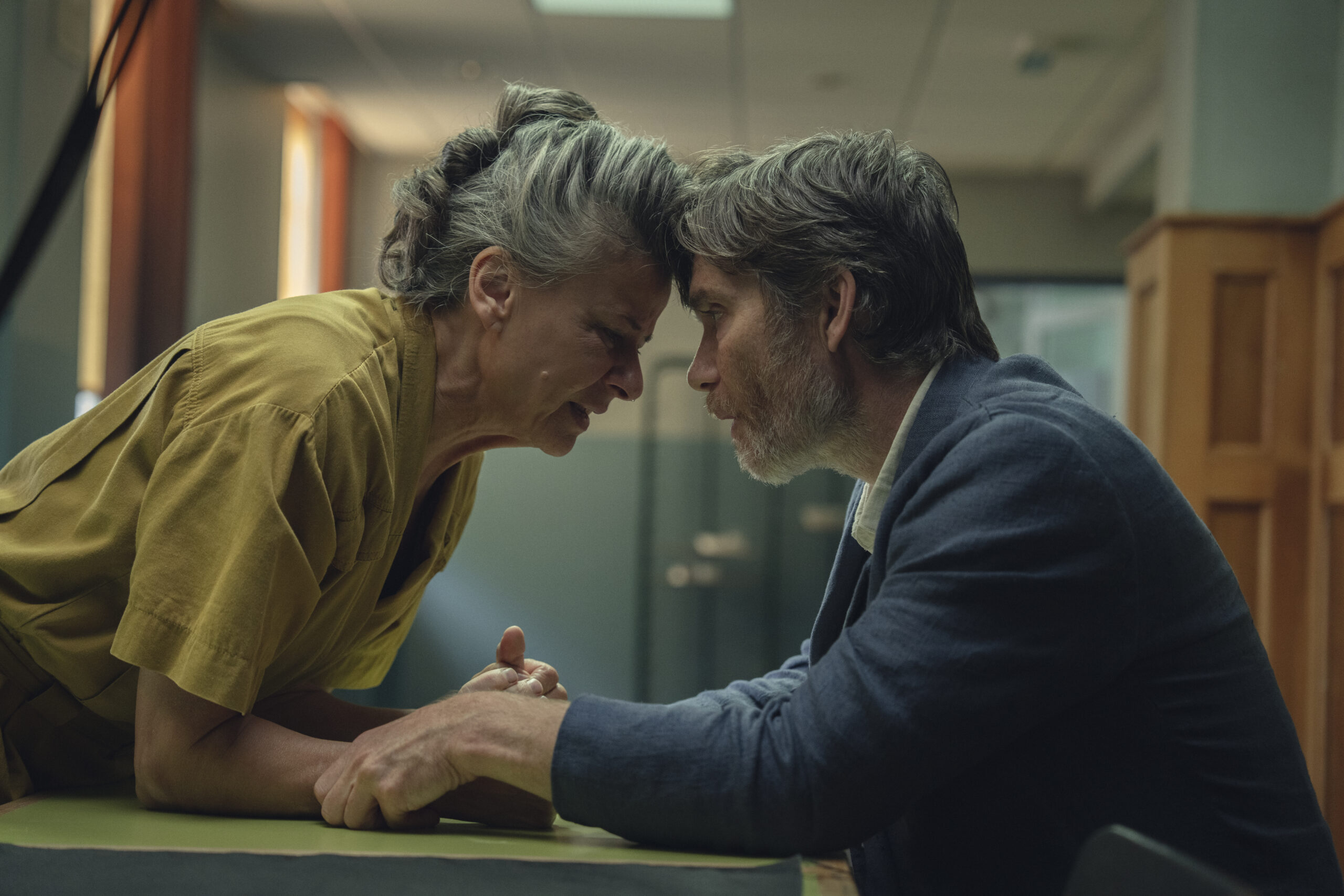
Tim Mielants gives his adaptation of Max Porter’s 2023 novella “Shy” a new name and a new protagonist. Steve (Cilian Murphy) is the headteacher at Stanton Wood, a special school for troubled boys, and he is about to have the most stressful 24 hours of his life. Relegated to the margins in this cinematic story is Shy (Jay Lycurgo), a student at Stanton who in his own words is “depressed, angry and bored”. Steve received a limited cinematic release after its world premiere in the Platform Prize section at TIFF’s 2025 edition and is now streaming on Netflix.
When Steve opens, both Steve and Shy are at the edge of something but while Steve is given history and ample space to explore that history, Shy is shrunk into a thin shell of a character. On the day when Stanton is visited by a documentary crew, these two men receive news that contort the very fibres of their being. Steve learns that the owners of Stanton have sold the land and the school will be closed in six months. Shy gets a phone call from home and is told that his mother is breaking all ties with him. While these tensions simmer beneath the surface, in the halls of Stanton a BBC style crew tries to film a documentary, a local MP drops in for a photo-op, and the students – the boys – are on their best behaviour. This behaviour includes, among other things, inciting meaningless violence against each other, cursing with immense creativity, and making sexually suggestive motions (like humping the air and pretending to masturbate). Used to this madness, the teachers at Stanton try their best to keep things functioning smoothly.

Mielants shows a preference for long takes which brilliantly capture the intensity and chaos of the encounters between the boys. Cinematographer Robrecht Heyvaert’s camera is an invisible but sentient being for a majority of the film. His extreme close-ups of Steve and Shy are a perfect mix of dauntless and sensitive.
There is a strange experimental sequence in the second half which doesn’t quite work; instead of looking surreally psychological, it becomes jarring and takes away from the naturalism Heyvaert so intelligently manages in the first half. An important aspect of this naturalism is Paki Smith’s production design. For most of its duration, the film stays within Stanton Wood, a house that is crumbling yet more alive than the wilderness surrounding it; mold and chipped paint are accompanied by colourful posters and 90s teenage paraphernalia.
The sounds are also distinctly of the decade (the story is set in 1996). Music plays a significant role in the narrative; Shy is never without his Walkman and dreams of launching his own label with one of the other boys. Ben Salisbury and Geoff Barrow fill the soundtrack with acid house, hardcore, dancehall and hip-hop, and keep the volume high enough for both Shy and the viewer to drown out everything else.
At the end of the day (both idiomatically and in the narrative), it is Jay Lycurgo as Shy who is the film’s crowning laurel. While Cilian Murphy as the titular Steve is great at playing a pendulum of a person, constantly swinging between frustration and kindness, it is Lycurgo who is absolutely outstanding despite the scanty material given to him. With incredible subtlety, he swallows his character while also allowing the character to swallow him. The 27-year-old plays a 16-year-old with such finesse that he beautifully elevates and complicates the written script. Tracy Ullman as Amanda, another teacher, and Emily Watson as Jenny, the school psychiatrist, are the two other highlights of Steve.
Mielants’ film, at the heart of it, is about caring for those whom society has spat out, and it manages to portray that decently well. But in the process there becomes apparent a desire for performance and spectacle, which inevitably dilutes the vulnerability and volatility of the people involved on both sides of the screen. Even its technical wins are endangered in its efforts to appear flashy. One can’t help but wonder why Steve is titled after Cillian Murphy’s character and not Shy. Mielants and Porter have picked the relatively easier character for their protagonist so of course I had to read the book and see for myself.