Movember is a global annual movement that aims to start a conversation surrounding the very real and serious growing mental health crisis that men are experiencing. With rising suicide rates, substance abuse issues, and the manifestation of other psychological issues, Movember seeks to start a conversation about this over the month of November, encouraging men to grow moustaches as a symbol of empowerment and encouragement of conversation, similar to the pink ribbon for breast cancer awareness.
While this issue is serious and of critical importance, and men’s mental health deserves the time and space to be discussed and tackled, I’d like to ask the question of whether or not Movember actually accomplishes this, specifically the collegiate campaigns. Credit where credit is due, the global Movember movement maintains transparency regarding their funding towards research in all fields of men’s health research including testicular and prostate cancer and yet, there is glaring omission in the campaign, a refusal to confront the structural and historical forces that place men in this position to begin with: the patriarchy and late-stage capitalism.
A strong distinction needs to be made between these two strands of men’s health. One is far more objective, and its funding is straightforward: towards research and treatment of cancer. While breast cancer awareness campaigns have similarly been commercialised, it revolves around an empirical and medically solvable problem. The other, mental health, is inherently social and therefore demands a political reckoning which Movember firmly refuses to do, with not a singular mention of the patriarchy on its website.

Despite the transparency, funding the mental health campaigns of Movember is not as straightforward: within Ireland, some of the Movember campaigns have funded upscaling for men, seeking to alleviate financial pressures that may result in mental health crises. They treat the symptoms of capitalism and the patriarchy (men being conditioned to being the sole bread-earners) rather than addressing it head-on. The patriarchy, by design, privileges men materially and socially while simultaneously denying them and punishing emotional vulnerability. This creates a paradox where men dominate the social and institutional hierarchies but worsen personal psychological issues. Capitalism compounds these issues by measuring worth, not solely for men, in terms of productive capacity and the commodification of care.
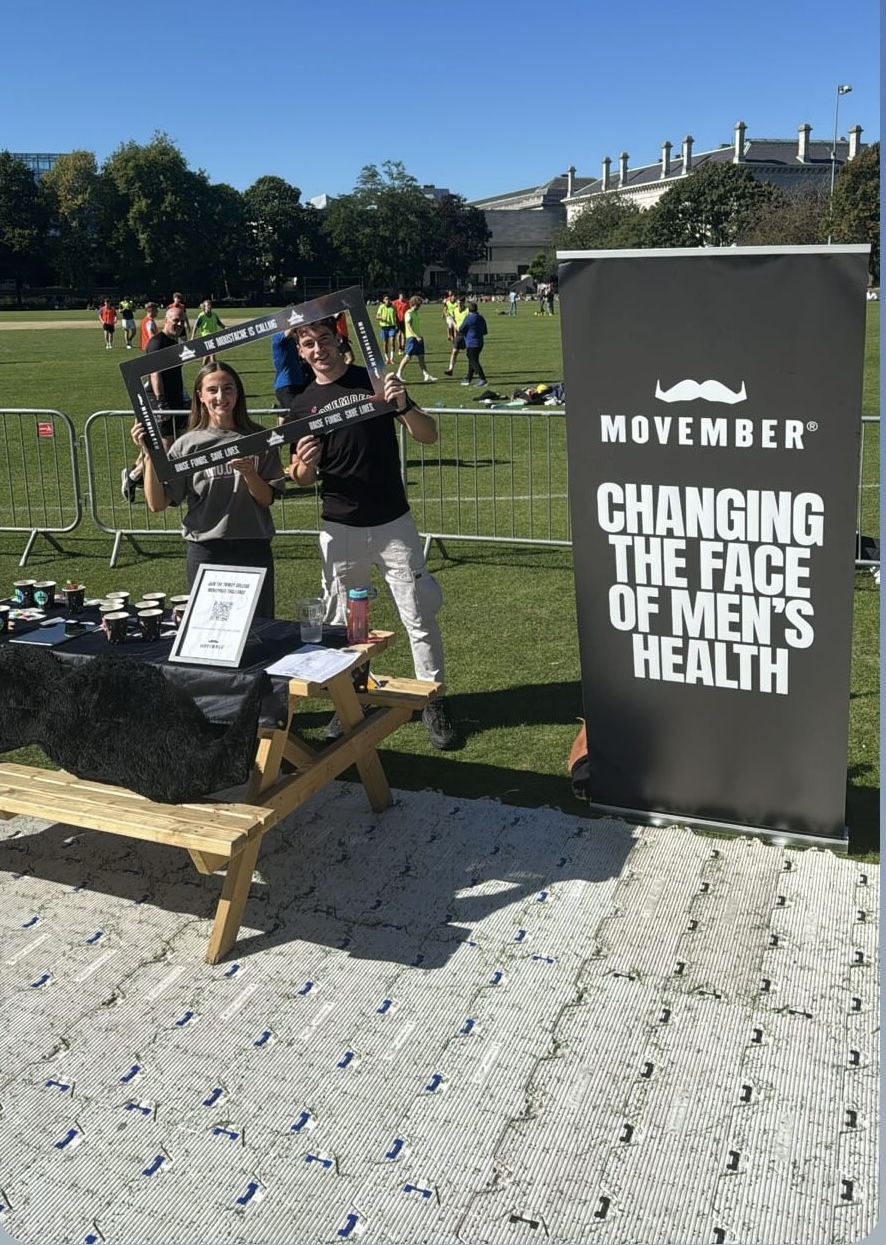
Trinity’s Movember campaign began in 2024, prioritising visibility and participation rather than introspection. In its previous campaign, it made no mention of the free Student Counselling Services available on campus or even encouraged seeking care. Additionally, there haven’t been interactions with other mental health and feminist initiatives that have done the hard labour of unpacking the emotional tolls of the patriarchy. Awareness without institutional accountability only furthers the image and aesthetics of care while maintaining the structures that continue to harm. This apolitical approach sanitises a clearly socially-rooted issue, making it safe for sponsors and participants without having them challenge their privilege.
The patriarchy punishes vulnerability by equating emotional expressions with weakness. The patriarchy acts in a self-fulfilling circle, where it systemically benefits men while psychologically harming them. This deliberate non-mention and depoliticisation of a clearly social movement ignores the deeper and far worse systemic issues inflicted by the patriarchy on women, queer people, and other minorities at the risk of men losing their status at the top of the social pyramid. The reality that the patriarchy continually produces and reproduces pain for other groups can coexist with the fact that men too are harmed by it.
The reason Movember and its aesthetics thrive are because they fit neatly into capitalist logic: commodifying care and inviting participation and belonging through ticketed events and exclusivity. Movember is able to sidestep actual change through the confrontation of harmful systems while being on the verge of repeating mental health spirals through exclusionary activities. Growing a moustache or attending a party become easy substitutes for the uncomfortable work of dismantling systems of harm. Last year, Movember raised 58,285 euro which appears to be a great achievement. Yet the campaign reinforces the same masculine performance it tries to critique. Empathy is only measured in outward display, not internal reflection.
Mental illness is far-reaching and caused by systems of injustice. Women attempt suicide at far higher rates than men; male suicide rates also exclude demographics of trans and gay men impacted by the mental health crisis and who happen to be targeted rather than beneficiaries of the patriarchy. The symbol of the moustache reaffirms the lack of vulnerability afforded to men under the patriarchy. Yet, Movember isolates male suffering and elevates it to an exceptional level and ignores the far worse issues caused by the same system. If the goal of Movember truly is to heal men and their mental health, it would prioritise healing society at large rather than accessorising it.
In a statement, Movember-at-large said the following:
“Movember exists to tackle serious men’s health issues – suicide prevention, mental health support, and testicular and prostate cancer. These are not abstract challenges: in Ireland, men are significantly less likely to seek support, and many die prematurely from preventable causes.
The Real Face of Men’s Health is a landmark, state-of-the-nation report on men’s health in Ireland, developed by Movember to drive national conversation and policy change. Combining lived-experience storytelling with new research, it provides an unprecedented insight into how men across Ireland understand and manage their health. The project engaged directly with men in every corner of the country to uncover what helps them stay well, what holds them back from seeking support, and how these experiences shape their families, friendships and communities. One of its defining findings is that when men are supported to prioritise their health, the benefits extend far beyond the individual – strengthening relationships, easing pressure within households, and building more connected, resilient communities. Since its launch in September this year, the report has been referenced over 20 times in the Dáil, underscoring its significance as a call to action for stronger support and full implementation of Ireland’s National Men’s Health Action Plan.
We also recognise the importance of ensuring conversations about men’s health are backed up by access to meaningful support. In our work with Irish universities, including Trinity College, Movember collaborates with campus wellbeing teams and student unions to ensure clear and consistent signposting to counselling and other support services. Awareness and access must go hand in hand, and our focus is on helping men feel able to seek support early, and to know that confidential, professional help is available where they study, work and live.
This is also why we invest in preventative and community-based programmes. In Ireland this year, we have delivered Movember Ahead of the Game – a mental fitness and resilience programme delivered through grassroots sport. It supports young players, as well as the parents, coaches and club volunteers around them, including in girls’ and women’s teams, to build the skills that protect wellbeing before crisis point. We have also made Movember Conversations, our digital supportive communication tool, available to campuses and workplaces to help people feel more confident supporting the men in their lives.
These initiatives create change not only by supporting men directly, but by reducing harm, easing burdens on families, improving community connection and ultimately contributing to a healthier society.
We welcome open discussion on how to continue improving men’s health – meaningful progress requires connection, compassion and sustained action. Our commitment is to make it easier for men to speak, and easier to access support when they do. Because when men are well, we all benefit.”