After graduating with an English Studies degree in 2016, Naoise Dolan joined the ranks of Trinity’s acclaimed alumni back in 2020, with the publication of her bestselling debut novel, Exciting Times. Since then, she has continued to make a name for herself as not just a novelist, but a determined political advocate, with a particular involvement in the pro-Palestine movement.
Born in Dublin, Dolan studied English at Trinity and went on to do a Master’s in Victorian Literature at Oxford. She has written for a variety of publications, including the London Review of Books, The Guardian, and Vogue, and her work includes fiction, essays, and criticism. Her debut novel, Exciting Times, was met with critical and popular acclaim following its 2020 release, and was shortlisted for both the An Post Irish Book Awards as well as the Waterstones Book of the Year. In addition to a flourishing literary career, Dolan has also garnered attention for her continuous advocacy work in the pro-Palestine movement. She notes her relationship with the Irish language and culture as foundational in her inclination toward political activism and outspokenness. In a conversation with Niamh Donnelly for the Irish Times in May 2025, Dolan spoke about her belief that, to her, one of the best things about Ireland was the “healthy disrespect for authority,” a belief that has underscored her work as both author and activist.
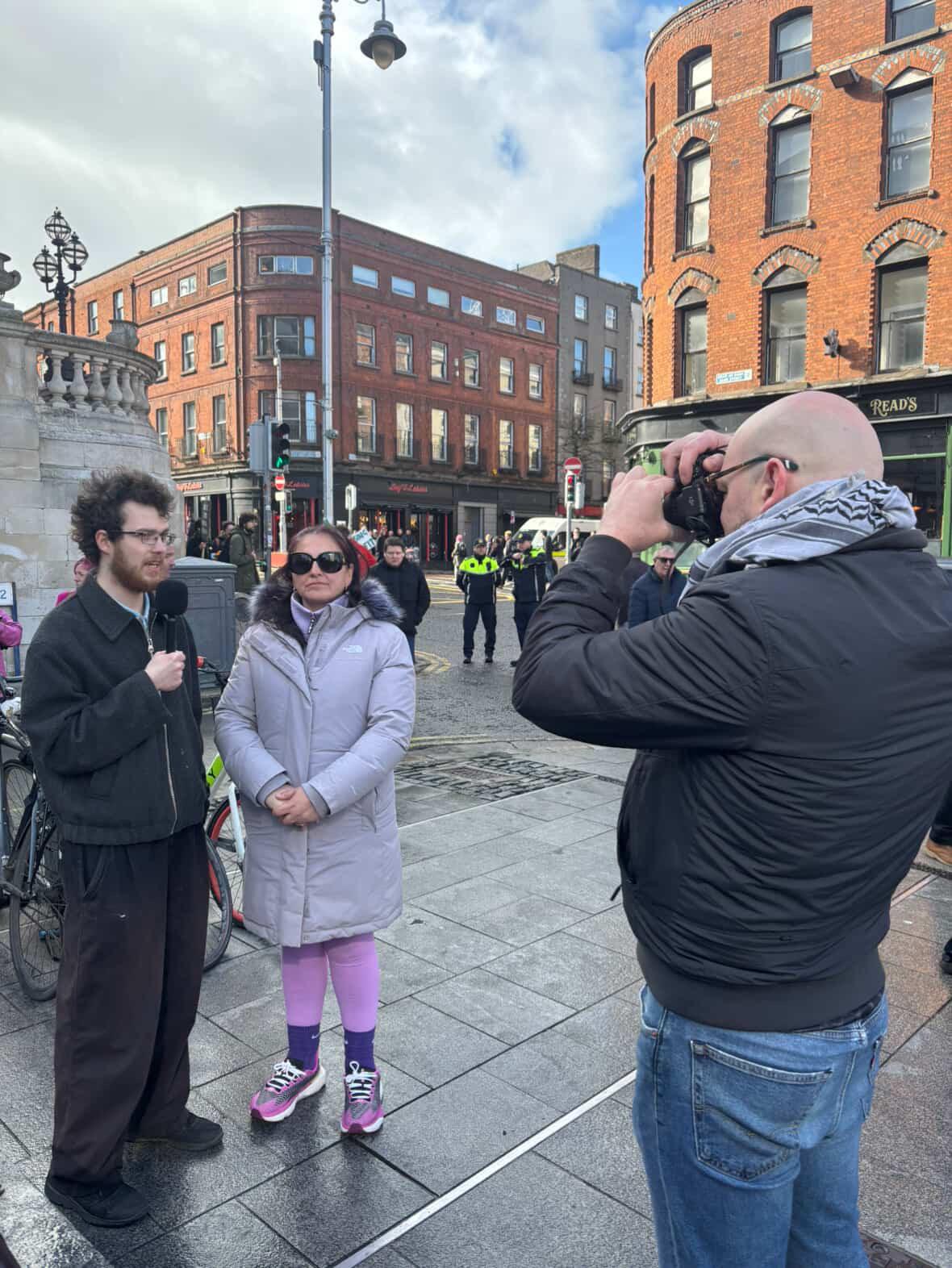
Dolan has attended and spoken at numerous pro-Palestine protests and events, and in doing so, has made waves across social media. On May 29th, at a protest organised by the Ireland Palestine Solidarity Campaign, which took place outside the Dáil, Dolan spoke powerfully against Ireland’s relations with Israel. In a video posted to the event organiser’s Instagram, Dolan condemned the Central Bank’s regulation of Israeli bonds. “The reason the bombs continue, the reason children are still starving, the reason people are dying as I speak, is the sale of these bonds. The reason we have been able to sell them within Europe is us,” Dolan said, “every single person here today, without our consent. We did not agree to be complicit in this, and the Bank made us anyway. Shame on them.” Dolan’s words were met with a roar from the crowd, and the video, posted online, was met with similar appreciation in the comments and reposts.

Recently, Dolan took her activism a step further when she joined the Thousand Madleens Flotilla, a campaign in collaboration with the Freedom Flotilla Coalition designed to bring humanitarian aid to Gaza. The rhetorical goals of the Flotilla, as outlined on the Thousand Madleens’ website, were to coordinate an unprecedented peaceful maritime demonstration that would bring international attention to the humanitarian crisis in Gaza and demand open borders. Dolan first boarded the Flotilla on September 27th, on a boat that was carrying primarily medical aid such as painkillers, baby formula, and crutches. The boat she was on was one of nine others that were intercepted by Israel on the way to Gaza on October 8th. Dolan and the others aboard the boat, including retired Trinity Professor Dr Veronica O’Keane, were detained by Israeli authorities. Dolan was held for four days before being released and deported back to Ireland.
Although Dolan was not able to make any statements herself during the length of her detention, several family members, including her mother and brother, spoke on her behalf. In an interview with Suzanne Brennan for The Women’s Podcast, Dolan’s mother, Miriam McNally, spoke about the impact of her daughter’s work. In addition to the obvious social influence, she mentioned the personal significance of Dolan’s activism. “We bring it back to Palestinian mothers and fathers, who have been dealing with this for decades. Our activists have voices, they are European citizens, and they have embassies advocating for them….Palestinians have no voice.” Speaking as a mother, McNally’s statement draws on the emotional resonance of her daughter’s activism. She also highlighted that her daughter is autistic, meaning that she is constantly running through all possible risks and outcomes in a given situation. Despite possible fallout, Dolan remained undeterred.
Before boarding the Flotilla, Dolan discussed the endurance of her goals despite the numerous possible risks. “At the front of my mind is always delivering the aid. That’s how you sustain a sense of purpose doing this, and I never want that to be merely symbolic. It’s also material help that we’re attempting to bring. Equally, I’m a rational person, so I’m very prepared for what might happen.” As an author, Dolan does not fail to understand the importance of voice and expression, and her actions evidence that they are things worth fighting and sacrificing for.
Although the Flotilla was unsuccessful materially, the attention it received from media coverage brought important awareness to the cause. Upon her arrival at Dublin airport, where she was greeted with an emotional welcome from family and friends, Dolan made it clear that she is not going to stop speaking and working on behalf of the cause. In response to the recent Gaza ceasefire deal, she said that although she “hopes something good will come from it,” “it’s more hope than rationality at this stage.” However, even if it is just a shred of hope, it is a fire that will keep on burning, a torch that Dolan will not forfeit.
Showing bruises on her arms, Dolan spoke firmly to reporters. “This is what they do to white women with EU passports…..think about what they’re doing to Palestinians.” Dolan does not shy away from acknowledging her privilege, but instead weaponises it, using it to platform those without the opportunity. Not only a woman of letters, but truly a woman of her word, Dolan’s actions show a persistent dedication and willingness to make personal sacrifices that nullify claims of performativity. Although she has not made any further public statements since her arrival back in Ireland, it has been made clear that her work is not yet over, and she has no intentions of scaling back her public activism.
Information on upcoming events and protests in Dublin can be found on https://www.ipsc.ie/, the official website for the Ireland Palestine Solidarity Campaign, as well as their official Instagram page. For interested students, Trinity’s BDS Campaign has more information about getting educated and involved in and around campus on its Instagram.