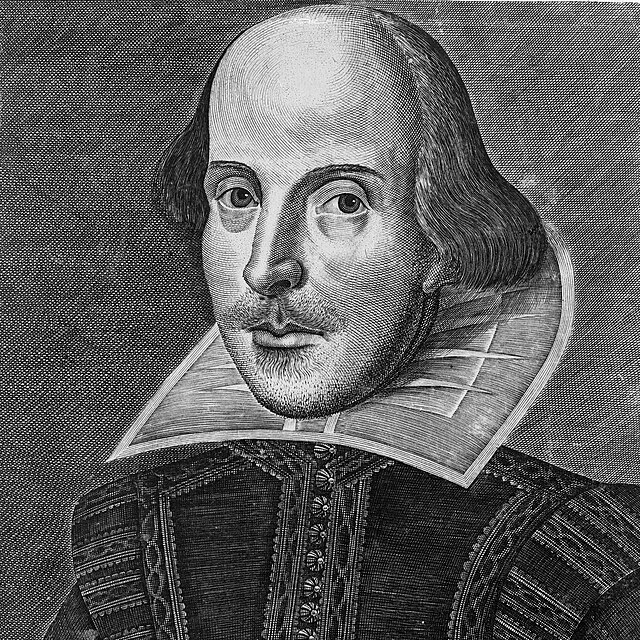

For over a quarter of a century, the Irish government has made a strange bargain with its young people. While our education system claims to champion critical thinking, inclusivity, and Irish culture, its English curriculum, particularly at Leaving Cert level, is anchored to a figure from our colonial past: William Shakespeare. Why are our young people forced to write essays on an English cultural icon year after year, while our own rich literary tradition plays second fiddle?
This is not an argument against Shakespeare’s literary merit. It is an argument against his compulsory status, which undermines the progressive goals of our education system and overshadows figures from Ireland’s great literary past. Making the study of Shakespeare optional wouldn’t be erasing his work, it would be opening our curriculum to other writers, of equal intellectual merit and greater relevance to the Irish student. Thomas Kilroy is that writer.
While students might be familiar with, and indeed tired of, the works of great Irish playwrights such as Brian Friel, Thomas Kilroy is noticeably underrepresented in the Irish curriculum, despite his ties to Field Day Theatre Company, the Abbey Theatre, and Aosdána. Born in Callan, Kilkenny in 1934, educated in University College Dublin, and appointed Professor of English in University College Galway, Kilroy spent his life documenting the Irish experience. His body of work constitutes a profound and often critical engagement with the issues that shaped the Ireland we know today.

While Shakespeare’s history plays depict the English monarchy that occupied Ireland for centuries, Kilroy’s The O’Neill (1969) dramatises the fate of a heroic figure from our own national story, Hugh O’Neill, Earl of Tyrone. The play describes the happenings that led to the final dissolution of the ancient Irish order of government and the Plantation of Ulster. Rather than reading plays from a colonial perspective, Kilroy’s play would expose students to the complex relationship between colonialist and native.
Kilroy’s plays are not merely glorifications of Irish history, but also deconstruct the myth of Irishness itself, exposing borders and boundaries to be more than black and white. Double Cross (1986) contrasts the lives of Brendan Backen and William Joyce, more commonly known as Lord Haw Haw, two figures on opposing sides of the Second World War. Kilroy’s play explores the reasons why these two men chose to re-invent themselves, an Irishman becoming English, and an American fascist joining the Nazis, questioning the curious riddle of nationalism.
Kilroy was also a pioneer, depicting the first explicitly gay character on the Irish stage in The Death and Resurrection of Mr. Roche at the Dublin Theatre Festival of 1968. This is a groundbreaking play that dared to explore homosexuality and social hypocrisy in Dublin with a raw honesty that is revolutionary to this day. The stage is littered with caricatures of Irish men and their fragile masculinity, and offers the readers a view into the not-so-distant Irish past, forcing us to question how far we have really come in regards to the treatment of ‘outsiders’. Mr. Roche provides a valuable lens to discuss the journey of Irish social values than, for example, The Taming of the Shrew.
Thomas Kilroy’s plays are intellectually demanding, formally inventive, and thematically rich. The study of his plays would require students to think critically about their own society and history, instead of passively reading about the state of a foreign nation hundreds of years ago. Young pupils will engage and relate to Kilroy’s works, not just as Irish people, but as individuals navigating questions of sexuality, class, and identity. The current curriculum’s hidden message is that tradition is more important than relevance, and that one centuries-old English voice is more worthy than any Irish one. We have a chance to create a syllabus that excites students and fosters a genuine love of literature. It is time to decolonise the Irish classroom. It is time to make Shakespeare an option, not an obligation, and finally promote Irish voices that have been ignored for far too long.