
“Significant enhancements” are being added to the Higher Education Access Route (HEAR), announced the organisation on November 5th. Along with introducing four new “priority groups”, a revised “scoring matrix” will determine HEAR eligibility for future applicants.
HEAR is a national higher education admissions scheme for Leaving Certificate students under 23 from socioeconomically underrepresented backgrounds in higher education. The scheme works by offering eligible students reduced CAO points on all undergraduate courses across 20 partner institutions throughout Ireland. Participating Dublin universities include Trinity College Dublin, University College Dublin, National College of Art and Design, Technological University Dublin, National College of Ireland, RCSI, Dublin City University, Marino Institute of Education, and Institute of Art Design and Technology.
The new priority groups include applicants who are “Care-Experienced”, meaning they have been in the care of the state; members of the Traveller and Roma Communities; young parents (those who become parents while in post-primary education); and disabled students.

The revised scoring scheme assigns each applicant a score ranging up to 7. Students assigned a score of 5.5 to 7 are considered “HEAR Priority”, whereas students with scores of 2.5 to 5 are “HEAR Eligible but not HEAR Priority”. Those with a score of 2 or lower are ineligible for the program. The newly announced priority groups are immediately placed with a score of 7. However, applicants who have experienced homelessness or lived in emergency accommodation during post-primary education will only be given a score of 2.5, indicating they are eligible, but not considered a priority group by the program. Finally, “enhanced, tailored support systems” will be provided to applicants from priority groups aligned with the National Access Plan 2022–2028.
“The enhancements to the HEAR scheme will allow the higher education sector to be more targeted in the support that they provide to ensure it reaches those who need it most,” said James Lawless TD, Minister for Further and Higher Education, Research, Innovation and Science. Lawless also stated that the scheme will “facilitate smoother transitions and create more opportunities for disadvantaged young people to access higher education”.
Daniel McFarlane, Head of Access at the Irish Universities Association, overseeing the scheme at participating universities, stated: “I’m proud to welcome these groups of students into the HEAR scheme, and our goal is to make sure that they, and the next generation of HEAR students, not only gain access to higher education but truly thrive once they get there.”
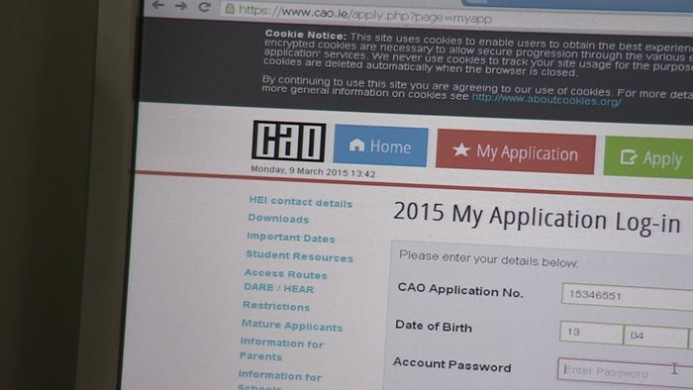
Applications for the 2026 HEAR scheme are open as of November 5th via the Central Applications Office (CAO).