Top Floor Music has become one of Trinity’s most reliable spaces for communal, unpretentious live music. What started as modest gatherings has recently become the go-to space on campus to soak up good music in good company. It’s evident the society has carved out a distinctive place in Trinity’s arts scene with no sign of losing momentum.
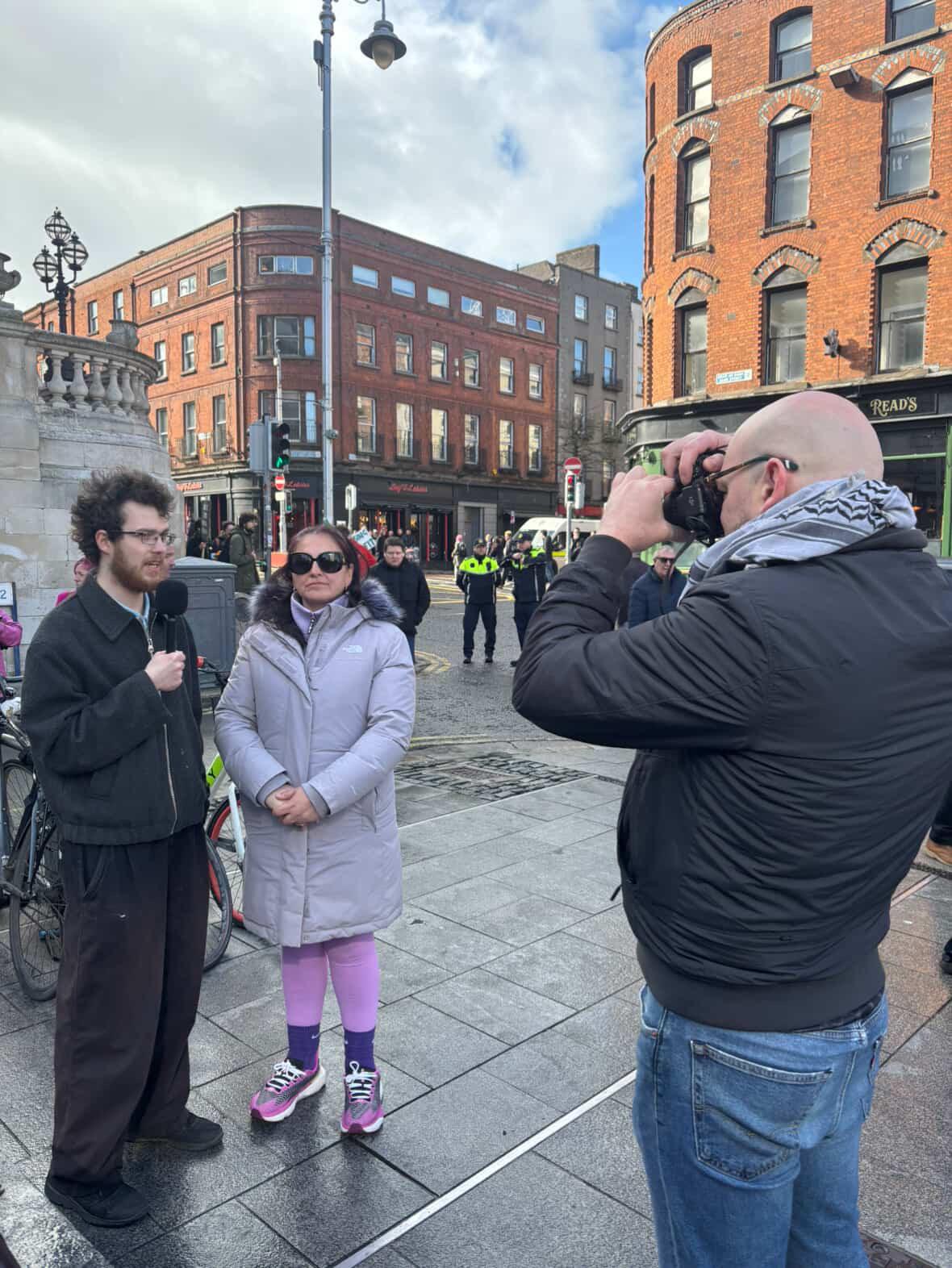
Meet Sophie: Top Floor Music’s chair since 2024. The society was founded in 2017, but it has evolved massively in the last two years when Sophie took over. The committee decided to make the transition from humble, brightly lit Atrium sessions to the lively, addictive, crowded gigs we know and love today. This shift was deliberate, with Sophie drawing from her experience as a die-hard gig-goer at DIY shows in Boston when she was in high school. She crafted the Trinity Top Floor scene in the image of these nostalgic nights.
Top Floor’s gigs now pull in big, buzzing crowds, and that energy creates a kind of community that can be difficult to accomplish with intimate gatherings. The events offer a great way to socialise and lose yourself in the music. The big crowds also make for a more eclectic audience. At any given Top Floor gig, you can expect to run into music obsessives, casual listeners, and friends-of-friends all packed together, further highlighting the value of encouraging such a large, diverse collective to exist and connect. And from the artist’s standpoint, the greater the audience, the greater the exposure.

As exciting and opportune as these now gig-oriented, fun-forward settings are, the momentum works both ways. Bigger crowds can mean bigger energy—but also more distractions that can pull focus from the performance. “You definitely lose a bit of intimacy,” Sophie tells me. “When you have people drinking and messing around, you don’t get the same level of attention and care for the artist. We sometimes risk losing connection to the band and that respect.” It’s a tricky balance—wanting the vibrancy of a big crowd without losing that close connection—but they make a conscious effort to reach that equilibrium. Ultimately for Top Floor, the payoffs of these bigger nights outweighs the drawbacks. And as an avid attender, I would have to agree.
When it comes to what sounds Top Floor Music looks for when showcasing an artist, the short answer is: anything goes. The main aim is to “platform a big variety of sounds,” as Sophie puts it. And on Friday, Top Floor delivered just that. At Trinity Arts Festival’s annual GMB takeover, Top Floor turned an ordinary campus space into a lively stage. The night’s acts—Chris Sherridan followed by Plum Texes—were a perfect example of the sonic range Sophie talked about. Chris’s ambient textures melted into Plum Texes’s thrashy, improvised chaos. The crowd shifted from spellbound silence to head-banging bliss. In a soundscape where anything goes, anything did.
Experience is just as fluid a factor in their curation process as genre; there’s a conscious push to welcome musicians of all experience levels. First-timers share stages with seasoned performers. The same principle applies to demographics, as Top Floor makes it a priority to platform women artists. Ultimately, it’s all about the love of music. If you’re making music and you’re willing to put it out there, Top Floor will give you a chance to shine, regardless of genre, gigging experience, or gender.
This unadulterated freedom of expression was articulated by the artists of the night themselves. Tom, the drummer for Plum Texes spoke about the “lack of separation between performer and audience,” noting that the absence of a raised stage makes everything feel more “immediate” and “conversational.” Playing physically on the same level dissolves any sense of hierarchy. Chris echoed this, emphasising that Top Floor has “no preconceived notion of what should be played or what type of artist should play.” That creative liberty, he said, creates an environment of trust and openness that can be felt by both performers and audience members alike.
Another defining element of Top Floor Music’s identity is its accessibility. Their gigs are always on-campus, free, and easy to stumble into. In a world where live music is increasingly harder to afford, this is all the more special.
Their digital presence is equally distinctive. They lean into a short-form, quick-edit style that mirrors how young people actually consume music online now, and media as a whole, for that matter. That said, Top Floor still makes full-length recordings available online. For improvisational acts like Plum Texes—who feed off the energy and unpredictability of the crowd—this is essential. Each show is uniquely wild and near impossible to replicate, so documenting the full show preserves those fleeting moments and keeps the experience accessible long after the night ends.
If Friday’s electric sets slipped past you, be sure to catch Top Floor Music’s next gig. The performers have not yet been announced, but that hardly matters. The beauty of Top Floor is the atmosphere they’ve managed to cultivate time and time again. The brilliance of the musical performances they curate is just the cherry on top.