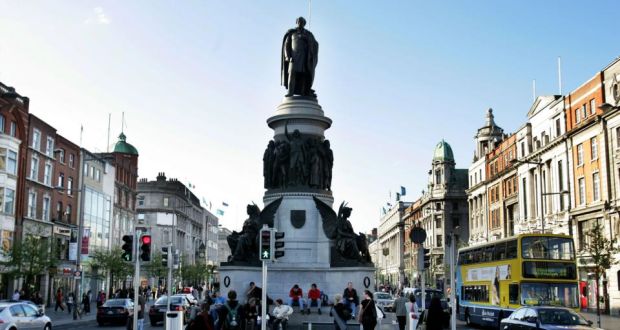

The greater Dublin area has a population of around two million people. This is a fraction in comparison to the amplitude of the world’s largest city, Jakarta in Indonesia, however Dublin ranks only two places above it in a list of the world’s most congested cities. Dublin is also around the 450th biggest urban area in the globe, but lies just above Los Angeles as the 11th most congested city in the world. This is according to the 2025 Global Traffic Scorecard by INRIX, a US company which monitors traffic data.
Out of the top 20 most congested cities, nine are in the USA and four are in Europe. This means that Dublin is Europe’s third most congested city, placing just above Paris.
The data reveals that an average driver in Dublin loses around 95 hours of their time per year being stuck in traffic, in comparison to the time it would take if the traffic were allowed to flow freely.
Bordeaux has a greater metropolitan population of around 1.4 million, and when comparing it to Dublin which has a similar population size, one can see a difference between the levels of investment in transport infrastructure in both cities. For example, Bordeaux has six tram lines with multiple connections between them. There is a dedicated tram line to the airport. It took only four years of construction to bring this to fruition. In Dublin there are two tram lines, the Green Line and the Red Line, and although they come close, they do not meet each other on their journeys.
According to a 2025 report by the New World Wealth, Dublin also ranks as the 49th wealthiest city in the world, outlining that there are around 22,300 millionaires living in Dublin. This could signify that the wealth of a city and the quality of its transport infrastructure do not correlate. However, some organisations like the Green Party argue that it should, as a wealthy city signifies increasing economic growth, and tax revenue too.
By all accounts, Dublin is a city that relies on road vehicles. The increasing delay of bus arrivals and departures and the rise of anti-social behaviour on Dublin’s public transport could turn people to their cars. For the tourist, the inability to pay for a bus fare with a card or a contactless payment method may drive them towards taxi drivers. Anyhow, the car infrastructure is at capacity. Transport Infrastructure Ireland has said that the capacity of the M50 motorway has indeed “maxed out”.
A Senior Sophister Engineering student commented to the University Times that “[he] would rather cycle through a storm than rely on Dublin Bus to get [him] to college on time”. He speaks of the crowded and untimely nature of commuting to college on Dublin Bus routes, especially at prime time hours in the morning and evening.
There are no major public transport projects currently underway. The underground metro plan has been touted for decades, and new Luas and DART extensions are expected to be constructed soon, but no physical work has taken place yet.
It may seem that Ireland is following the economic path of low rates of public infrastructure spending and high levels of private investment. It is debatable whether this will bring Dublin’s public transport infrastructure to the level of its European counterparts.