The Irish language is having its moment. In the Irish music scene, we have mainstream artists such as Kneecap and Khakikid regularly using Irish in their music. Irish podcasts such as Mortharfocloir are becoming more popular, making Irish more accessible in a casual, out of the classroom way, and on top of all of this, President Catherine Connolly is determined to make Irish a more regularly used language in this nation. With Ireland becoming more diverse alongside this resurgence, it only makes sense that youth of colour are also getting involved.
Irish language advocate, Ola Majekodunmi, has spoken at length about the importance of the use of Irish and the sense of community and culture it can help produce. “Seeing the surprise on Irish speakers’ faces when I make them aware of my fluency, and the connection we can then make, feels wonderful. It is moments like this with young, diverse people that will help breathe life and celebration into the Irish language and culture”, Majekodunmi remarked in an article she wrote for the Irish Times in 2020. Emma Dabiri, the Irish author and black rights activist, also spoke on the Tommy Tiernan Show about how she, in an attempt to interact more with her Irishness, became fascinated with the language and had begun her PhD on race interactions in the Irish language. It seems that the use of Irish is being used by them both as a way to connect more with their innate Irish identity.
Furthermore, over the last few years there has been an active effort to make the Irish language more inclusive. For example, a clear and defined phrase “duine de dhath” was put in place to describe people of colour and a dedicated LGBTQ Irish dictionary was created to help Irish speakers from the LGBTQ+ community learn the words necessary to describe their experiences as Gaeilge.

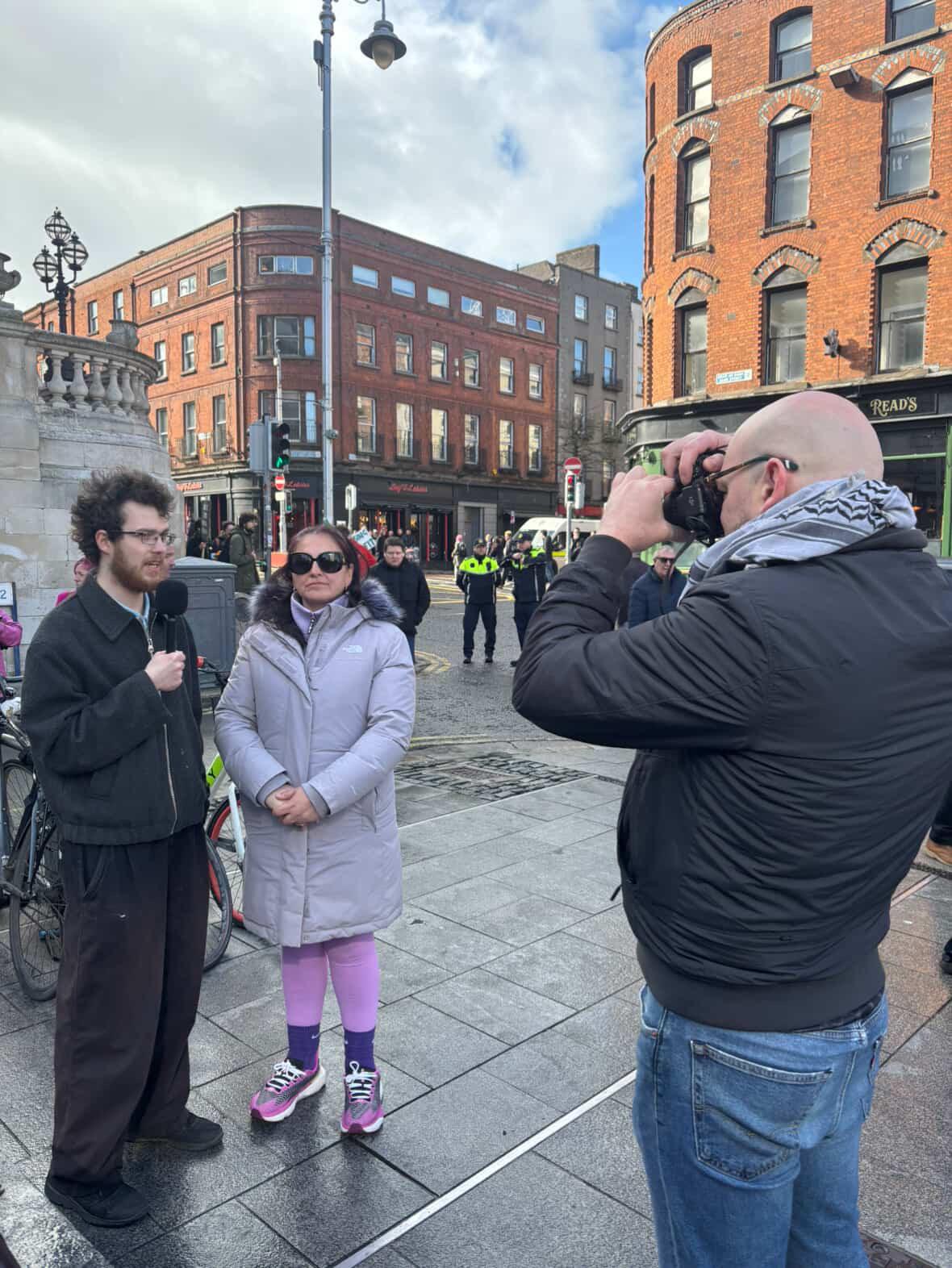
First year Law and French student, Nathaniel Yusuf Peters, who was born in Spain and is the son of Nigerian parents, proclaimed that “the English language is a threat to the Irish language and culture” when asked about whether Irish is important in modern society. “I think Ireland should follow a similar path as Quebec. They should make it mandatory for everyone to speak Irish”, he continued. “Even though it would be really inconvenient for immigrants like me, I think they should still do it. Storekeepers should be required to address you first in Irish and then in English.” This sentiment was shared by fellow first year of Nigerian parents, Samuel Ogunleye. “I remember back in the day, anytime Irish was put in songs it was limited to ‘an bhfuil cead agam dul go dtí an leithreas.’ I’m glad that we’ve moved past that”, he shared. “I’m not sure if it’s just a trend, but if it is, Gen Z should continue following this one.”
Despite their clear shared interest in Irish, neither could speak at a conversational level. When asked about it, they replied with the usual problems. Poor secondary-level education, the lack of entertainment in Irish, and the rarity of finding others who are fluent. However, there seemed to be a deeper issue at hand when questioned further. Both Nathaniel and Samuel come from families which speak the Yoruba language, a west African language spoken in Nigeria, Benin, and Togo, at home and with their wider family. When asked if they would learn Irish before they learned Yoruba, they both replied no instantly. “As much as I am Irish and am proud to be Irish, like I love this country so much, I could’ve been born in France or something. I was born Yoruba, that’s my lineage, you know?” Samuel said. “Its not that one is more important than the other but it feels right to put my blood first.”
“My youngest brother was born nine years after me in Belgium. I would say I am Spanish and he’s never even been to Spain”, Nathaniel continued. “We have the same mother and father but different national identities. It is the Yoruba identity that ties us together.” They both shared the idea that in some way, putting Irish over their home’s identity was wrong. In places like Nigeria, it is very common for those over the age of sixty to have less than conversational levels of English, and this raises the question; how many people of colour have to make the conscious choice between communicating with their families on a level they haven’t been able to before, or speaking Irish? If this is the case, surely this is an unreasonable question to be asking of second-generation immigrants. Is a cheaper pint in a pub in Stoneybatter worth the stories and connection you would lose by spending time learning Irish instead of the language of your family? Most people do not have enough time to learn two languages at the same time, which places these POC in a very confusing position.
This is all without mentioning the lack of representation in the Irish speaking community. Why would black people speak a language which includes the term ‘Fear Dubh’ which directly translates to black man but is used as a nickname for the devil? Even if POC wanted to engage with Irish in university, this would mean they would have to immerse themselves in an all-white community, such as the Cumann Gaelach of Trinity which is entirely white. Many POC are understandably not comfortable with being in all-white communities outside of when it is a necessity. On top of all of this, even with reforms to the Irish language, the boring education and lack of entertaining resources as Gaeilge makes it hard for POC to engage with Irish outside of the classroom.
The experience of the Irish language seems to vary widely among POC communities. POC are not a monolith and the connection between individual nationalities and ethnic communities with Irish varies widely. However, views continue to be very positive with regards to the Irish language and people of colour want to be involved. As Nathaniel said to end our conversation “I think in like fifty years, our kids could be speaking Irish to each other if we protect the language. I want that”.