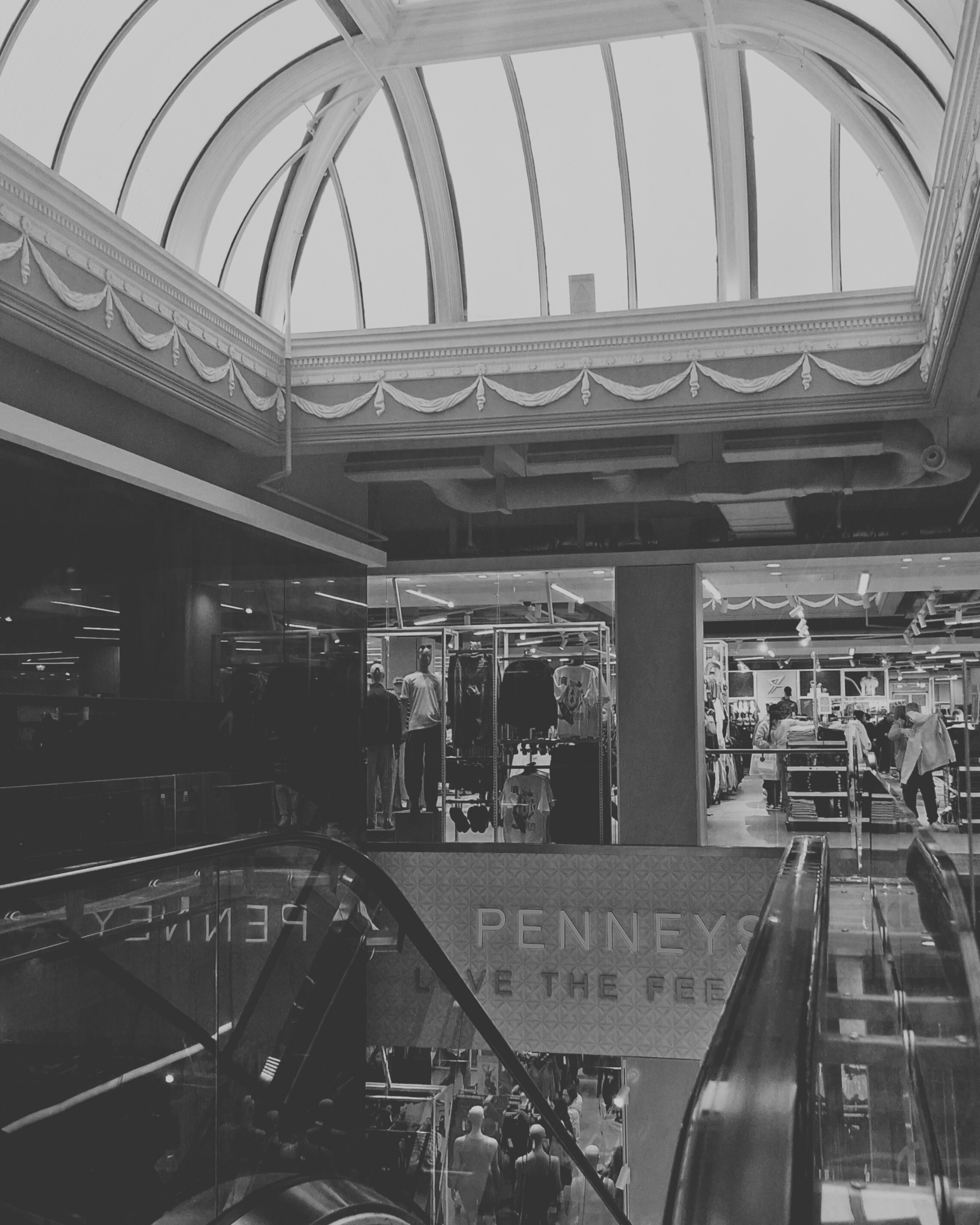

In a world that seems to be pushing further and further into a fashion industry that reflects values of sustainability and eco-consciousness, Penney’s has taken somewhat of a step backwards. Its decision to end its partnership with second-hand clothing outlet WornWell came with shock and controversy. The unlikely duo first came together in 2022, launching WornWell sections in Primark stores across the United Kingdom, and due to its great success, the collaboration made its way over the channel and was welcomed to two Irish shop floors in 2023. The WornWell sections of both the Mary Street and the Dundrum stores offered shoppers the chance to find unique, second-hand clothing pieces from decades such as the 1980s and 1990s. The curated collection of vintage clothing took the heavy lifting out of thrifting, making it the perfect accessible introduction for first-time buyers who were looking to get into sustainable fashion, but might feel out of their depth at a flea market and confused in a charity shop. The outlet served as the environmentally friendly yin to Penney’s often criticised, fast-fashion yang, greatly improving the retailer’s public image on sustainability and responsibility fronts.
Penney’s choice to end the collaboration with WornWell comes as a bit of a surprise, as the popularity of renewable fashion grows daily in Ireland. More and more people are heading into charity shops and perusing the rails in search of special pieces from bygone eras. The popularity of thrifting apps such as Depop and Vinted, the latter having over 200,000 Irish downloads since its launch in November 2024, serves as a testament to the increase in interest towards eco-friendly shopping. So with the growing rise of circular fashion, why would a large retailer like Penney’s not want to capitalise on and encourage this trend? The fast-fashion powerhouse made a statement in relation to the closure, saying, “As we’ve expanded our own product offering, we are adapting our spaces so that each store is best set up to cater to local customer preferences”. However, this statement is confusing, given that the Irish population, now more than ever, is looking for and purchasing second-hand clothing. In reality, instead of blaming the consumer, the fast-fashion giant needs to take accountability and be honest about the real reasons for the closure. Realistically, we shoppers all know that it will only be a matter of time before Penney’s replaces the once recycled and one-of-a-kind clothing section with more of their mass-produced, micro-trending, poor-quality tack. Even the way that Penney’s is removing the WornWell sections, quietly and without announcement, brings about an air of secrecy and shame, almost as if the company itself knows this is not a decision to be morally proud of.
So what can we, the shoppers, do? The obvious answer seems to be to boycott the store entirely, but that’s not a one-size-fits-all solution. As a student myself, I understand how hard it is to resist those low, low prices when finances are in a pinch, and let’s be honest, are we really going to shop anywhere else for socks and underwear? Instead, it’s all about the small adjustments and changes we can make in our buying behaviour. So next time you’re in Penney’s, and you’re tempted to reach for their newest take on a micro-trend, be it polka dots or butter yellow, ask yourself the following questions: Is this something that I could buy second-hand? Are there already plenty of similar items to this on Vinted? Is the quality and craftsmanship of this clothing piece so poor that it won’t survive more than a couple of wears and washes? If your answer to this triad is a resounding “yes”, then I think you know yourself that it’s not something that deserves the privilege of being in your wardrobe. Your refusal to settle for low-quality, poorly-made clothing and accessories, from a brand that pays no regard to the enormous and ever-growing piles of landfill produced from their clothing, is what forces these retailers to step up to the mark. At the end of the day, it is we, the shoppers, who set the standards for our stores, so by supporting vintage stores, charity shops and online thrifting platforms, Penney’s and the likes have to confront their environmental impacts and make changes for good. And who knows, if we all do our part, maybe Penney’s might reconsider their previous collaboration with WornWell and perhaps even rekindle the flame, making sustainable, second-hand shopping more approachable and accessible for all once again.