This Wednesday, February 25th, former President Mary McAleese was distinguished with the Praeses Elit award by the Trinity Law Society (Law Soc).
Mary McAleese is recognised for her “lifelong dedication to bridge building, equality, and compassionate leadership”, which embodies the very spirit of the award, according to the Law Soc Instagram caption. President McAleese served two terms in office, from 1997 to 2011, as Ireland’s second female president and the first successive female president in the world. She is also known as an advocate for human rights and equality, notably as a supporter of access to abortion and for her role in the marriage equality referendum. “President McAleese has remained a powerful and principled voice in public life long after her presidency.”
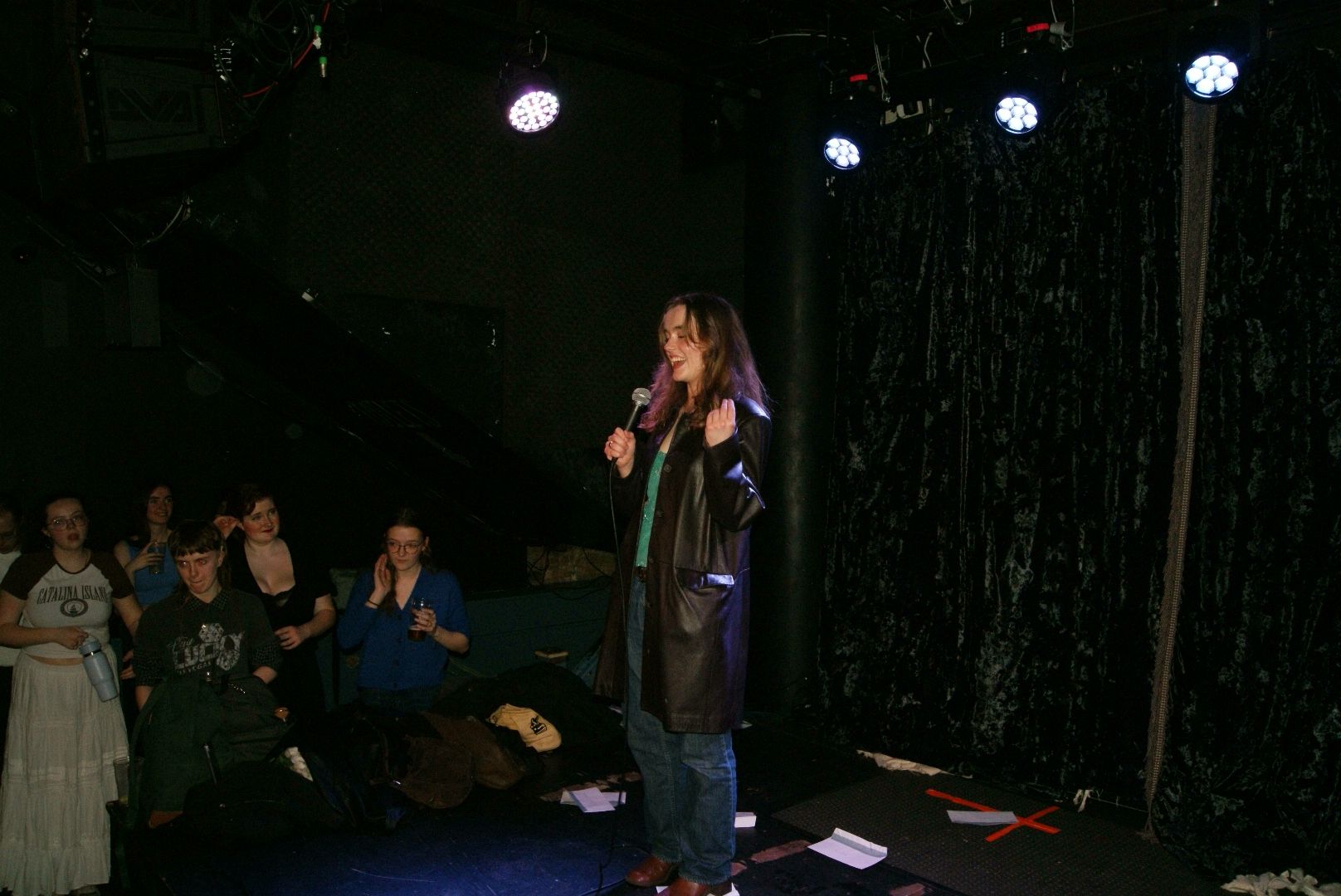
Mary McAleese was introduced by Zoya Kherani, Auditor of Law Soc, and interviewed by Lucy-May Roberts, the Treasurer of the Society.

Roberts began by asking a “lighter question” about McAleese’s favourite book. McAleese responded that her favourite novel is one she was introduced to while studying for the O-Levels, “Flight of the Heron” by D.K Broster. The novel tells the tale of two men on opposite sides of the Jacobite uprising, “it dovetails well with Irish history”, she said. However, what drew her to the book was that the author veiled her name using initials due to prejudice against female writers, calling the book “a challenge to the convention that would have normally imposed on us all male writers”.
When asked about her career in journalism, McAleese noted, “it was an electrifying time in Irish politics – except RTE wasn’t there”. McAleese went on to say that the skills she took away from her career in journalism were “voice projection and the ability to hold a story”. She stated that she initially “had the wobbles”, but that “live television takes them out of you”. Her fast-paced speech “got on the nerves of any audience”, and during her time as a lecturer, she would write reminders to “slow down” on each page of notes.
On returning to full-time education, she remarked, “The older I get, the more I enjoy being a student rather than a teacher”.
“My parents were delighted to have somebody studious.” McAleese stated that her parents did not “get the same opportunity for second-level, never mind third-level education”. “I was fortunate to be born after the introduction of the Butler Act”, she said, referring to the 1947 Education Act, which resulted in free second-level education in Northern Ireland. Speaking of her generation, she used a quote by Seamus Heaney, who had also benefitted from the reform; “[we had] intelligences brightened and unmannerly as crow bars”. “It was a world that wasn’t ready for us.”
McAleese spoke of her childhood growing up in a majority Protestant area of Ardoyne in North Belfast as Catholic, “I grew up with great Protestant friends […] the fracturing of those relationships, but also knowing the potential of those relationships, the goodness that was in people, the yes-ness for consensus building […] I knew that was there because I grew up with it”. When asked about the theme of her presidency, McAleese answered, “Building Bridges”, adding, “it was a distillation of an all-consuming desire to see people who were neighbours be reconciled in a culture of good neighbourness. They were never going to agree politically, possibly never religiously either, but could they at least live without conflict?”
Describing the difficulty of reaching out to the loyalist community during her time in office, she stated, “they were determined never to cross the border, never to engage in dialogue, never to befriend. They saw it as a Trojan horse for a united Ireland”. Her approach was to “just invite people for 14 years, starting with people who would come. […] It was like peeling back onion layers. […] If people came once, they probably came two or three times. […] We radiated out a warmth of hospitality that was building bridges”.
Asked about the fight for equality between the sexes and Ireland never having had a female head of government, McAleese responded, “There are still barriers for women that need to be addressed. The political structures that we have are really still quite old-fashioned”. Noting the lack of a creche in the Dáil as an example. “The numbers [of women in the Dáil and Seanad] are still very modest. […] We’ve a lot of work to do.”
McAleese shared an anecdote from her adolescence to illustrate the changing attitudes towards women’s education and careers. A parish priest had asked her what she would like to do after school, to which she responded, “I [am going] to stay in school and do A-levels because I [want] to go to law school and be a lawyer”. The priest answered, “You can’t because you’re a woman and you have nobody belonging to you in the law”. Her mother was enraged, stating that his language “was quite unhelpful”. McAleese remarked that this was the only career advice she had received from either parent.
When asked about what students could do to progress equality, she answered, “this generation has to be very conscious of its obligations to equality […] We are seeing the value of working with the genius of men, the genius of women harnessed together, and our country has never done better”. McAleese would have advised her younger self “to call out misogyny where I hear it and see it” and to put people using such language “to the pin of their collar to explain. And in explaining, try to expose the lack of care for the other, the lack of respect for the other, the lack of understanding of what true equality means”.
Responding to a question about the Catholic Church, McAleese said, “Have I lost trust? 1000 per cent yes.” She stated that the Church is made up of 1.4 billion members, some of whom do “great work”. However, the damage done by the governance structure to her trust is not rebuildable during her lifetime. “Top-down reform” is needed, but the Church “is not good at self-critiquing”.
Speaking on negativity in Irish media, McAleese said, “We are fortunate to live in such a sane democracy. And that our democratic structures and our voting doesn’t actually produce autocratic, moronic demagogues, which is amazing”. She credits this to the “checks and balances” in Irish government structures. However, she noted the impact of social media on “those who are in political life and their families. It was never easy, but it is phenomenally more difficult […] I wonder, does that then affect the calibre of people who come into politics?”