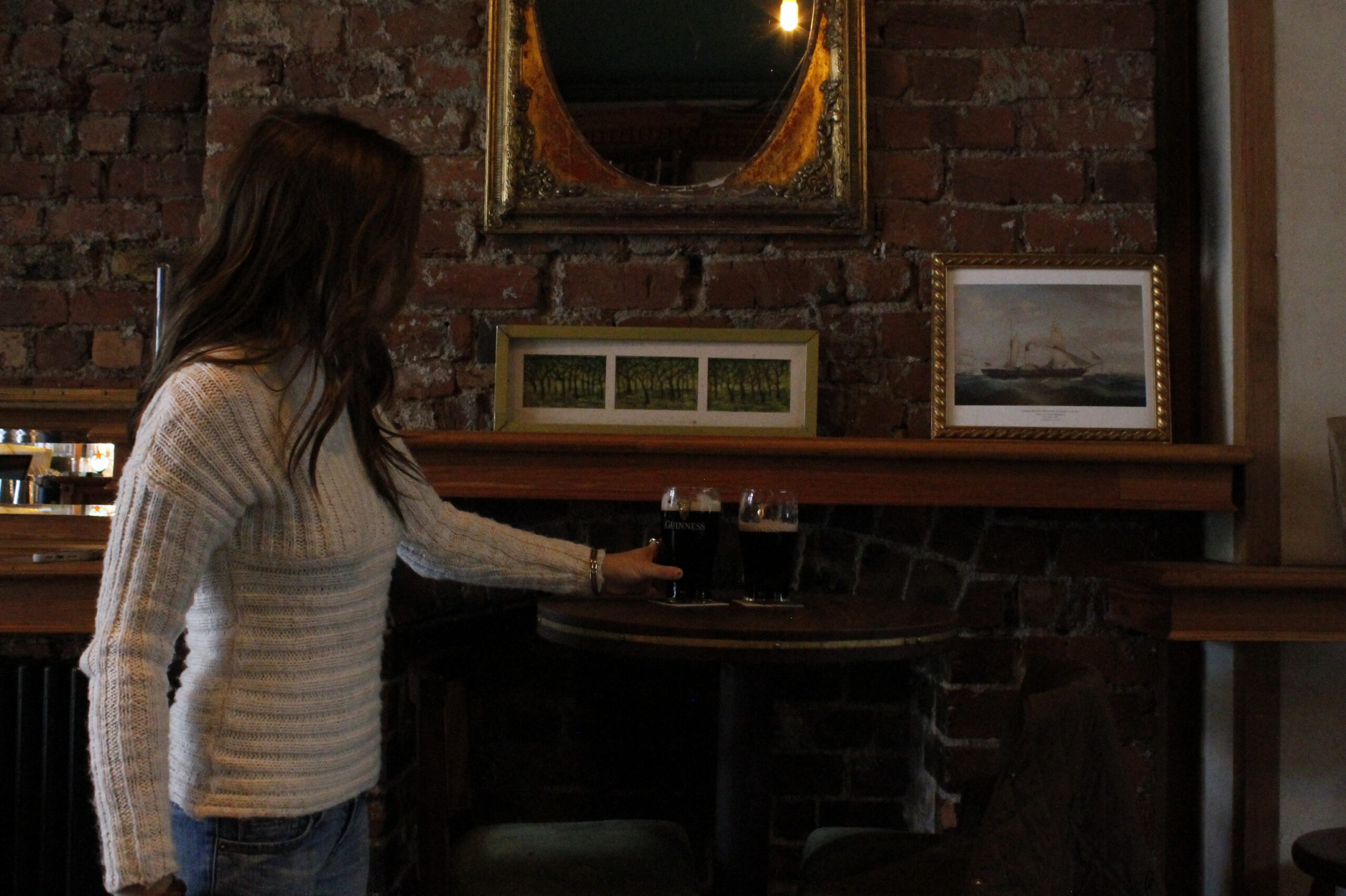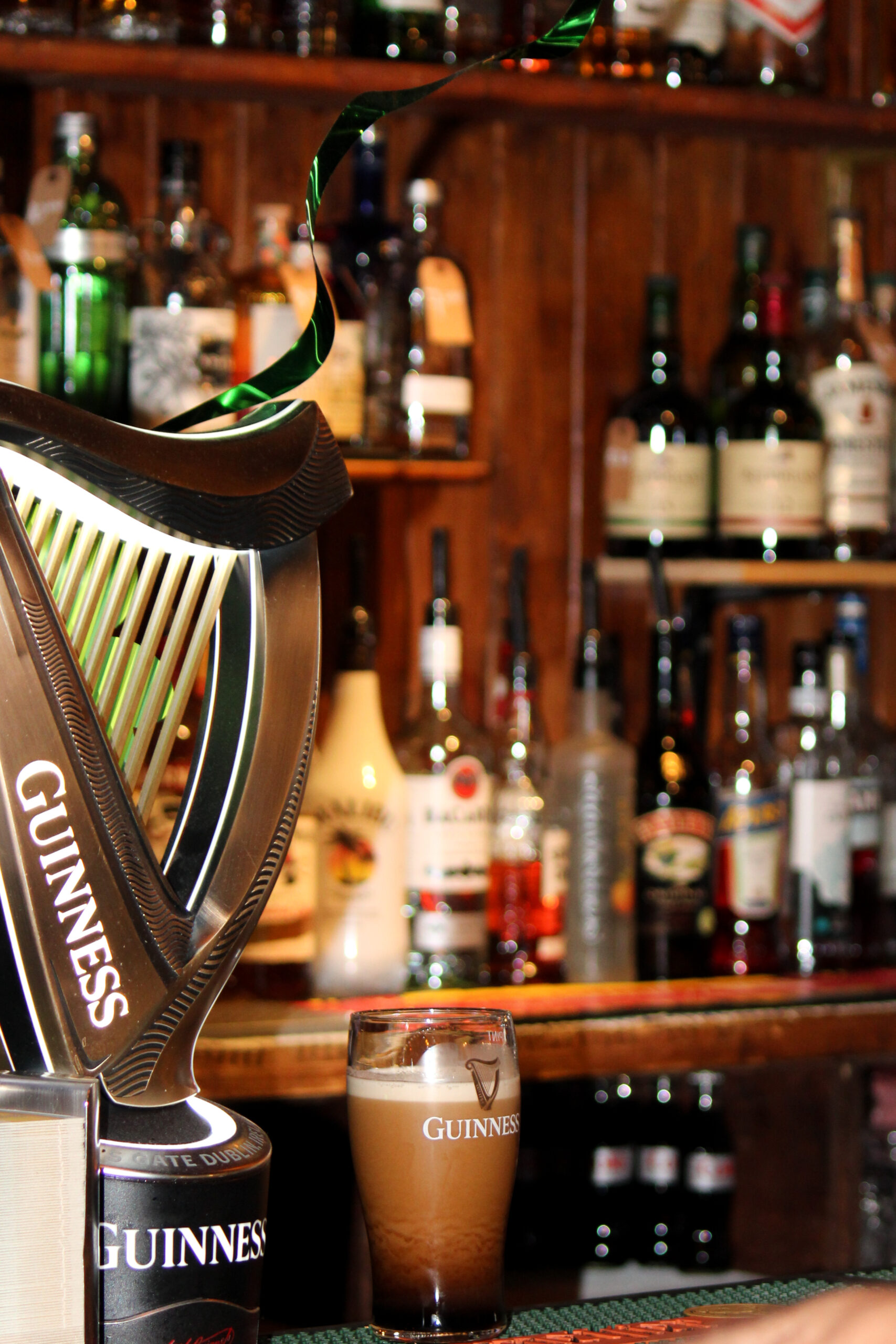
Every 50 seconds, in the Dublin Airport in 2025, an Irish breakfast was ordered and, alongside it, a total of three million cups of tea were poured. Neither should not seem shocking, who does not love a traditional Irish breakfast and cup of tea when travelling? But a recent statistic published by Dublin Airport Authority (DAA) would suggest that the definition of an Irish breakfast needs to be revisited. Perhaps Guinness is the new Irish breakfast. 1.2 million pints of Guinness were recorded as being poured, almost half the amount of tea. Whilst this may seem surprising, consider that the airport bars open at 4:00am, compared to the opening times of 5:00am or 5:30am in Heathrow Airport. But early bar opening times alone cannot explain such a high consumption of 68,1913 litres of Guinness, can it? There are typically four categories of people who drink in the airport with supporting psychological reasons behind it.
First and second are the smallest categories. First, is the solo business traveller who has time to spend and no particular interest in working, and the drink is also enjoyed at their company’s expense. Second, are travellers in transit who are in a time zone difference; for all anyone knows it is 3:00pm for them. But when you are at the airport for your early morning flight (having barely been awake for two hours) and departing from your home country, the time zone excuse no longer fits.
The third and fourth categories are where the majority of the airport pint-enjoyers would fall into. Third is the festivities group: either the individual, couple, family or friend group who are using airport pints to mark the start of their holiday or celebration. Alcohol signals the transition from one set of rules to the other. Edward Slingerland, author of Drunk: How We Sipped, Danced, and Stumbled Our Way to Civilization, explained how, on a small scale, we use alcohol at the end of the workday or workweek to transition to leisure time at home. Airport drinking is a larger scale example of that, “a way of transitioning from our normal everyday lives to whatever unusual thing we’re off to”. It is a pint of excitement, a pint to mark the start of the journey which has been planned in advance and the traveller has been looking forward to.
Fourth is the anxious traveller, who is nursing a drink, not so much to celebrate. as to loosen their anxiety about flying. This category extends to passengers who may not even be anxious about flying, but more to reconcile the complete lack of control one has in the airport. Slingerland explains how alcohol helps people relax into passive helplessness, feel more calm about the things you cannot control: “ah sure look, our flight is delayed but we’ve had a pint and so we’ll have a couple more – nothing we can do!”. This theory finds its roots planted in two psychological gardens: neurological triggers and liminal space theory.
A day of air travel induces dopamine fluctuations between anticipation and relief. The day before travelling cortisol begins to climb as travellers pack and prepare, with studies showing that 70 per cent of travellers have interrupted sleep the night before a flight because of underlying anticipation for the travel day ahead. Cortisol peaks en route to the airport, during check-in, bag drop and through security. Once successfully passing through security, cortisol drops sharply and dopamine floods in. This heightens emotional receptivity and primes the brain for reward seeking, resulting in a reward-quenching pint. On the other hand, is the liminal space theory. The theory is that airports place their occupants in a state of temporal and geographic ambiguity; you are not at home, but you have not arrived at your destination. The effect of this is to reduce resistance to spending; evident in the splurging in the duty free, the journal of consumer psychology found travellers in transit exhibit a 37 per cent higher willingness to pay for luxury goods; this is evidenced with 43 tonnes of Toblerone and 409,000 litres of whiskey being purchased in Dublin Airport over 2025. This liminal space is uneasy to be in: it is a state of uncertainty and you have a complete lack of control as to when you can leave it, and passengers need to reconcile this with the control they exert over their daily lives – the best way to do this, is to indulge in an alcoholic beverage.
Airlines have complained about the airport pint culture, as the flight attendants are the ones who ultimately deal with any over ambitious drinkers; the airports just booze them and board them. Ryanair have called for a two-pint limit on passengers waiting to board, after reporting a 600 per cent increase in on-board disruptive incidents, all of which were related to alcohol consumption prior to boarding. However, a Dublin Airport operator stated that the drink limit is not necessary as the majority arrests of drunk passengers occur at check in rather than inside the airport, and that it may be more of a concern in airports where alcohol is cheap. So, to many there is no harm in an airport pint or two (or three), but the consequences of those who overindulge are faced by airline staff and other passengers rather than those serving the pints. Something to think about.
Overall, it is a staggering statistic. Perhaps people prefer Guinness with their hashbrowns, are taking more celebratory trips or perhaps we are all much more anxious travellers than we realise. Thank Guinness a pint in the airport does not count!