
From February 24th to the 27th, the Irish-language play Múcín was staged as part of an art project that brought together culture, language, and contemporary issues in one powerful performance. Even before the play began, something was clear: this was more than just another play.
Looking around the room, there was a visible sense of pride among the audience. It is difficult to define exactly, but in the expressions on people’s faces, you could sense how meaningful it was for them to see a modern story performed in Irish. The language itself felt central to the experience.
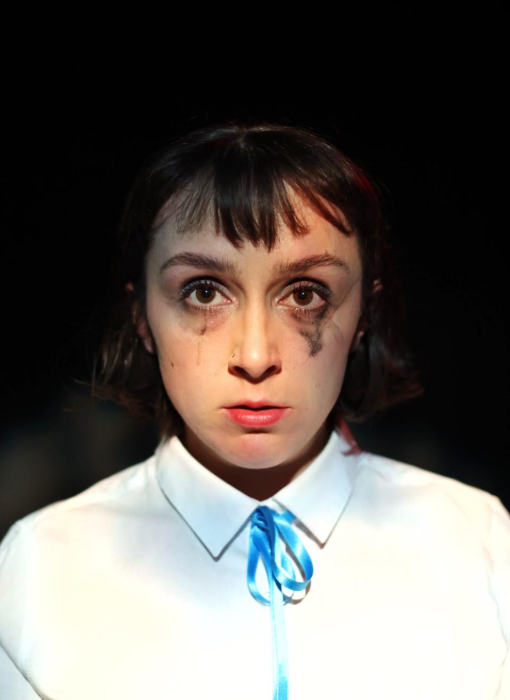
When the play opened, the atmosphere quickly shifted into laughter. The audience responded immediately to the humour woven into the storytelling. Siofrá Ní Eilí delivered a compelling performance as Mercy, a young woman recounting the breakdown of her relationship with her girlfriend during college. Her story unfolds with honesty and sharp wit, moving from personal heartbreak to her experiences working in a chip shop in Offaly. The character feels really flawed, vulnerable and deeply human.

Produced by Lemon Soap Productions, the same small production house behind Ballybridewater, Múcín proves that strong storytelling does not require a large-scale production. The staging is focused and intimate, allowing the writing and performance to carry the emotional weight of the piece.
Beyond the brilliant performances of Niamh Murphy and Siofrá Ní Eilí, what truly stayed with the audience was how real the play felt. It doesn’t lecture the audience about “issues”. Instead, it shows them through the messy, complicated life of a young person trying to figure things out.
The play touches on eating disorders, mental health, violence and the confusion that often comes with modern relationships. But it doesn’t present these topics in a heavy or dramatic way. They appear the way they do in real life sometimes hidden behind jokes, sometimes surfacing unexpectedly, sometimes brushed off with sarcasm.
There were moments when the audience was laughing loudly, and then suddenly the laughter would soften. You could feel the shift. It is that uncomfortable recognition when something funny hits a little too close to home. That balance between comedy and vulnerability is what makes the play powerful. It allows people to relax, to laugh, and then gently forces them to think about what they just laughed at.
Although performed entirely in Irish, the production ensured accessibility by providing English subtitles through a QR code displayed at the beginning of the show. This small but thoughtful addition allowed non-Irish speakers to follow the story without taking away from the authenticity of the language on stage.