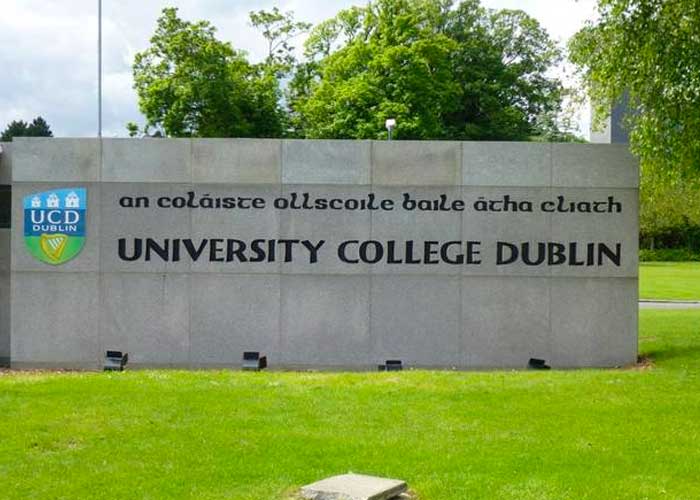

The recent handling of an incident of sexual assault in University College Dublin (UCD) has been met with immense scrutiny and outrage. The questions this news has raised have been plentiful. Does society, and indeed colleges, know how to help tackle this issue? What steps are being taken to protect people from incidents similar to the case in UCD? It has also reignited the discussion about the Trinity College Dublin Students’ Union (TCDSU/AMLCT) campaign last year when effigies were placed around campus during Sexual Violence Awareness Month.
TCDSU’s current President, Grace McNally, spoke to the University Times on this issue and about how the Union hopes to help combat sexual violence on campus. One of her primary initiatives during her tenure has been setting up a taskforce on sexual violence. When asked what her goals were with this, she responded that “the primary goal of the taskforce is to monitor campaigns or actions that revolve around sexual violence. This taskforce implements accountability and transparency around any sensitive campaigns that we may be planning as a Union. There is a strong communication mandated between Union Forum and the Sexual Violence Taskforce to create an open, safe ability to continue sensitive but necessary campaigns. The discussion and action around sexual violence should never be silenced and this taskforce implements that”. This response highlights an impetus to avoid insensitive and inappropriate campaigns, such as the one that was organised last year and force the Union to take the voices of victims seriously.
In response to the campaign last year, McNally stated, “the effigies showed the Student Union how to move forward in a more proactive way around Sexual Violence campaigns. Students voiced concerns and opinions that have since changed the way we lead campaigns surrounding sexual violence on Trinity’s campus and that is okay. In fact it’s good, it’s why the Student Union always wants students to speak out about what they want to see. We will always make sure students’ voices come first. Sexual Violence campaigns will not be stopped because of this, they will still go forward. We will not be silent on this matter. We will continue moving forwards for survivors and standing up for them always.”

There are also serious questions about how Trinity College supports victims and handles incidents of sexual violence. On this, McNally said, “College has no right to be silent on this issue. People suffer from sexual violence every single day. They are left alone with no resourcing and no supports and no matter what, college is still silent. Higher institutions have responsibility over every single one of their students. Students deserve to be given immediate, trauma informed support with transparent processes. Proper training around sexual violence such as bystander training or disclosure training are things that college should be implementing. Mandatory consent training should be put in place. College should be an environment where rapists are uncomfortable, not survivors. Our campuses should be safe spaces for all survivors, not rapists.”
Trinity College and TCDSU have a number of ways in which people can communicate and report issues of sexual misconduct. McNally said, “there are options to make DR&C complaint forms through emails (drc@tcd.ie). This can be a long process of a screening panel and a formal investigation. There is contacting Trinity’s Campus Security at (01) 896 1999. There are the Gardaí at 999 or 112. There’s also the Speak Out tool which allows secure, anonymous and confidential reporting. There are student ambassadors on campus representing Speak Out also who are trained by Speak Out. Apart from that all other forms of support for assault on campus are external such as Niteline, a student helpline, Dublin Rape Crisis Centre or the student counselling service. There is no form of immediate trauma informed support that Trinity does give out or have as an option for students. As in line with a lot of student life, it is unfortunately up to us to know what to do.”
From speaking with McNally, it does seem as though TCDSU are indeed making considerate steps to assist students in feeling as though the College is taking sexual violence seriously and with a victim-centred approach. There does appear to be work still to be done by Trinity College in providing immediate help and a better counselling service to protect and help victims.