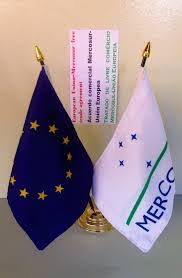

Recent trade agreements between the European Union, Mercosur, and India have been presented as landmark achievements; symbols of a continent eager to expand its economic reach and secure its place in a more uncertain global order. Yet, from an Irish perspective, the outlook is less reassuring. These deals can be assessed to serve primarily the interests of large exporters and established multinational firms, while placing more vulnerable sectors and communities, such as the agricultural sector, early-career workers, and students, in a more exposed position. In Ireland, where the economy is already unevenly structured, and housing, education, and labour markets are under significant strain, these agreements risk compounding existing weaknesses rather than relieving them.
The EU-Mercosur agreement is especially contentious. By lowering tariffs on agricultural imports from Brazil, Argentina, Uruguay, and Paraguay, it introduces new competitive pressure onto a European market where farmers already operate on ever-thinner margins. For Ireland, where beef and dairy production remain central to rural livelihoods, this is not an abstract concern. Irish farmers must meet high environmental, animal welfare, and traceability standards that increase production costs. Competing against imports produced under less demanding regulatory systems creates a sense of structural unfairness. While EU negotiators point to safeguard clauses that could slow import surges, these are reactive tools that do little to offset the long-term uncertainty farmers face when planning investments, borrowing, or succession within family farms.
A broader look at the environmental impact deepens scepticism: the EU promotes itself as leading in green initiatives, yet expanding agricultural trade with regions linked inextricably to deforestation sends a contradictory message. Even if not all production is environmentally harmful, this perception of inconsistency harms public trust. Economically, the projected gains for Ireland from this deal are modest and concentrated in limited export sectors, while the risks are geographically and socially concentrated in rural communities. When benefits are diffuse and long-term, but costs are acute and local, political resistance should not come as a surprise. The deal reinforces a feeling that trade policy is shaped at a distance from the communities most affected.

The EU-India agreement, touted as the “mother of all [trade] deals” by European Commission President Ursula von der Leyen, presents a different profile but similar concerns. Tariff reductions will create new opportunities for certain exporters – the news of the agreement will be welcome by the Irish spirits and pharmaceutical industry – but these advantages primarily favour large firms that are heavily integrated into global markets. Smaller businesses generally lack the scale and resources to break into complex foreign markets, limiting the practical reach of such benefits. Meanwhile, the labour mobility provisions, which, while more limited than some headlines would suggest, feed into other anxieties. Ireland is now the only country in the EU which provides access to a natively English-speaking population, and India maintains English as an official language – for Ireland, this presents concerns regarding job competition in an economy where many young people already face major challenges securing stable and well-paid work. Claims of skills shortages coexist with the uncomfortable reality that many capable graduates face underemployment or precarious contracts.
For students, indirect effects have the potential to be significant. University places in Ireland are already competitive, and postgraduate pathways are increasingly seen as a necessity to remain employable. If trade agreements make it easier for multinational firms to recruit globally, without parallel expansion of domestic opportunity, local graduates may find themselves competing in an even more crowded and stifling labour market. This dynamic could suppress wage growth and weaken the bargaining power of employees in their early career: needless to say, the potential risks for current students and those seeking work are significant, and more young people may be pushed towards migration or unstable living conditions.
Taken together, these agreements reflect a model of economic policy that prioritises market access and corporate flexibility over social balance. While unlikely to create immediate crises, and while some sectors will undoubtedly see benefit, the distribution of these benefits appears to be narrow, while burdens fall on groups already struggling with uncertainty. Without stronger domestic policies of support, the gains from these deals will feel remote to many.