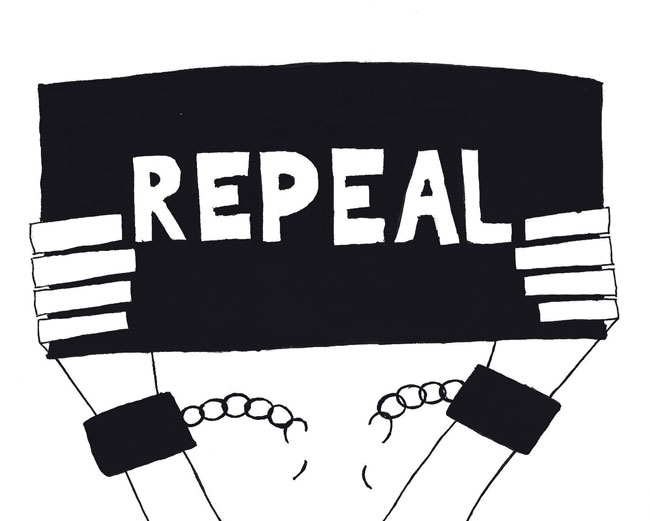

The recent passage of Sinn Féin’s bill abolishing Ireland’s mandatory three-day abortion waiting period has been celebrated as a significant step forward for reproductive rights. However, its success also brings to light the uncomfortable truth that while Ireland may present itself as a modern nation, its treatment of women’s reproductive rights remains rooted in its legacy of conservatism. Only weeks earlier, the Reproductive Rights (Amendment) Bill, championed by Social Democrats leader Holly Cairns, was defeated in the Dáil despite proposing far broader reforms to Ireland’s abortion legislation. While Sinn Féin’s bill addresses the patronising three-day waiting period, the Social Democrats’ proposal sought to build upon legislation introduced during the Repeal The Eighth movement in 2018 by also addressing the criminalisation of healthcare professionals and other barriers to abortion access. Though the removal of the waiting period should be welcomed, we must ask ourselves why, eight years after one of the largest feminist movements in Irish history, women’s political priorities are still struggling to translate into legislative change.
The struggle for reproductive autonomy in Ireland began in 1983, when the Eighth Amendment, backed by the Catholic Church and the Pro-Life Amendment Campaign, was inserted into the Constitution, embedding religious ideology into Irish law. This cemented Ireland’s absolute abortion ban by insulating these laws from political reform and ensuring that any future change would require a nationwide public vote. The stringent wording of the Eighth Amendment was soon challenged when the State attempted to prevent a 14-year-old rape victim from travelling to England for an abortion despite the risk of suicide. Public outrage and a subsequent Supreme Court ruling ultimately permitted her to travel, revealing a contradiction at the heart of Ireland’s abortion policy: while the State vehemently prohibited abortion domestically, it relied on women travelling abroad to obtain the care it condemned. By introducing partial reforms which allowed women to leave the country for the purpose of abortion, the State officially recognised the harrowing and potentially life-threatening struggle they were inflicting on Ireland’s women, while simultaneously appeasing the increasing pressure from Catholic institutions.
The closure of the last Magdalene laundry in 1996 marked the beginning of a secularising Irish society, which could finally move away from the shroud of guilt and shame that cloaked female sexuality. However, despite a noticeable shift in public attitudes, it took the death of Savita Halappanavar almost two decades later to expose the devastating cost of legislative inertia and spark a widespread call for justice. Her tragic death, which occurred due to sepsis after doctors were legally prohibited from intervening with an incomplete miscarriage under the Eighth Amendment, was the catalyst which propelled the Repeal the Eighth campaign into action. The rise of the repeal movement was met with incredible backlash from Anti-choice organizations, which polarised public opinion to an extreme which had never been seen before among Ireland’s voting body. In the weeks leading up to the vote in May 2018, Ireland’s rural towns and urban cities alike transformed into a landscape of political warfare and manipulation, with graphic posters assaulting the vision at every turn and an influx of powerful digital campaigns backed by anti-choice US organisations. Nevertheless, a wave of support for the Together for Yes campaign swept across the country, uniting communities in recognition of the generations of women who had been forced to flee Ireland for healthcare. For many, the vote represented an opportunity to ensure that future generations would not suffer the same ostracisation. On the 25th of May 2018, that sentiment translated into action as the public took to the polls, with 66.4% voting in favour of repeal, delivering a landslide victory and marking a historic turning point for Ireland.

Though the passing of the Health (Regulation of Termination of Pregnancy) Act 2018 distinguished a new period of freedom and autonomy for Irish women, the final draft was a far cry from the original outline proposed by the Abortion Rights Campaign (ARC). The rollout of abortion services was grossly misdistributed, severely lacking in rural areas, while more severe restrictions such as the 3-day “cool-off” period required anyone seeking an abortion to attend two separate consultations with at least 72 hours between. This practice had no medical foundation and was introduced solely to assuage conservative concerns by asserting control over the process. In practice, it disproportionately impacted marginalised and vulnerable women already facing barriers to healthcare, such as those experiencing financial hardship, domestic abuse, coercive control, or those living considerable distances from a provider. While Sinn Féin’s recent legislation has finally moved to abolish this requirement, many of the other restrictions introduced in 2018 remain in place and continue to undermine the promise of accessible reproductive healthcare.
The legislation’s most threatening shortcomings are in the details – or lack thereof – outlining termination beyond the 12-week threshold. An abortion outside of this period is only permissible under the most critical of circumstances, provided that two doctors certify immediate risk to the life of the mother or foetus, or where the foetus will die within 28 days of birth. Yet the Act provides no clear definition of what constitutes a “fatal foetal abnormality”, nor any guidelines to determine with certainty whether a foetus will die within the extraordinarily brief timeline. This ambiguity places healthcare professionals in an impossible position, particularly given that providing care may open them up to criminal prosecution and a prison sentence of up to 14 years. The result is a culture of defensive medicine, in which doctors are encouraged to prioritise legal protection over clinical judgement for fear that a decision made in good faith may later be challenged. This became abundantly clear when Dublin’s Rotunda Hospital reported that they would be conducting abortion services before the 11-week mark instead of the 12th, in an effort to protect their staff from criminal liability, a stance which was quickly shut down by the HSE.
These restrictions stand in direct opposition to the World Health Organisation’s (WHO) recognition of abortion as an essential component of healthcare and its efforts to reduce the 45% of abortions worldwide that are performed unsafely, placing millions of women and girls at risk each year.
This brings us to the recent developments in the Dáil surrounding abortion reform. Earlier this year, the Social Democrats introduced the Reproductive Rights (Amendment) Bill, a wide-ranging proposal that sought to abolish the mandatory three-day waiting period and revise the restrictive criteria governing abortion in cases of fatal foetal abnormality. The Bill was built around a comprehensive analysis of the Health (Regulation of Termination of Pregnancy) Act 2018 by barrister Marie O’Shea, which was published in 2023 and identified major flaws in the wording and operation of the Act. The Bill was unfortunately defeated in the Dáil with 85 votes to 30, a stark contrast to a similar bill which had been defeated mere months before by just 2 votes. This evident backpedalling can potentially be attributed to the recent rise in right-wing nationalism that has begun to sweep the country, in an attempt to shut down any form of social progressivism. The vote produced an unusual contradiction for Fine Gael leader Simon Harris, who had commissioned O’Shea’s review of the 2018 Act but ultimately voted against legislation that sought to implement many of its recommendations. However, the biggest surprise came from Sinn Féin’s decision to abstain, instead introducing their own abortion bill to address exclusively the 3-day wait, in a manoeuvre that can’t help but feel underwhelming from a party that was integral to the repeal campaign. Still, the change is undoubtedly a positive development and will remove a barrier that campaigners, healthcare professionals, and advocacy groups have criticised for years.
The issues outlined in the Social Democrats’ defeated bill are merely the beginning of a long list of restrictions that women in Ireland face surrounding reproductive healthcare. O’Shea’s review of the Regulation of Termination of Pregnancy Act 2018 uncovered an astounding level of discrepancies that have since been ignored by the government, including the disturbing discovery that some non-providing GPs have been directly contravening the law by disrupting arrangements for transfer of care for abortion services, and withholding/presenting misleading information about access to the provisions, without any statutory consequences. She also highlighted an ongoing issue affecting both access to free abortion services and free contraception, which is only available to those who have a PPS number and therefore excludes asylum seekers, migrants, and those living in Ireland on a temporary basis. Her expert analysis advocated for addressing these issues and many more, as well as efforts to help educate the people of Ireland to make them aware of the providers of abortion services and 24-hour clinical advice services available, as a matter of human rights.
This lack of care and support for such a prominent issue stems from a clear pattern of inertia and unwillingness to progress when it comes to addressing problems affecting women. Ireland falls behind other EU countries in almost every sector of gender equality, ranking 22nd out of 27 for the number of women in government – only 23% of the Dáil – and continuously lagging near the tail end of progressive movements, such as abolishing the outdated marriage bar, legalising divorce, and the enforcement of equal pay. Time and time again, the government has shown the women of Ireland that they are not a priority and that deviation from old traditions will be a slow and painful endeavour. However, new bills will continue to be proposed, and, outside of the Dáil, various organisations are working tirelessly to establish critical infrastructure to strengthen abortion services around the country. Real change cannot come from referendum results alone. It must be reflected in the legislation that follows, and eight years after the Repeal, the government has a responsibility to deliver the reproductive freedom that the Irish people overwhelmingly endorsed in 2018.