
The poet T.S. Elliot once said that “good writers borrow and great writers steal”.
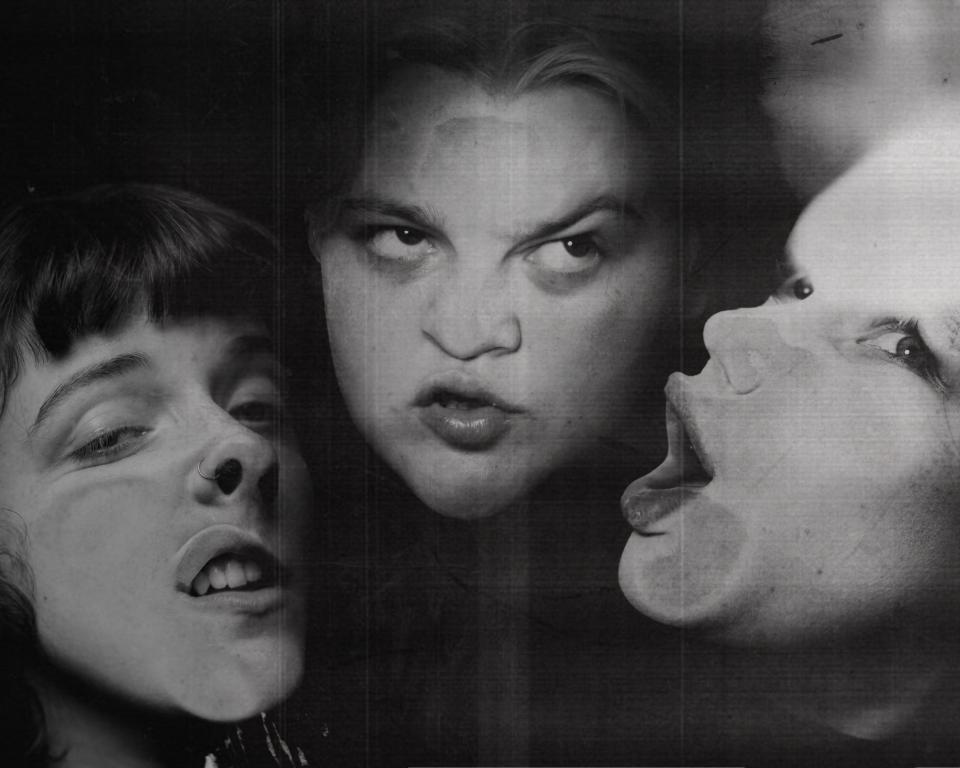
The newest play from Gift Horse Theatre, Don’t Copy Me (Copy), played at this year’s Dublin Fringe Festival, deciphers what makes an original play and pushes the inquiry even further – can a play be original?
Limited by the framework of rigid Samuel Beckett copyright law, stage directions and gendered characters, an all-women theatre troupe find that they cannot perform to the extent that they want to in a Samuel Beckett play.

Why should they act out a Beckett play anyway? Haven’t Beckett’s plays been performed too many times already, following his strict and methodical guidelines, so that no one production of the same play can really be that different from the other? But then, hasn’t every life scenario been played out before in different ways? Why should Beckett’s plays be an exception? Perhaps Beckett, the prolific and glamorous playwright, lived a life as prolific or as glamorous as the next man. Beckett’s plays discuss something fundamental about the human experience, but so does the fella down the road, right? This is what the girls discuss, wanting to use a Beckett play as a popular and sellable building block to construct a different message. An original message. If such a thing exists.
The director, Doris de Vries, certainly provides us with an original play, of course based on already used thoughts, in the way that every original thought is a product of our environment and society in which we are based. That is the point.
This is an experimental play. There are a lot of special effects, cut scenes, the experimental use of lecterns, emails, Beckett imagery, and real-life copyright infringement scenarios, portalling Gift Horse Theatre to the fiction of the play. While this overload can definitely cause confusion to the narrative, perhaps causing a loss of resonance in the message, it also adds to the uniqueness of the performance and energises the audience and the atmosphere. There were certain things that fell short of good stage direction in this performance – the main set was skewed to one half of the stage, therefore negating part of the audience to a full and rounded exhibition. One scene involved a spotlight which forced the actors, playing romantic partners of Beckett, to speak quite rapidly to get their story across, before the spotlight moved on. Unfortunately, sometimes too rapidly, resulting in comprehension difficulties.
The script was written very wittily, and the performance was peppered with jokes and casual slagging throughout, causing the audience to burst into laughter regularly. And that is something that not every production can do.