
I have always approached “TikTok artists” with a high level of skepticism; from their claims of writing “the song of the summer” and their repetitive clickbait promotions of their EPs. When my friend offered me her extra ticket to Mon Rovîa’s concert in Vicar Street on January 20th, however, I had no idea that the musician would quickly go from an infrequent visitor of my Instagram page to someone whose lyrics I could recite from memory.
The musician, Janjay Lowe, who is currently carrying out a nearly sold-out European tour, first rose to popularity on TikTok when his songs Crooked the Road and To Watch the World Spin Without You started making the rounds on “For You” pages. His political ballad Heavy Foot, from his most recent album Bloodline, has brought particular attention to his music online, placing him within the resurging genre of “folk protest music”.
Mon was originally born in Monrovia, Liberia during the First Liberian Civil War. Following his mother’s death, he was adopted by a missionary family and brought to the United States. Having settled in Chattanooga, Tennessee, his Appalachian sound took root and mixed with West African influences to create his “Afro-Appalachian” folk music. His songs are laced with personal and political narratives from his birthplace and the US, often exploring themes of mental health and his struggles with survivor’s guilt after leaving his siblings in Liberia.

The night of January 20th started off rather unpromisingly. My friend and I had managed to each spend €3.50 on a single Fanta Lemon in the Vicar Street bar, aimed at rejuvenating ourselves from a long day of lectures. Along with this, the venue was quickly filling up with what appeared to be middle-class 50-somethings, rather than the indie, underground college students I was promised.
After finding a place to plant our feet in a pit very different from the Boland one I had cooped myself up in the previous few hours, attitudes continued to turn sour. The fatigue of the college day had suddenly begun to manifest itself into irrational frustration at the pair of tall, glamorous older women who were blocking our view and the two teenage boys exercising their lack of spatial awareness beside us.
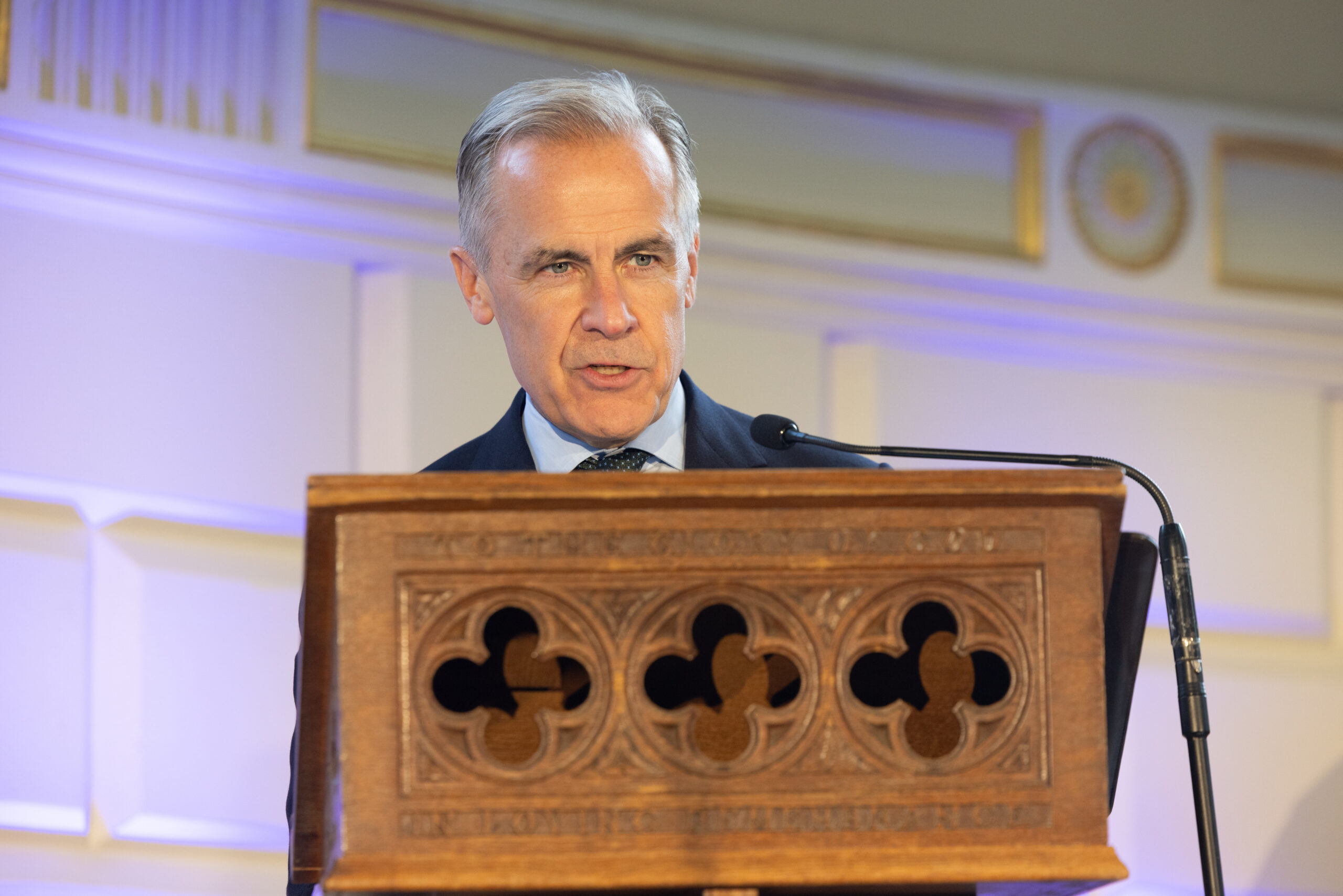
When the Liberian-native first stepped on stage to perform his calming opener Jester in the Bowl, however, I felt a spiritual shift in my demeanor. Mon opened with an invitation to the crowd to allow themselves to feel whatever emotions crop up throughout his 17 song set – a sentiment often performatively echoed by big artists in the attempts of connecting with mass stadiums of fans, but something that felt entirely genuine from the folk artist to this small mish-mashed crowd.
The night of musical storytelling unconventionally began on a darker note with Mon’s hauntingly beautiful Day at the Soccer Fields recounting his return to Liberia as an adult. The singer candidly sang of his encounter during this trip with child soldiers: “I remember it / Like it was yesterday / AK-40 pointed at my face”, and his confrontation with this life that he narrowly escaped: “As my body shakes / I feel my history / I’m terrified”.
With a dim halo above his head, provided by mellow mood lighting and a bird emblem lighting design, Mon moved from an exploration of a childhood overtaken by conflict into a celebration of resilience and perseverance. The contemplative Little by Little was followed by the train-chugging rhythms of Old Fort Steel Trail as Mon advised the crowd against “circling” traumatic memories and robbing yourself of joy. While fighting back tears and sharing tissues with my friend, I soon felt a strange affinity to every member of the phone-less crowd. Suddenly, I was sharing an ethereal emotional connection with the pair of older ladies I had previously criticised through our joint sobs and rhythmic sways.
After having delved into a search for his ancestral origins in Whose Face am I and Bloodline, the concert reached a joyful climax with Field Song. When Mon invited two Irish musicians he had met the night before at The Cobblestone to join him for this buoyant tune, I was suddenly reminded of a Leaving Cert Music essay I had once written about the influence of Irish traditional music on Appalachian music. The Irish banjoist and guitarist seamlessly added joyful ornamentation to the improvised performance, and the crowd soon broke out into a customary “Olé, Olé, Olé” chant before Mon’s encore.
Having previously encouraged the crowd to “put the past down” in Old Fort Steel Trail, Mon began the concert’s final act by warning against “painting over the past” in Somewhere Down in Georgia – a contemplation on the American South’s distortions of its history. The singer made a final plea to the crowd to “never close your eyes to the injustices around the world” before ending the night with fan favourite Heavy Foot, criticising the broken political systems in our world actively trying to “keep us all down”.
In just under two hours, Mon Rovîa had guided the crowd through a deep exploration of a troubling political past and successfully inspired us to choose to believe in a better future: “though the lights keep fading, there’s a peace that’s waiting for us”.
In a world of increasing division, Mon’s music nurtures solidarity, where a pair of old White-Irish ladies can share the same melodic heartbeat as an adopted Liberian refugee, and two teenage boys can place a comforting arm around each other’s shoulders, nurturing a friendship free from fear of emotional vulnerability.
The night was nothing short of a joyous celebration of the dynamic seeds of music and culture that immigrants have sown, whether from a fleeing Irish trad musician to the Appalachians in the 18th century, or a Liberian seven-year-old to the United States in the 21st century. As I left Vicar Street that night, feeling as though I had taken in a deep breath of hope, the final lyrics of Heavy Foot echoed triumphantly into the solidaric streets of Dublin: “No they’re never gonna keep us all down”.