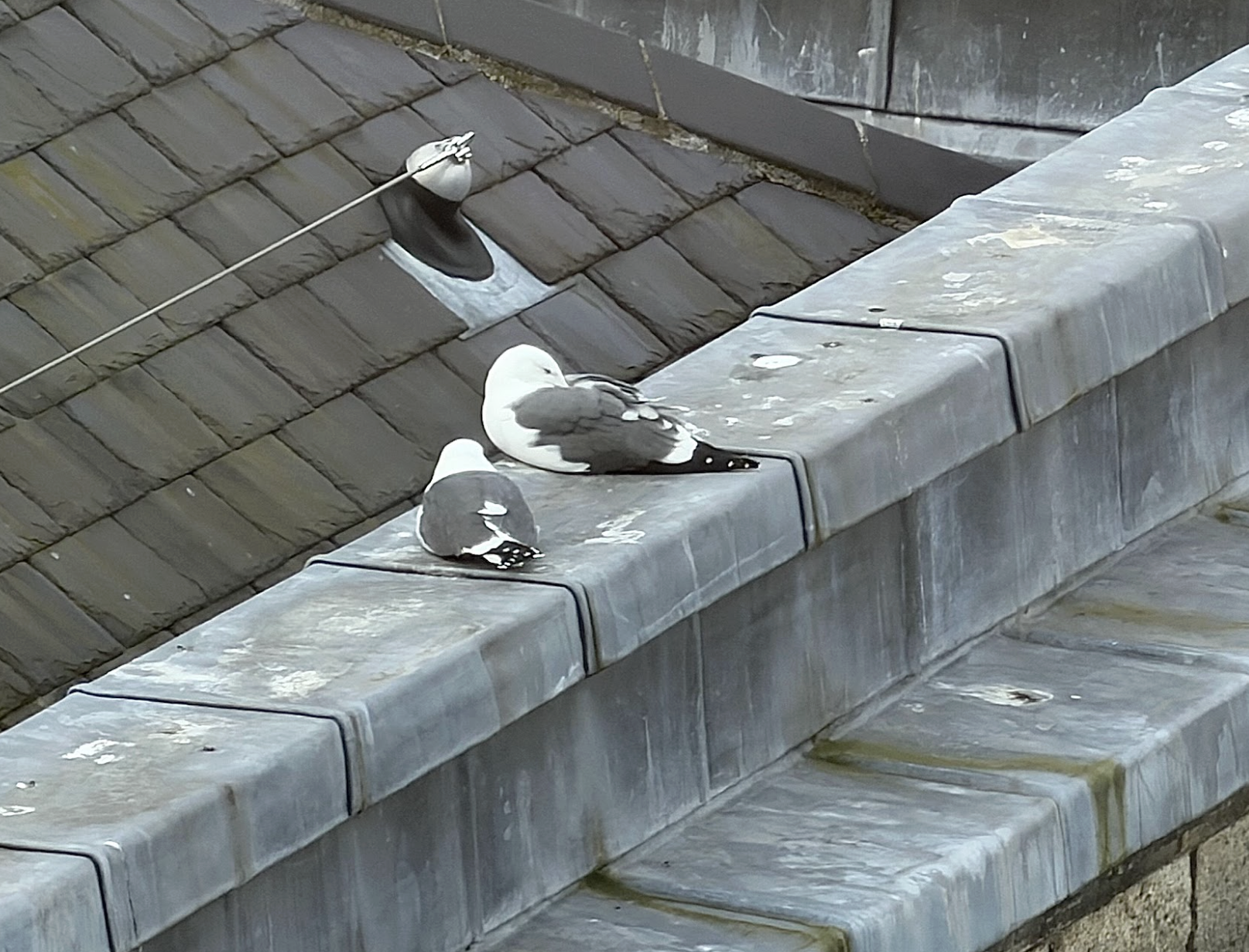

The first time I visited Trinity, I had my sandwich stolen out of my hand mid-bite by a ferocious seagull. When I came back two years later, I quickly realised that my first encounter with a campus seagull was nothing extraordinary. In fact, it would become a stable part of my day-to-day life at Trinity. Scarred from this and subsequent seagulls attacks, my peripheral vision has since expanded to monitor any birds that could potentially dig their talons into my €7 sandwich.
If you’ve ever been among the masses outside the Arts Block during lunchtime, cosplaying carelessness on one of the rare sunny days, this will sound familiar. Most people will probably be inclined to speak of seagulls like they’re Satan because, to many, they are. The College even acknowledges their status as the most hated creature on campus, seeing how they spend their hard-earned income from the Book of Kells on a falcon, whose only job it is to fly around and scare them off. I am here to play devil’s, or seagull’s, advocate.
The species most commonly seen in Dublin is the Herring Gull. Walking on campus, it feels like there are five of them for every confused tourist. It may come as a surprise that the birds’ population decreased by 90 per cent just a few years ago. While it has stabilised since, such rapid population decline is “nature’s way of screaming for help”, says Niall Hatch from Birdwatch Ireland. Herring Gulls currently sit on the Amber list in the ranking of Birds of Conservation Concern in Ireland, meaning they are still of conservation concern.

When learning of the gulls’ unstable population level, people’s most common response is a morbid satisfaction. Not only is this incredibly macabre, it is also unfair to the birds.
Herring Gulls‘ natural foraging habitat is the sea and coast, where they would feed on fish, mussels and small worms. While they’ve always had a presence in coastal cities, it is not until recently that they’ve been spotted nesting on rooftops.”This is a major warning sign”, says Hatch. He explains that the birds are forced out of their natural habitats due to a lack of food sources. This is due to invasive species like minks and rats that were brought there by humans. Overfishing and rising water temperatures due to human-made climate change has decreased the population of fish, an important source of food for the gulls. Moreover, humans wishing to go for a “relaxing hike through nature” increasingly walk through gull colonies’ habitats, creating an unsafe environment for nesting and breeding.
At the same time, the increase in food waste in urban centres is a convenient alternative source of food. Hatch emphasises that this, however, is not the birds’ first choice. They were forced to move inland, where they could nest on rooftops vaguely resembling their natural nesting sites, and feed on chips and plastic bags, not resembling their natural food source whatsoever. “Any other species would have simply died, but the gulls adapted”, Hatch says. And now, they are wherever the people are, including Trinity campus, where they are treated like the enemy.
Beside the thievery, people are often concerned with the possibility of catching a disease from the gulls. The College’s justification for deploying the anti-seagull-falcon is that the birds pose “health and safety issues to staff, students, contractors, and the general public”. Hatch sneers at this. “I have never heard of a case where a human caught a disease from a gull. If anything, they transmit disease to other birds, but even that is very rare”, he explains. He adds that by feeding on the food scraps humans carelessly throw away, they minimise potential food sources for another widely hated species: rats. “Rats come out at night, so people don’t complain about them as much. But they are the ones that actually carry disease. We should be thankful to the gulls for cleaning up after us”.
To some extent, the antagonism is understandable. “It’s easy to blame nature”, Hatch says, as from a human perspective, the gulls are thieves. Whoever paid for the sandwich gets to eat it, and birds don‘t have any money. Yet, they paid much more than even the most overpriced lunch in Dublin City Centre is worth. Perhaps it is time to give them some grace.
However, this does not mean you should offer up your lunch to any seagull you see. In fact, Hatch warns explicitly not to feed them. While chips and sandwiches are not bad for them per se, feeding them teaches the gulls to rely on humans for food. “This is not in the gulls’ best interest”, says Hatch. “If you want to help the gulls, you leave them alone and dispose of your waste properly”. Parents get very protective of their chicks, which can be misinterpreted by humans as overt aggression. However, they want nothing more than to survive. Hatch adds that people wishing to contribute to bird conservation in Ireland should consider a membership with Birdwatch Ireland, attending the events, or even just having some sympathy for the birds. “We can’t change the gulls’ behaviour, but we can change ours”, he says.