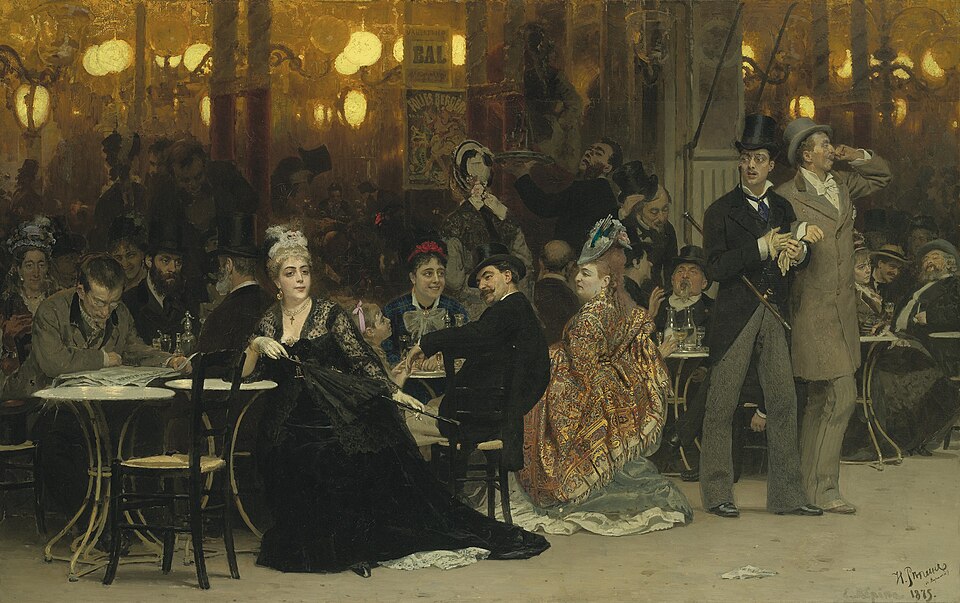

A very wise and reliable narrator once reassuringly said, “Claire, it’s French.” The bob Fleabag was referencing was most certainly not French, but there was an unmistakable singularity to it, a certain je ne sais quoi. That something which is ineffably French, but also entirely singular, has become present in the branding of cafés around Trinity.
It is a matter of attempting to stay relevant, to make money, if you will. It’s easy to buy a Nespresso machine and accumulate masses of empty pods, and it is inconvenient to sit and wait for your coffee and pastry which always claims to be fresh. Chain cafés such as Starbucks and Costa have perfected efficient coffee production by instilling corporate anxiety into their baristas so that customers can pass through without an ounce of heartfelt interaction. This is not the baristas’ fault; they are being watched, every move tracked. This atmosphere of surveillance in an environment, which always looks as if it could be put together and taken apart in a day, has lost its charm. This is because the corporate café misunderstands the beauty of a cup of coffee, and that the act of drinking it is a cultural phenomenon.

The French understand this, and countless artists and writers have achieved genius as a result of the collaborative experience of a café. What is more interesting though, is the way in which small business cafés have adopted the branding strategies of museums in order to affect this French intellectualism and intimate sense of community all at once.
In the past several decades, funding for artistic institutions has been a marked issue, but not one that museums have taken lying down. Rather, they have developed a marketing strategy which almost manages to feel personal and intimate, but piques the curiosity enough that once the customer is inside the contents speak for themselves.
Curator and researcher Frank Johnson writes on his museum blog, “A museum brand is […] the sum total of every experience, emotion, and perception a visitor, community member, or potential donor has with the institution, meticulously shaped to communicate its unique value, mission, and personality. It’s the distinct promise of what an individual can expect, and it’s the lasting impression left long after they’ve walked out the doors or closed their browser.”
In many words, this is to say that in order for museums to generate impact to stay relevant and funded, they must be deeply invested in consumer experience. They must be accessible yet expansive, familiar yet eye-opening, memorable while encouraging people to come back for more. This, of course, means being beautiful and laid out in such a way that it guides the consumer through the space. It’s open enough to wander, but the mind still picks up on the threads of a story that are being told. The consumer is invited into the intellectual experience of being the audience member of something grand.
Though it might not seem like it, a local café can and does offer a similar experience. The Parisian motif of long hours spent consuming espresso after espresso and debating issues great and small is an atmosphere which encourages spending. The French understand the economic success of making customers feel comfortable enough to stay, and to pause in their day so that they may feel life moving around them. This can be seen in popular cafés around Trinity as they too focus on customer experience, subtly guiding people to feel as if they are sitting on a bench after buzzing through galleries without looking. Finally, sitting with sore feet, they can look out the window and see the buzz of life as a moving gallery.
This imagery of flâneurs, intellectuals, artists, and life outside the café windows feels French to the modern media-trained mind, which is why it is entirely unsurprising that certain successful Dublin cafés, like Metro and Fréd, have taken up the mantle entirely in an effort to encourage people to stay. Metro in particular with its striped awning and petite tables crowded by rickety chairs invites the many cigarette-wielding students of Trinity to stop and sit and chat.
More subtly, cafés such as Bestseller and Books Upstairs imitate this sense of a café as a cultural hub. Rather than waiting for customers to shed the pace of their daily lives, these cafés directly position themselves as sites of artistic pursuit.
Bestseller, which like Metro has that Parisian striped awning, not only functions as an all-day café, but has a stage for jazz musicians and at other times actors — when the café becomes the Glass Mask Theatre. During the day, tables litter the stage under uncharacteristically bright lights in the otherwise dim space. The tea-drinker almost feels as if they have stumbled into a Beckett play, where all the actors don’t know that they’re acting.
Books Upstairs is similarly multi-functional, operating as a café, bookstore, and literary venue. In the café, the majority of tables must be computer free, encouraging consumers to be present. High up above D’Olier street with a warm mug between their palms, the customer can sit in the bay window and look through the thick-paned, rain-flecked glass. Below, the passersby hurry with their heads down, unknowingly avoiding the presumptuous lens of the coffee drinker.
Be still, look around. This is what the museums encourage with their solid coloured walls and soft lighting, drawing the gaze to Keats on Merrion Square. On Dawson and D’Olier, the eye is drawn out through wooden frames towards subjects caught unaware. It’s not Paris, it’s Dublin, but the sedentary mind still finds itself wandering over everything within the café walls and beyond. The customer cannot help but feel joy at that reconnection with life and the self, no matter how small, with friends or without, and that is the brand experience that keeps you coming back.