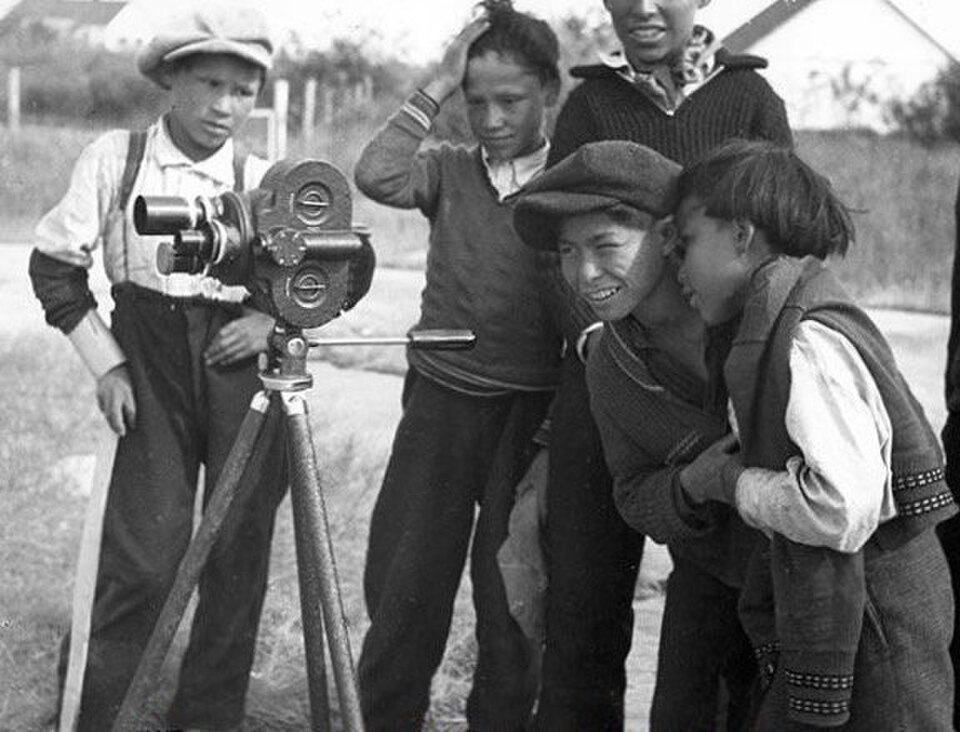

This is the nightmare of most parents; their child sits them down, opens their laptop, and shows them their first choice on the CAO. Hearts rise, then plummet. Their child has chosen to study film. But why is this a nightmare?
I interviewed three Bachelor undergraduate students from three different Dublin colleges who all study a variant of film—Sarah Flood, a third-year Media Studies student at National University of Ireland Maynooth, Vishvani Paranavithana, a second-year Film Studies student at Trinity College Dublin, and Bogi Ugvari, a third-year Moving Image Design student at the National College of Art and Design (NCAD).
With the birth of iPhone filmmaking and the ever-growing path from independent YouTube creator to the big screen, I asked the three students if they think a film degree is necessary for joining the industry. While they all conceded it wasn’t necessary, they highly recommend it. The biggest edge such a degree gives, they all agree on, is the connections. Bogi believes “art school is four years of making connections that LinkedIn will never get you.” This rings true. Some instances include Sarah being taught by Ireland AM staff, Vishvani being offered free tickets for the previous Dublin International Film Festival where her tutor’s film was being shown, and Studio 9, the Dublin animation studio, coming to NCAD for a stop motion project.

With all these industry links being established, I asked how prepared these students felt for joining the film industry, particularly since a 2025 survey revealed only 27% of film professionals in Europe are women. Bogi feels “very prepared”, having “tried everything” in her course, from camerawork to working with Blender. She trusts her NCAD course leaves her knowing “even a bit about everything that we should know about the film industry.” Vishvani and Sarah share her strong sentiment, their confidence stemming from both having worked with studio-grade equipment in practical modules. Sarah has even experienced an industry pitfall—group work of over twenty people. “Some people take for granted the level of work each role requires”, she states, her tone betraying a grade gone rogue.
But it is not just silver screens their course preps them for. Vishvani believes her course’s “unique programme of practical and theoretical classes prevents you from boxing yourself in. With this degree, I believe you could go into the film industry, film academia, film criticism, marketing, or publishing”. Bogi seconds this, adding book and corporate illustration, social media, and commercial motion graphics to potential careers outside of film. Sarah also believes jobs in the social media sector especially suit her degree. “Every company wants and needs to be on social media right now. It’s a very sought after career-path.” Her degree has taught her the importance of these careers. “I think media and film is an important study in sociology. Print, for the past centuries, was our dominant source of media, and was such an integral part of how people behaved. Social media, with its constantly evolving nature, has changed everything.”
Despite the number of jobs these three students think will be available to them, there is a widespread stereotype that degrees in the arts are a waste of time and money. When I asked the three their opinion, they sighed. Bogi confesses that this utilitarian stereotype is deceptively easy to fall into; “I get really defensive when I’m told by my family that I’m going to be jobless for the rest of my life since I’m in art college. So I start explaining the amount of jobs that I can actually get with my degree, since it’s design.”
Sarah “hates” the lie that, “the only jobs available are in STEM or business fields. People don’t realise how broad creative industries are and their importance.” She finds this notion especially hypocritical when “the same people saying courses in the arts are a doss are often the same people who listen to music, watch TV, and read books. Why do you not think it worthwhile to dedicate your life to something that you love?” Vishvani wholeheartedly agrees. “STEM degrees are great, we absolutely need them, but we also need art. It’s more crucial than ever in today’s world with war, with AI.”
AI seems to be an ever-looming threat at Dublin universities. Bogi revealed the shocking news that two of her tutors created films using AI, referring to it as a “tool of filmmaking […] One of them even held a conference about how he used AI in his short film. Thankfully, no-one showed up for it.” Sarah faced two conflicting AI policies on two assignments involving poster generation. For a module under her media major, the use of AI for poster generation was strictly prohibited. For a module under her marketing minor, the use of AI for poster generation was allowed and recommended.
Despite this concerning infiltration, these students are not giving up the fight. I spoke with each for approximately an hour, and their passion and insight were prevalent. I could have easily spoken for three hours more. Film is a course that should be allowed a second look, to see past the shadows cast by stereotypes, statistics and synthetic “creativity”. Finally, a child now has the privileged position of picking a college degree. The child sits their parents down, opens their laptop, and shows them their first choice on the CAO. Hearts rise, then rise higher. Their child has dared to dream.