
Industrial textures and synth loops matter little to the Dalkey tide, but in the spring of 1991, it gave U2 room to breathe. The band was at breaking point; bleak winter nights in West Berlin’s Hansa Studios had yielded friction rather than effortless breakthrough. It was only when they unpacked the session tapes back home in Dublin and set up a makeshift studio in the converted garage of Elsinore — a Victorian mansion overlooking Dublin Bay — that Achtung Baby took definitive shape. The band tempered Berlin’s harsh electronic experiments against the salt-flecked sea air of the Dublin coast, ensuring that the resulting introspective record was an album of survival rather than collapse. Yet, this glamorous coastal retreat was the preserve of an established band that could afford distance from the city centre. The next generation of Dublin musicians would reject this luxury.
As the millennium turned and Celtic Tiger fever gripped Dublin, the city’s creative pulse drifted back inland. A young Mic Christopher stood in the freezing rain on Grafton Street alongside Glen Hansard, their acoustic folk drowned out by the polished roar of new money. Their sanctuary was a rented flat above the Harcourt Hotel. This apartment became the nexus for a network of talented Irish folk musicians, with Damien Rice and Lisa Hannigan among those who gathered there before gigs and busking sessions. Later, Christopher would move to red-brick Dartmouth Square in leafy Ranelagh, where he wrote the songs for his celebrated album, Skylarkin’. It was in that room that he penned his most beloved song, ‘Heyday’. It was also here that the same network gathered to listen to his recordings and complete the album after Christopher’s untimely death in 2001. The album remains a testament to the defiance of a scene that chose authenticity over the city’s rising commercial tide.
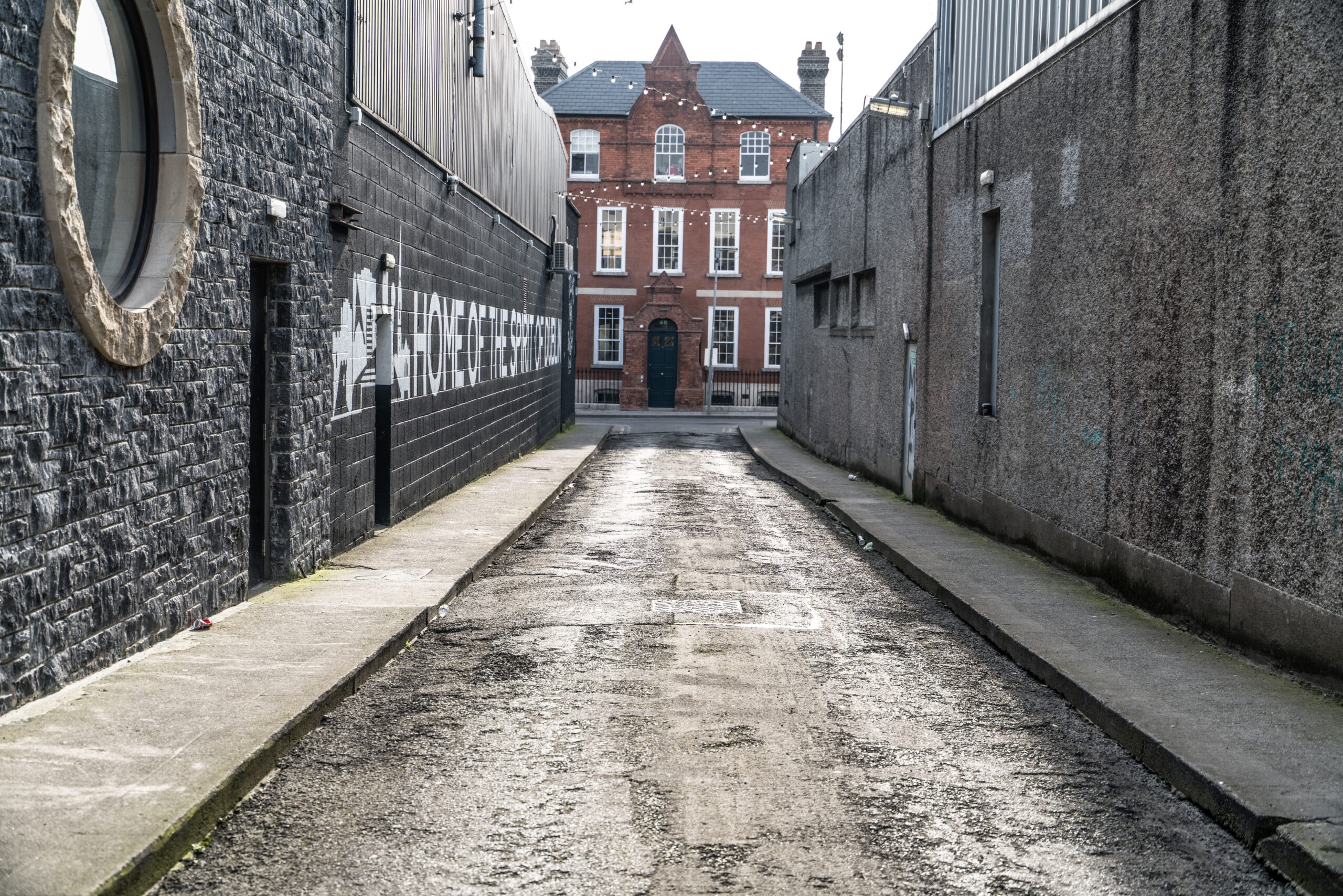
By the time Fontaines D.C. met in the 2010s, the warmth and vibrancy of Dublin music were threatened by a clinical landscape of construction cranes and disappearing cultural spaces. Where U2 sought coastal isolation and Christopher built a community, Fontaines retreated into Dublin’s working-class enclaves to record what was slipping away. They absorbed the cadence of local chatter in The Liberty Belle and the rhythm of Moore Street vendors, channelling them into their debut, Dogrel — a record at once Joycean and unmistakably contemporary. The acclaimed track “The Lotts” was named after a pub near where the band used to practice. The street was strewn with syringes, as homelessness, addiction, and deprivation revealed an uglier side of Dublin. Infusing these real addresses and vanishing Liberties haunts into their songs turned the album into an archive of resistance and a response to erasure. The city, Dogrel declared, was a living entity under threat — and post-punk anger intended to face it down.

Never confined within studio walls, Dublin has served as an uncredited bandmate on so many of its landmark records. Each generation — the surging confidence of the early nineties, the frenzied optimism of the Celtic Tiger, the creeping unease of the late 2010s — inherits a different city. To follow the sound of modern Dublin is to trace a geographical trail: from elegant coastal villages, through the rain-slicked central cobblestones, and into the working-class heartland. Three albums, three Dublins, and the city’s indelible influence etched into every vinyl groove.