
After ten years, Trinity’s Northern Irish feasibility study has come to an end, marking a shift in how, if at all, Trinity will engage with and encourage prospective students from the North.
The initiative, announced in 2014 and implemented in the 2015 admissions cycle, was an attempt to counteract waning numbers of students from the North choosing to enroll in higher education institutions in the Republic of Ireland (ROI). Past Provost of Trinity, Dr Patrick Prendergast, spoke at the time of the importance of maintaining Trinity as “an all-island university”. As such, the feasibility study was launched, with the eventual target of 8% of the student body being from Northern Ireland.
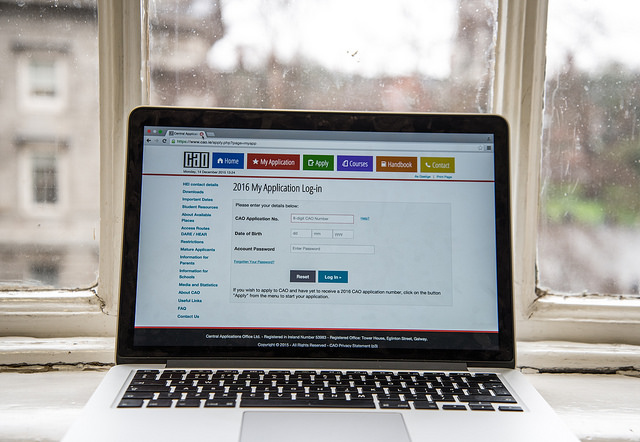
The study itself aimed to counter a significant barrier students from the North faced when applying to Trinity and other universities in the South: the CAO’s A-level point conversions. While the points conversion remains an issue for A-level students today, the conversion was significantly worse before the study was introduced. In 2005, the CAO set an A* grade at A-level to 150 points, meaning that a student taking a standard set of three A-levels would be capped at 450 points, making the vast majority of courses available at Trinity entirely inaccessible for A-level students. Although the CAO later readjusted the points in 2016, it remains the case that 625 is not achievable without additional qualifications, such as a fourth A-level, an AS, or an EPQ. With this in mind, the feasibility study kept places – a maximum of three per course – for Northern Irish students, who could apply for the study in order to be assessed solely on the basis of their best three A-levels, and then admitted accordingly. Alongside the study, Northern Irish students remained eligible to apply for their course through the standard CAO points route.

From 2015, the year of the study’s inception, to 2017, there was an upward trend in applications from Northern Ireland to the Republic of Ireland, and initially, the study proved to be successful. In 2015, out of all of the Northern Irish students who chose to study outside of the UK, 40% took up places in Trinity College. From 2018, however, these numbers fell considerably, with admissions boards and university councils all attributing this decline to Brexit.
After its final year in the 2025 admissions cycle, the study has now ended, with Trinity still not having reached its 8% target for students from the North. Increasing enrollment from the North, however, “remains a commitment for Trinity”, said a spokesperson from the College. Trinity’s attempts to attract more students from the North include “engaging with the Northern Ireland Schools and College Careers Association (NISCA)”, participating in the “annual UCAS Discovery event in Lisburn…attended by up to 10,000 students”, and coordinating the “Titanic Belfast Trinity College Dublin undergraduate scholarship as part of awareness building and student support”.
Despite this, current Trinity students from Northern Ireland report inadequate outreach from Trinity, and poor communication about studying in the South during their university admissions cycle.
Meabh Quinn, chair of the Politics Society and Junior Sophister student from County Antrim, said during her time in school and applying for university, there was no sense of “Trinity wanting you [Northern Irish students] to come down to them”. From her year at school, three students came to Trinity, a notably high number, according to Quinn. Far more chose to study at institutions in the North, or take up places in Great Britain.
To Quinn, low levels of North-South student mobility are in part due to a lack of clarity surrounding CAO applications from outside of the Republic of Ireland. Unlike UCAS applications, “we didn’t get much support in terms of the CAO”. In part, this was due to a lack of knowledge from admissions advisors on the CAO, a system “very different to UCAS”. Yet this knowledge gap was not filled at all by outreach or resources from Trinity’s admissions department.
“I never saw Trinity being promoted”, said Quinn.
Even when the feasibility study was active, Quinn claimed “people didn’t really know about it”, and many students applied to Trinity without knowing the study was an option.
Orla Morris, a Senior Fresh student from County Down, recounted a similar experience of the study, sharing: “I knew about the feasibility scheme from my own research”, and while she found that the study’s existence positively affected her decision to apply to Trinity, Morris observed that “there was little online about when I would hear back, or how it actually worked”.
Both Quinn and Morris outlined points conversions as a big issue affecting students from the North, yet the feasibility study, which aimed to ameliorate this issue, was in turn affected by insufficient outreach and awareness in the North. A lack of supplemental outreach work by the college could explain the schemes’ failure to reach the 8% student body target.
In 2025, it was reported that only 213 students from Northern Ireland had taken up places in ROI universities that year. While the number of students from this cohort who entered Trinity is unknown, it is clear that Trinity’s proposed target of 300 students from the North is far from being met.
Aside from unequal points equivalences, many students report a lack of education surrounding the CAO and ROI universities in the North. Morris recounted one such example from her application period.
“When I asked my history teacher about applying to History at Trinity, she asked if I applied via UCAS. There was little discussion about going down South as an option in general.”
Anecdotes like Morris’ speak to an insufficient degree of outreach from Trinity in the North, and this is particularly evident in lingering and outdated ideas about A-level requirements for Southern universities.
“Poor points equivalences are a big issue”, according to Quinn, but a perhaps more frustrating issue is not “letting people know there was a change” in conversions. The pre-2016 CAO points conversions still leave the common impression that without taking four A-levels, admission to Trinity and other institutions in the Republic is impossible. Both Quinn and Morris highlighted this misconception about CAO admissions, both recalling peers who didn’t fill out the CAO under the assumption that their A-levels wouldn’t get them the necessary points for their course.
Now, in the wake of the feasibility study, it is unclear whether or not Trinity will implement a new strategy for attracting students from the North. While certain factors negatively affecting Northern Irish enrollment are exogenous — CAO points, Brexit, high cost of living in the Republic — other factors could be resolved with more attention being put on Northern Irish outreach.
Even simple fixes like updating admissions pages online to provide clearer information, sending infopacks to schools, and increasing attendance at university fairs across Northern Ireland could have major impacts on increasing applications. Such measures are already in place for other regions. For prospective students from the USA, for example, there are five regional representatives working to attract students from across America, boosting Trinity’s visibility via college fairs and frequent communications. For Northern Ireland, there is one undergraduate representative. In order to be the “all-island university”, it remains to be seen how Trinity’s changing approach to Northern Irish applicants will manifest.