As the Fórsa-represented school secretaries and caretakers’ strike enters its second week, young activists and trade-unionists assembled in the Arts Block for the union’s inaugural Youth Conference, co-organised with the Trinity College Dublin Students’ Union (TCDSU/AMLCT). The ongoing strike centres around the integration of these workers into the Single Public Service Pension Scheme, which teachers and special needs assistants participate in.
However, this is a contentious issue for the government, as some policymakers argue that public pensions have become increasingly burdensome for governments given the decline in new contributions and ageing populations in much of the developed world. After a strike in 2022 failed to secure this goal in negotiations mediated by the Workplace Relations Commission (WRC) and pre-strike negotiations in the current dispute failed to bear fruit, Fórsa is wary to accept the invitation of Minister for Education Helen McEntee to return to the WRC “without pre-conditions”.
The conference began at 10 AM in the Robert Emmett Theatre with opening remarks by Hugh McInerney, the chair of Fórsa Youth and Rachel Fennelly, the Fórsa Youth Secretary, who gave a speech around the ongoing strikes, stressing the importance of pension parity and other benefits like sick leave that school secretaries and caretakers are currently denied. Buster Whaley, the Education Officer of the TCDSU, then gave a concise speech, filling in for President Séan-Thim O’Leary, who cancelled at the last minute due to a meeting with Aontas na Mac Léinn in Éirinn (formerly the Union of Students in Ireland, the national students’ union).

The conference lasted until 4 PM and consisted of panels, talks, and a debate, split between morning and afternoon sessions. In an 11 AM discussion on unions in public services, customs officer and union representative Audrey Smith stated, “My mother was a union representative, so I was raised with that kind of socialist thinking”, and discussed how a massive increase in hours of operation for airport workers in recent years necessitated union representation to secure safe working conditions. Rónán Kyne, a unionised pilot for Aer Lingus, discussed similar experiences, with changes in management and the COVID-19 pandemic causing worsening conditions and necessitating new contracts to improve conditions and keep pay in line with astronomical cost-of-living increases. He recounted his last strike, where pilots from around the world on layovers joined his picket line as they passed through Dublin Airport, discussing their contracts and supporting the workers’ demands. Smith spoke about the importance of cross-industry solidarity in the context of her son’s school caretaker, who she said she’s “been sending her messages all week telling her we stand with her… never ever cross a picket line”. Fennelly continued on this topic by discussing the importance of school secretaries in communities across the country, acting as the first person that kids see when they walk into school every morning, “they’re always the friendly face that you need”.
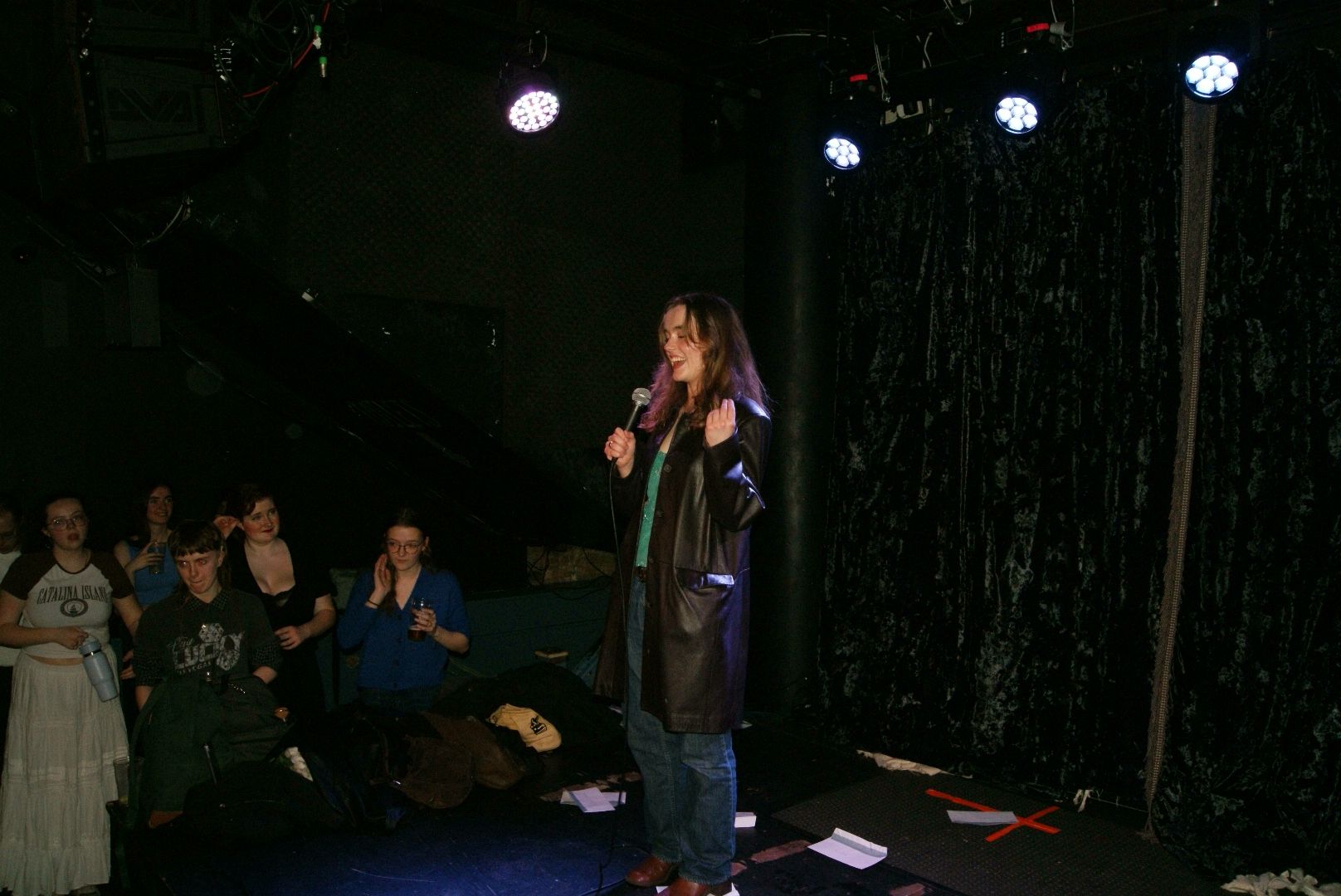
In the afternoon, all eyes were on a panel on Palestine and the Trade Union movement’s role in the international movement for Palestinian self-determination, which featured Presidential candidate and independent TD Catherine Connolly. As a surprise guest, the Palestinian Ambassador Dr. Jilan Abdalmajid also attended the panel, alongside Harry Johnston, chair of Trinity BDS, Dooley Hart from Trade Union Friends for Palestine, Gregor Kerr from the Irish National Teachers’ Organisation, and Roman Shortall, a reporter at The Ditch. Dr. Abdalmajid opened the panel with a deep sigh and heartfelt words on “the destruction of my hometown, Gaza”, and said that “we, the international community, must act for what is happening in Palestine and what Israel is doing”. Roman Shortall spoke to the limitations imposed by the Industrial Relations Act 1990, an Irish law which, among other things, banned political strikes. But Shortall warned against what he saw as trade union officials using the Industrial Relations Act as cover to avoid actions in support of Palestine. These potential actions include unions ordering union members in the civil service to stop processing trade documents for Israeli goods and air traffic controllers from not supporting weapons shipments to Israel through Shannon airport.
This was brought up in a question earlier in the day by former TCDSU/AMLCT President László Molnárfi, who challenged an Irish Congress of Trade Unions (ICTU) representative on their organisation’s refusal to act in support of Palestine. ICTU does have a policy endorsing workplace actions in support of Palestine; however, this policy has rarely been utilised, largely due to fears of a significant conflict with the government. Johnston continued on this topic by pointing out that if workplaces file a collective grievance, these political issues can be made into contract issues, and these contract issues can be used as a pretext for an industrial action. Catherine Connolly framed the genocide in Gaza not only as a moral issue, but as one of diplomatic credibility in the comparison between the response of the EU and Ireland to the Russian invasion of Ukraine, but has not followed up the indignation that is now expressed, after nearly 2 years of renewed genocide, with any real action.