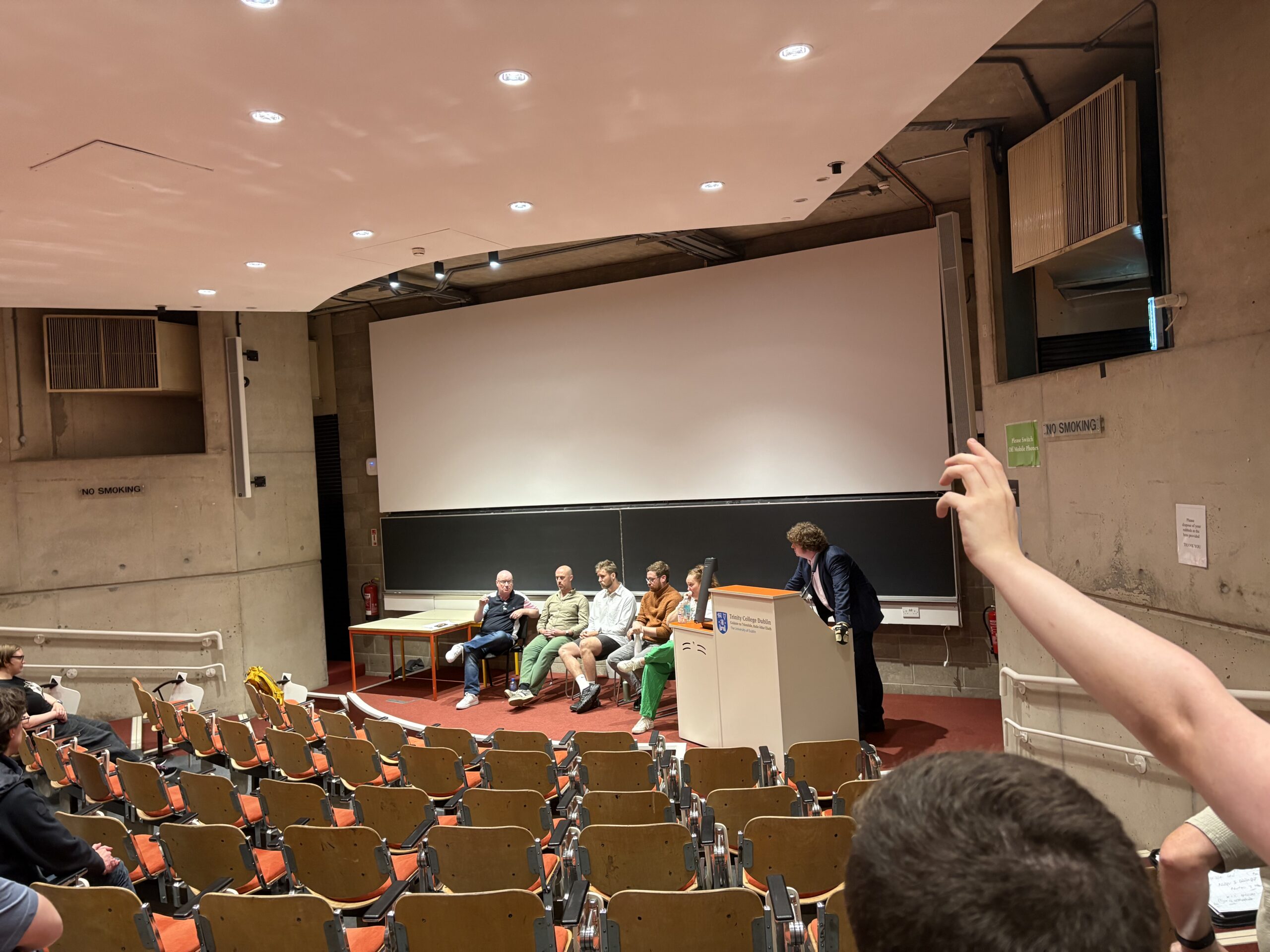

It is a long standing joke that the Academic Registry is difficult to deal with, but this has less to do with the people who work there and more to do with the inherent intricacies of university bureaucracy, which has become increasingly difficult to navigate in the last few decades. Arriving at Trinity can feel like standing at the entrance of a looming maze, with walls that make it impossible to get a bird’s-eye view and gather an idea of its layout. If you’re lucky, you won’t have to venture far into the maze during your first few weeks, but entering the maze is a rite of passage that everyone must go through, whether you’re switching modules, studying abroad, or, like I did this summer, withdrawing from the Dual BA and transferring courses. It is up to you, the student, to navigate it without a map or a guide, leaving trial and error your only option.
Trinity, like most universities, is governed by a set of strict rules and regulations that are meant to keep things running on a day-to-day basis, but these become obstacles rather than guiding posts. The university’s bureaucracy barely functions normally, and utilising its most basic functions often leads to frustration: every year, Online Module Enrollment overwhelms the system by having all students register for modules at the same time. Even worse, however, is facing the system with something unexpected that its inflexible nature was not built to handle. It tends to take more time to figure out who to talk to and about what than it takes to solve a problem. The fragmentary nature of the bureaucratic system also means you spend considerable time trying to get its different parts to communicate. In transferring courses, starting an email chain with all the people involved seemed to me a feat in itself. Putting this administrative burden on students results in unnecessary strain when the students who seek out assistance in the first place are often those already burdened with other issues. Students can easily slip through the cracks, and minor administrative errors can end up being very costly; it is always the student who has to live through the consequences.
The process of navigating bureaucracy is most comparable to something out of a Kafka novel. The university, like the castle in Kafka’s The Castle, governs students’ daily life, but students, like the main protagonist, K, are unable to figure out how it works and end up trying to communicate with an entity bigger than themselves. As a result, students feel a loss of control over their academic trajectory and lives. This is the product of a more general problem that is not limited to Trinity: as Mark Fisher argues in Capitalist Realism, excessive bureaucracy is a natural, and indeed necessary, function of neoliberalism. The “realism” lies in how capitalism manifests contrary to how it presents itself. Instead of the “friction free exchanges” promised, we are now seeing an increased number of bureaucratic measures as profit incentives have led to increased self-scrutiny in a bid to appease invisible consumers of PR. Faculty are perhaps most impacted by this, in being forced to do more administrative work to maintain the appearance of good quality research and teaching rather than the research and teaching itself. This affects students, too, who, like faculty, are now forced to do an increasing amount of administrative work.

When regulations are determined by PR, the only thing the administration, or anyone, can do is point to them, which absolves individuals of responsibility. Rather than exercise agency, people only carry out decisions in line with pre-made regulations, much like Kafka’s protagonists realise in The Castle. There is thus a marked disconnection between the system and its people, where you are directly dealing with people, yet the system they operate within is an abstract entity. While in my case, the history department contended that they would be as accommodating as possible, the system, remaining as inflexible as ever, would not permit any accommodation. The bureaucratic systems governing universities are made up of a series of abstract terms that no one can, or is meant to, understand. That my problem couldn’t be solved because of something called “pathway pillars” did not ease frustration but rather exacerbated it. Upon further investigation, the Central Timetabling Unit’s website outlines all rules and regulations in great detail, but these are made up of purely abstract concepts, and you would need a degree in timetabling to understand them. The mere existence of the website and the regulations themselves, however, is enough as something to point to as governing all decisions within the university. Students, like K, have no way of making a difference in the face of a massive, intricate, and most of all abstract entity. Yet there is no one to vent your frustrations to. You can’t blame any of the people you deal with face-to-face because, after all, they’re only following regulations.
Universities have become depersonalised institutions, and the administrative burden placed on students leaves us feeling alienated and unsupported as we attempt to navigate complex bureaucracy on our own. As students, we want to feel in control of our academic lives, but when met by impenetrable walls of corporate jargon, we are helpless. Fundamentally, universities need to remember their original purpose, which continues to guide their marketing but which no longer exists in practice. The time students spend navigating bureaucracy is better spent on doing what we came here to do: learn. The current system serves neither students nor faculty well, but it is unlikely to change, and any changes now made would fail to fix the problems inherent to the neoliberalisation of public institutions. While the profit incentive that governs modern universities will remain, we can use its logic to demand better. As Fisher rightly points out, students are the ones paying for a service and are thus, in some sense, its customers, even if we are not always seen as such. The university is supposed to serve us, not the other way around. We should not have to bear the burden of navigating a bureaucratic nightmare that frequently leads us down the wrong path or to a dead end. Neither should we have to spend time translating abstract jargon instead of solving problems. Direct interaction between students and staff ought to be at the centre of any university’s daily operations.