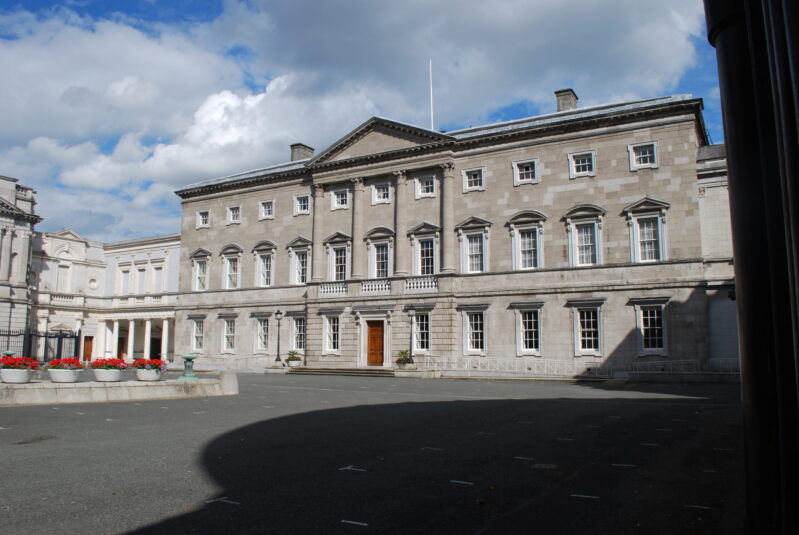

Power in Leinster House does not move in straight lines. It is tugged by party whips, treaties made at kitchen tables in constituencies, industry position papers slid across mahogany desks, and late-night compromise texts that stitch parties together just long enough to pass a Budget. On paper, the Dàil elects the Taoiseach and controls the purse. In practice, authority is braided from many strands: a coalition’s internal arithmetic, the discipline of the whip, the patience of committees, and the steady pulse of groups who live in the lobby and the inbox. The result is a politics that looks simple from the public gallery and feels labyrinthian in the corridors.
Start with the formal choreography. Whips ferry votes, police attendance, and meet to choreograph the week’s business. In a chamber where government majorities are often narrow, the whip is less a messenger than a metronome. TDs are expected to vote with their party, and free votes are rare. The architecture is pure Westminster, scaled to Irish size, and functions to convert fragile agreements into legislative fact.
Then there is the coalition itself, the original act of delegation. Since January 2025, the government has rested on an agreement between Fianna Fáil and Fine Gael with the support of a motley array of conservative independents. This pact elevated Micheál Martin to the Taoiseach’s office and two Cabinet seats to independent TDs. The coalition followed an election in which the two big parties landed within a hair’s breadth of a majority needed to stay in power. In this arithmetic, independents do not merely support. They hold levers, especially when Cabinet places and “super junior” roles give them proximity to the engine room.

Programmes for Government are both literary and legal at once. They read like manifestos, but they are also coalition contracts. The 2020 text that united Fine Gael, Fianna Fáil, and the Green Party showed how a minority partner can write its initials into the state’s extended memory. The pledge to cut emissions by an average of 7% annually to 2030, adding up to a 51% reduction, was made law by the 2021 Climate Action amendment, which created carbon budgets and sectoral ceilings that bind future Cabinets. That is leverage turned into law, the purest demonstration of how a small party can trade numbers for policy architecture.
Yet the Programme is never the only script. Interest groups edit lines at the margins and sometimes write whole scenes. Ireland’s lobbying regime requires registration and detailed returns. The system makes the dance visible, and in making it visible, it acknowledges that lobbying is a regular part of policymaking rather than a pathology. Business associations, unions, professional bodies, NGOs, and consultancies enter the process with different toolkits and different deadlines.
A 2023 study by Michele Crepaz and Raj Chari, drawing on an extensive survey of Irish groups, finds that organizations with high organizational capacity and those hiring revolving-door lobbyists are more likely to be “frequent visitors” across venues. Access is not simply tilted toward economic interests in every arena, but well-endowed actors do better with departments and agencies that demand technical information. Citizen groups are more likely to find a hearing among TDs, where constituency service and visibility matter. The portrait is not of capture, but of unequal fluency.
Ireland’s older tradition of social partnership still linger in the institutional muscle memory. The corporatist roundtable that knit together government, employers, and unions from 1987 until the crash broke the spell in 2009 has left habits of consultation and an instinct for compromise. That legacy explains why departments still convene stakeholders and why prominent actors like Ibec or ICTU can find the right door. It also explains why some reforms take shape as negotiated settlements, even after the formal social partnership model ended.
Committees, meanwhile, are the Dáil’s instruments. Pre-Legislative Scrutiny (PLS) allows backbenchers and civil society to mark up drafts before they harden. The Oireachtas Library and Research Service has tracked measurable impact from PLS, including changes in policy detail prompted by committee hearings. Committees are not merely schools for future ministers, but levers that can widen a Bill’s aperture or force a minister to return with a better draft.
There are other governors on the engine. The Irish Fiscal Advisory Council audits the Budget stance, regularly warning against overspending windfall corporate taxes and arguing for more substantial buffers. The Council’s June 2025 report sits alongside the Summer Economic Statement like a second conscience. The advice does not bind in a legal sense, but it shapes the context in which decisions are made and gives opposition spokespeople ballast at Question Time. The press, the rating agencies, and the markets read IFAC before they read ministerial speeches. So do officials drafting spending ceilings.
The compromises required to draft a Programme for Government are less about ideology than about sequencing. Housing and health get timelines and targets; childcare and disability services receive headline figures with caveats about capacity; climate has statutory scaffolding but runs into sectoral limits. The Environmental Protection Agency has projected that current policies would cut emissions by up to 29% by 2030, far short of the 51% legal target. That gap is where power gets bargained. The price of coalition harmony is often a promise to return to the hard choices later, in sectoral ceilings or budget lines.
Minority partners, whether a formal party or a bloc of independents, exert power through veto points and visibility. The Greens in 2020 traded their seat count for the legal architecture of climate policy; independents in 2025 translated their arithmetic into Cabinet presence and regional attention stitched into the Programme. The larger parties hold more ministries and a stronger bench. The smaller players set the terms on the few issues that matter most to them. If the whip keeps the beat, the minor partner writes the hook.
Does the balancing act produce effective governance? The record is mixed, which is another way to say it is recognizably democratic. Coalition agreements discipline drift and clarify priorities, especially in systems where no party commands a majority. They can also slow decision-making or dilute reforms that need a hard edge. Lobbying transparency replaces rumor with data, but unequal access persists. Committees broaden participation, yet the executive still dominates time. IFAC warnings land, but politics sometimes overrule arithmetic. And beneath it all, the electorate imposes a tempo that no whip can control.
If you wanted a single sentence to hold it, you could say that power in Ireland is a network, not a throne. The Dáil authorizes. The Government initiates. Whips count and cajole—minority partners bargain. Interest groups translate sectoral language into legislative text. Committees amend the edges and, sometimes, the center. Independent institutions grant or withhold credibility. The Programme for Government attempts to turn centrifugal forces into a coherent narrative. In good years, that narrative becomes law without fraying the coalition’s seam. In bad years, it tightens into a script that no longer matches the scene.
The question is not whether this produces purity. It does not. The question is whether it delivers enough direction to meet crises faster than crises multiply. On housing and health, the judgment will come in the form of waiting lists and keys handed over. On climate, it will come in the carbon budgets and whether the statutory path bends reality rather than the other way around. In each case, power is distributed, sometimes beautifully, sometimes inconveniently. The center holds because everyone needs it to. The rest of the time, Ireland governs by conversation.