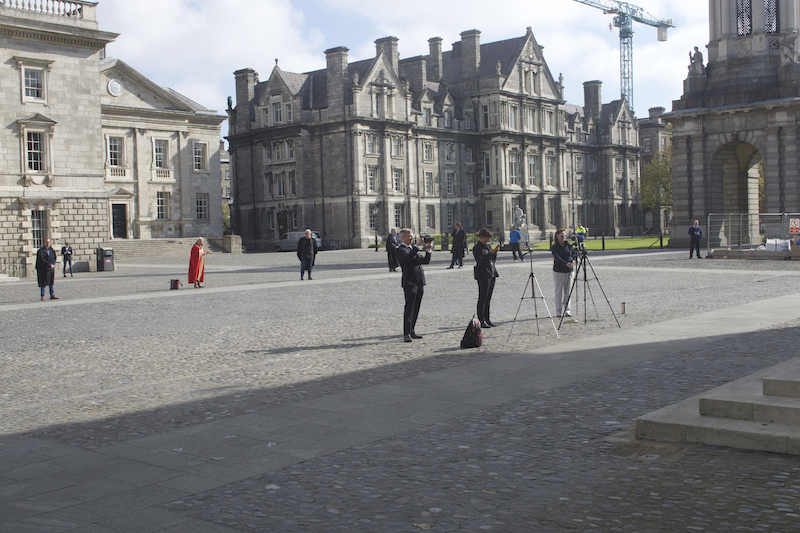

While the imposing facades of the Parliament Square and the incessant throngs of tourists (decked out this week in Vikings and Steelers merchandise) that they garner can easily make Trinity seem more like an attraction than an academic campus, the motivation for such grandiose buildings in the nineteenth century is the same that animates the construction of the E3 Foundry right now — that is, the College’s students. As the needs and disciplines of said students have changed over the years so have the physical settings in which we study.
As out of touch as they might seem today, the Exam Hall, Chapel, and Graduates Memorial Building — among others — no longer serve solely pragmatic roles but also as steadfast reminders of those who built our College’s reputation and developed the fields of study we still explore today. To discount these monuments as unnecessary and elitist because they are granite and Georgian is to ignore their continued value both as places of education and inspiration. Even if the Arts Block is more practical for seminars and lectures than the Rubrics are, and even if Goldsmith can fit more examinees than the Exam Hall can, there is something less tangible, less practical, that makes me more excited, more enthusiastic about events scheduled in the latter venues.
But the existence of these stone stalwarts has not handicapped Trinity’s development into an academic powerhouse; instead, the College has managed to find a synthesis between the necessity of growth and preservation of our past, even as its student body has rapidly shifted and grown over the centuries. While the later, defining buildings of Trinity are the obvious examples — the Hamilton, Sports Complex and disAbility Hub to name a few — there are countless, subtle demonstrations of Trinity’s dedication to its students across campus. One of the most useful, and well-integrated, of these are the smoothed trails laid into the classic cobblestones across campus, an addition that has made the area much more accessible to students, staff and visitors with reduced mobility (while managing to retain the character of the original paths).

This sort of necessary addition to the school’s landscape, however, has not been implemented in a uniform fashion — a fact that has left large swaths of campus largely inaccessible to those with disabilities. While this problem is one that most regularly impedes students, it might best be illustrated by the experiences of one of Trinity’s tour guides, a position that allows them to see the struggles faced by those with mobility issues: “As soon as you move further into the campus … Pathways are incredibly uneven, especially the two pathways that lead towards the Rubrics … The Museum Building is, obviously, entirely inaccessible.” Tourists, as central as they are to the feel (and I’m sure to the finances) of Trinity, exacerbate this lack of accessibility, clogging already antiquated facilities — what is an annoyance for me is a genuine hurdle to the everyday lives of those on campus with disabilities. While legislation won’t help with the latter problem it can hopefully be mobilized against the former. Landmark legislation in the form of the ADA (Americans with Disabilities Act) has helped to make a huge percentage of public spaces in the United States far easier to navigate for those with mobility issues. Similar bills in Ireland — both domestic and EU initiatives — were passed decades after their American cousin: An optimist would blame our campus’s continued lack of adequate accommodations on the greenness of these laws (a view that absolves Trinity, perhaps too kindly, of its responsibility).
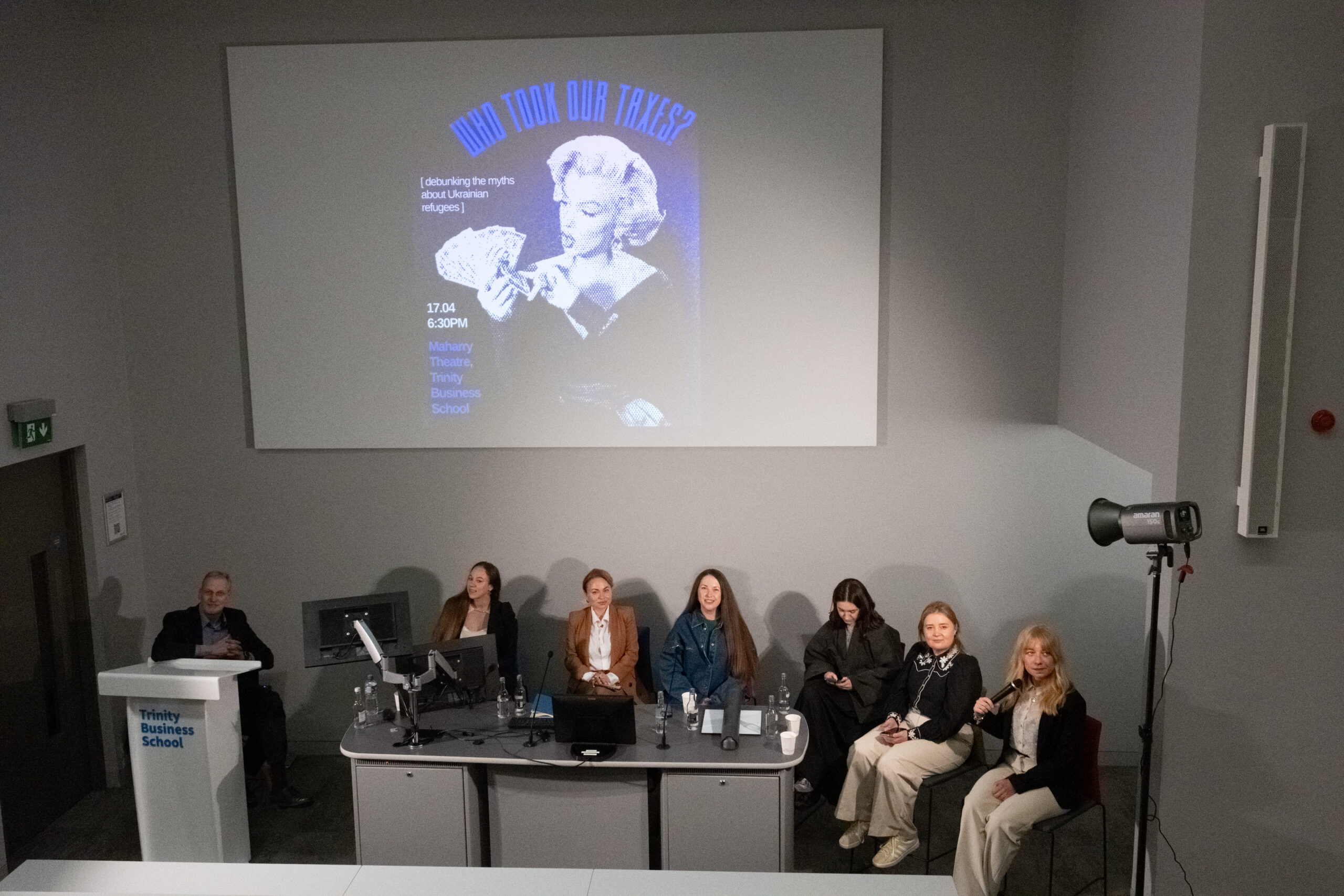
The emergence of new academic subjects has also motivated the development of Trinity’s campus, a fact reflected gaudily by the overwhelming glass of the Business School, glass that always manages to shine the sun right in your eyes when you’re running late for your least favourite class. While Trinity Business School is a century old this year, that’s relatively young for the College and a great example of Trinity’s ability to adapt to changing times for the betterment of its students. And, as obnoxious as I might find the style of the Business School’s building, it is an embodiment of the age in which it was commissioned: that is, the same as any other building on campus.
One can say the same about the brutalism of the Arts Block and Boland — both constructed around 50 years ago for the growing student population and with a vision of a more progressive future ahead. As subjective as one’s taste for architecture might be, it is difficult to imagine why else so much money and time would be sunk into these massive projects if not for the sake of Trinity’s students (a group that has sharply grown over the years). As quaint as the University’s location is, it naturally confines the rate at which the school can develop with its ballooning number of pupils: There physically isn’t enough space for all of the required additions. This, in combination with the ever-growing hordes of sight-seers, the estates are quickly dwarfed. The growth of the student body has not been uniform; the Protestant Ascendancy that first dominated the college grounds has given way to a far more diverse polity today. From international students, to students with disabilities, to students of many faiths, Trinity has morphed in a very physical sense — from the creation of the Global Room, to the creation of the Disability Service, to the development of the Chaplaincy.
As incremental as these changes have been, they are far from invisible and even further from unfelt. They are very real and important manifestations of Trinity’s commitment to its students; the prominence of traditional architecture on campus does not negate but rather reinforces the reality and history of this impressive commitment. While it might seem dated and drafty today, in 150 years, the Hamilton could be the building on campus that draws the most sightseers — though I don’t think that it will be.
It is hard to discount the ethos that exists walking across the various quads on campus, most especially at night, after a long stretch of studying, emerging from Kinsella and walking along the walls of the Long Room, imagining those who did the same in centuries past, as different as they and their ideas might have been. One cannot avoid the importance of physical objects — most especially the settings in which we find ourselves.
The house on Cape Cod in which I’ve spent every summer that I can remember has left an indelible mark on me. Its well-worn kitchen and mossy backyard will forever be a part of who I am and that period of my life. And I’m sure that, in years to come, it’ll be impossible for me to say any different about the squeaky doors of Kinsella or the ever-present buzz of the Buttery. We should understand the context in which we exist on campus and appreciate those who have come before us. We should do this not only because this place formed them in the same way that it forms students and staff today, but more importantly, because they left their own marks on it, as we will too — just like I left a few marks on that house on Cape Cod (though not in the same, romantic way).
Trinity College Dublin’s motto should come to mind when one walks around campus: “It will last into endless future times.” And what is “It?” An indescribable notion of education? It is more than that, it’s the place in which we learn. The impressive construction we are lucky enough to call ours should inspire us to strive for more, a feeling grounded by the certainty that this place was, and continues to be, built for us. While blaming the the administration for not moving quickly enough in growing our campus and its facilities — and for not incorporating student feedback effectively — is very often legitimate (and, more often than not, overdue), any criticism we have should be made only after we understand that the College’s leadership is working to ensure that it will last into endless future times.