A mere three months after their pledge to ban bottom trawling, the UK government has dismissed hard-earned progressive legislation, instead favouring inaction. This decision comes at the price of both public and expert consensus, leaving us asking: how much more violence will the ocean endure before we learn our lesson?
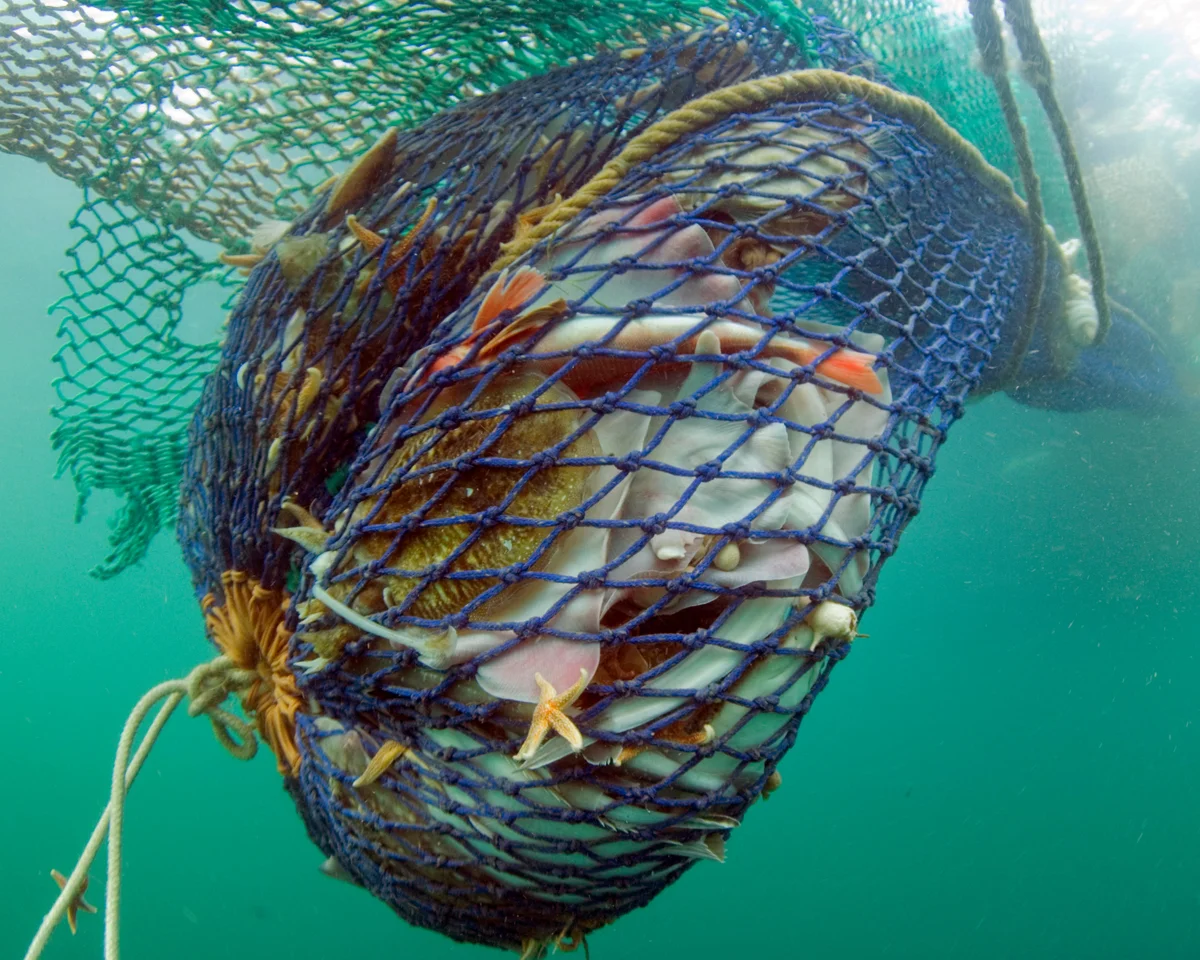
Bottom trawling is a non-selective fishing technique that uses metal frames dragged by a boat raking through the seabed in order to collect bottom-dwelling shellfish. For years, bottom trawling has been widely recognised as a destructive and unsustainable practice by the United Nations (UN), as it actively rips up habitats including nursery and feeding areas vital for a range of species. Yet it’s not just marine life that is affected. The upwelling of bottom sediment releases a whopping 370 million metric tons of carbon dioxide into the atmosphere, equivalent to the emissions of heating 50 million homes for a whole year.
The now-rejected bill sought to ban bottom trawling in marine protected areas, places with high biodiversity or where there may be vulnerable species. Environmental organisations, activists and the general public alike celebrated the UK government’s bill proposal in June. David Attenborough’s Ocean documentary gathered public momentum by demonstrating the effects of trawling on seabed. Katie White, the main speaker for the bill, highlighted that eight in ten UK adults were in favour of the ban; the majority of people already believe a ban is in place. Indeed, it had seemed like a done deal with Steve Reed, a Labour minister, doubling down on these promises at the UN Ocean Conference following the bill’s public release.
The reason for the bill ultimately being tossed out is immensely frustrating. The Department for Environment, Food and Rural Affairs stated that “blanket bans are disproportionate and not in line with legislation”. Instead, they have opted for targeted bans on specific vulnerable areas following consultation. Yet all of these areas are protected for a reason — the stipulation for consultation seems more of a cop-out that will take years of ‘assessment’ and get no real work done. The bill wasn’t perfect, but it was precious progress fuelled by a movement to look below the surface of our seas and protect the organisms and habitats below as we do above. The only stakeholders that truly benefit here are the large industrial fishing companies who can continue to exploit the marine environment. This is a clear case of out of sight, out of mind — ocean health is simply not as valued as equivalent ecosystems on land.
This bill rejection may seem trivial and there may be other legislation in the future, but it signifies a greater issue than our unsustainable fishing practices. It illustrates the deep disconnect with our oceans and its diverse life. Oceans modulate our climate, absorb carbon dioxide and filter pollutants from water. In return we abuse and pillage them just to eat a precious scallop at a fancy dinner. That sounds a whole lot like we’re the toxic ex, consistently taking advantage of kindnesses we’re not owed.
Any friend would say: block him! Fortunately for us, this is an ocean we’re talking about, not a poor girl. We can still pull our act together and get back in her good graces, protecting what is worth saving, not just what is ours.