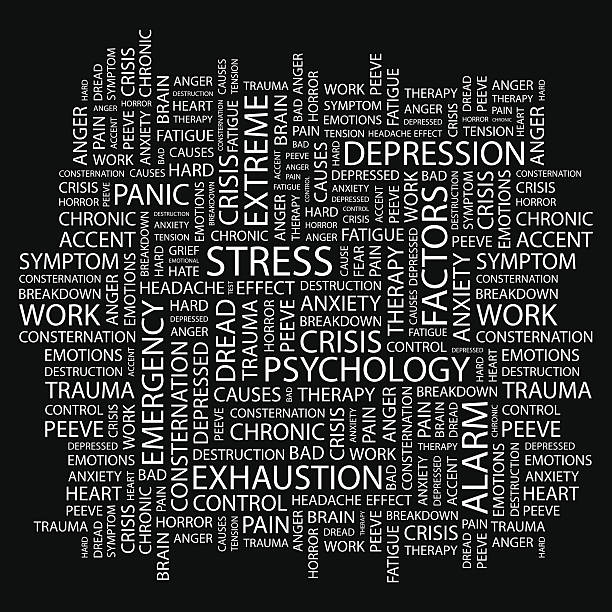
There are many perks to the recent generations’ efforts to destigmatize mental health and illness. What was once considered a taboo conversational topic is now, in many spaces, discussed without hesitation. It has become extremely common to openly share our mental health struggles, whether with a close friend, a therapist, or even in an online comment section. A new perspective is emerging– one that acknowledges a person’s mental health as something intrinsic rather than trivial. It’s a comforting transition: the more we openly talk about mental health, the more normalized it becomes.
Naturally, this conversation has made its way to social media. Every day, we come across content that feeds us new information about ourselves- whether it’s an influencer sharing a mental health journey similar to ours or an infographic identifying us with an anxious attachment style. There comes a point, though, when our openness shifts from comforting to misleading. When you’re in a vulnerable place, desperate to relate to others, it becomes difficult to differentiate what information is real from what has been misconstrued. It often feels easier to diagnose yourself with anxiety based on the list of symptoms your favorite TikToker read out in a video titled “Living with GAD” than to make an appointment with a psychiatrist.
This kind of self-diagnosis is not unfamiliar to us. We feel a headache coming on, type our symptoms into Google, scroll through endless pages of uncertified medical advice, and before we know it, we’ve diagnosed ourselves with a lifelong, incurable disease. It’s the perfect hypochondriacal storm. The same phenomenon is happening on social media, only now it’s disguised as an educational Instagram post titled “5 Signs You Have ADHD.” Instead of taking yourself down a 45-minute-long maze of what your migraine might mean, all you have to do is open your explore page and suddenly you have OCD.
The accessibility of inaccurate information regarding mental health and illness has become an ongoing issue, especially on social media platforms. Buzzwords such as manic, OCD, and trauma are often thrown across our screens with no further diagnostic explanation. Terms such as narcissist and manipulator are used as casual insults among adolescent social circles. Mental illnesses such as bipolar disorder and schizophrenia are flippantly mentioned in comment sections to carelessly describe someone’s actions or behavior. This constant overgeneralization and streamlining of information has sent the newer generation into a spiral of misdiagnoses and a skewed perception of mental health as a whole.
It is important, if not crucial, to distinguish posts that aim to spread awareness from those that spread misinformation. The former often stems from an innocent desire to connect, while the latter may serve a more dangerous agenda. Social media posts are, at its core, made to translate information into an aesthetically pleasing, easily comprehensible format that prioritizes engagement over veracity. Recently, I have noticed a worrying amount of unverified infographics with deceptive language and stock phrases clouding my explore page. A post titled “Do You Have Anorexia Nervosa?” accompanied by a poorly drawn stick figure and a slowed down ballad of Fiona Apple’s “Paper Bag” popped up on my Instagram feed a few days ago. Though the creator appeared somewhat knowledgeable and sympathetic, each slide I scrolled through was riddled with outdated stereotypes and lacked any credible sources. Coming across this was a grounding reminder of how easily information can be manipulated and overshadowed by appealing graphics and simplified linguistics.
This isn’t to say online conversation about mental health can’t provide comfort and community. For many people, direct outlets such as talk therapy or psychotropic medication are simply inaccessible. Whether it be a lack of external support or an inability to find and receive proper help, a large percentage of the population is left untreated and medically neglected. According to the World Health Organization, over one billion people are living with mental health disorders and fewer than 10% of affected individuals receive care in low-income countries. It’s only fair that so many people would find it necessary to turn to outlets that don’t require overpriced health insurance or an out-of-pocket check. But can we really trust social media to provide us with accurate information? Are these platforms as helpful as they claim to be?
As we all know, you can’t trust everything you read online. When indulging in conversations about mental health, it is extremely important to feel secure in where and who the information is coming from. No matter how knowledgeable your favorite influencer appears, their perspective is likely far narrower than that of a healthcare professional. In order to destigmatize mental illness and prioritize mental health, we must approach these topics with a desire to normalize uncomfortable discussions and discourage the acceptance of harmful generalizations. Empathy backed by knowledge is stronger than advice made to go viral.