There are three core experiences associated with college life that every new student should engage with: studying, partying and… climbing. Not what you were expecting, right? After hearing what Olivia Johnson and Darren Kelley – leading members of the Dublin University Climbing Club (DUCC) – have to say, you might start to believe it yourself.
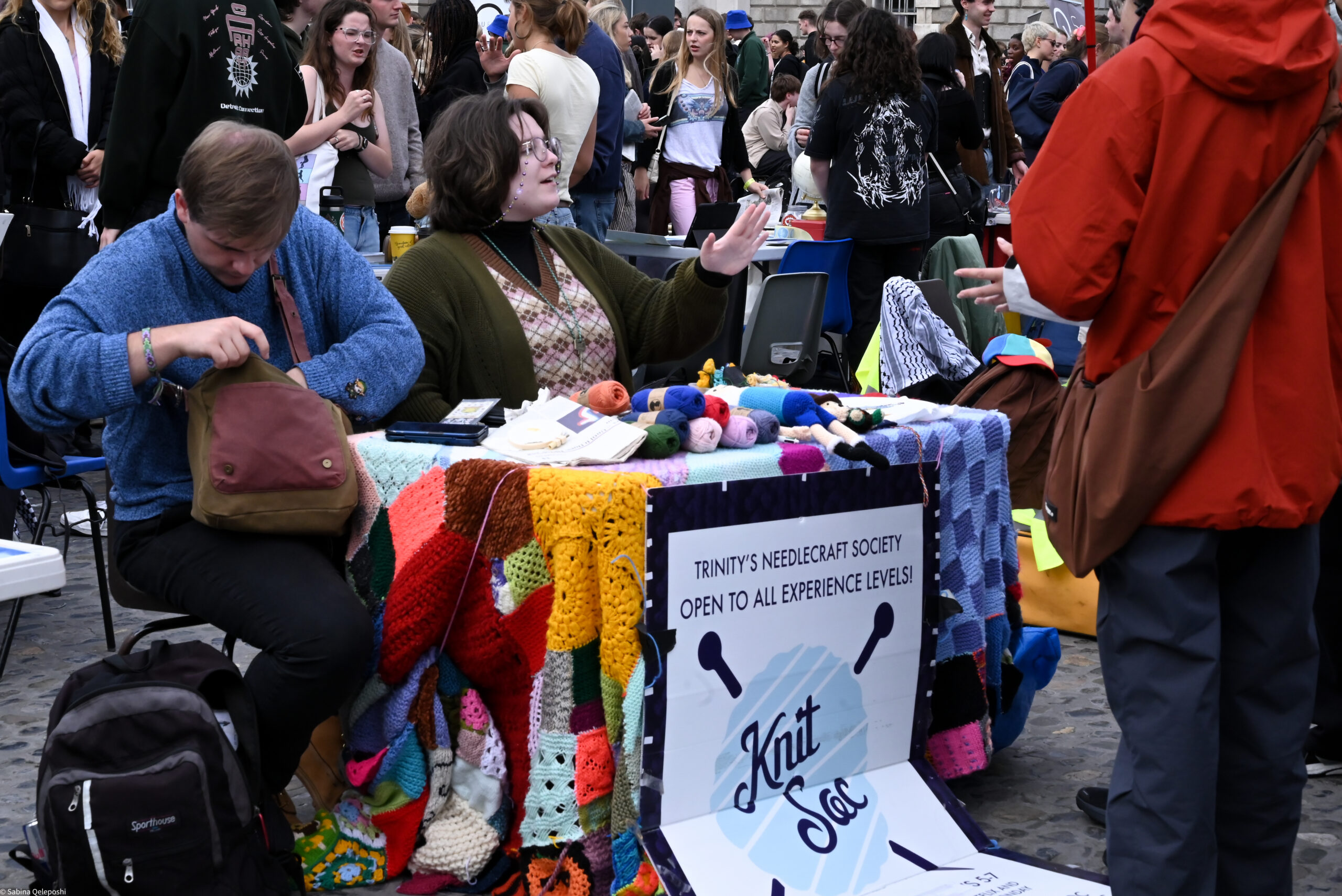
Trinity College Dublin prides itself on having a vibrant social life, with over 170 clubs and societies available to engage with, varying from more academic-focused societies like the DU Mathsoc, to the laid-back leisure of the Knitting Society. As Olivia Johnson, the club captain herself, argues, the Dublin University Climbing Club “has a little something for everyone”, combining aspects of physical activity and community-building through its orchestration of both social events and excursions. The club hosts three major outings per year – one in each reading week, and one at the start of the summer break. All three of these events provide the ideal opportunity for members of the club to bond over the shared experience of climbing, using nature as the perfect medium for this process. The club is not, however, limited to climbing events. Coming up soon is the annual film festival “Bridgerock”, hosted by DUCC, which involves a raffle raising money for mountain rescue.
The activity of climbing leads to a certain degree of exposure to the mercy of the elements. While weather conditions might be seen as a deterrent to joining the climbing club, Olivia has a refreshingly optimistic outlook on this issue: ‘in a way, you have to bond because of the weather’ – perhaps the only positive application of the Irish climate. Whenever conditions are remotely unsafe on a trip, the climbers just end up ‘staying inside, drinking, having fun.’ Not a bad trade-off, if you ask me.

An integral aspect of the DUCC is the tight-knit community that it is able to build. Darren emphasises that the club “attracts sort of unusual people”, uniting a wonderfully varied faction of individuals through a shared passion for climbing. This is partly due to the trips that it organises, which – according to Darren – act as a “crash-course icebreaker” for all those involved. Olivia points out that ‘climbing is fundamentally quite humbling,’ as the act of being ‘exposed, trying to scramble up a wall’ eliminates an element of the social pressures associated with joining a university society for the first time. Correct me if I’m wrong, but, if you’re ten metres off the ground, maintaining social norms might no longer be a top priority. DUCC cultivates a purely supportive environment, where “every success, as well as every failure, brings on a cheer”. To quote Alex Honnold, a professional rock climber, “ninety percent of climbing is falling” – a reality which is acknowledged and embraced by members of the climbing community.
The club captain also emphasises DUCC’s flexibility, accommodating both those wanting to try their hand at climbing for the first time, as well as those who want to take their skills to the next level. For those seeking active involvement in the club, it’s never too late to join: both Olivia and Darren – now in third year – only started climbing in their first year of university, and have worked their way up to leading positions in the club. Of the twelve committee members that make up the DUCC, each role entails different levels of responsibility. While some, like secretary or captain, might require a good deal of time and dedication, others, like first-year rep or trips officer, can be much less demanding.
If anyone is still debating whether or not to join the Dublin University Climbing Club, perhaps this quote from Olivia will give all the inspiration you need:
‘I didn’t necessarily find college to be exactly how I thought. Climbing was the saviour… I was able to find my place, find my people.’
Darren, who began his career in climbing terrified of heights, has one last suggestion to those who might share in this fear: to gather up the courage for your first climb, listen to ‘Little League’ by Cap’n Jazz.