
When it comes to things to complain about, jobs are always a big topic, but life with a job is generally desirable. While the notion of working during study sounds tiresome, many students received more than just the financial rewards from this lifestyle. However, for the students from low-income backgrounds, part-time jobs can be a burden and potentially push them to drop out. In fact, students who receive the SUSI grant are penalised for earning wages during their study time. Having a healthy portion of part-time jobs while studying is a privilege that not everyone enjoys.
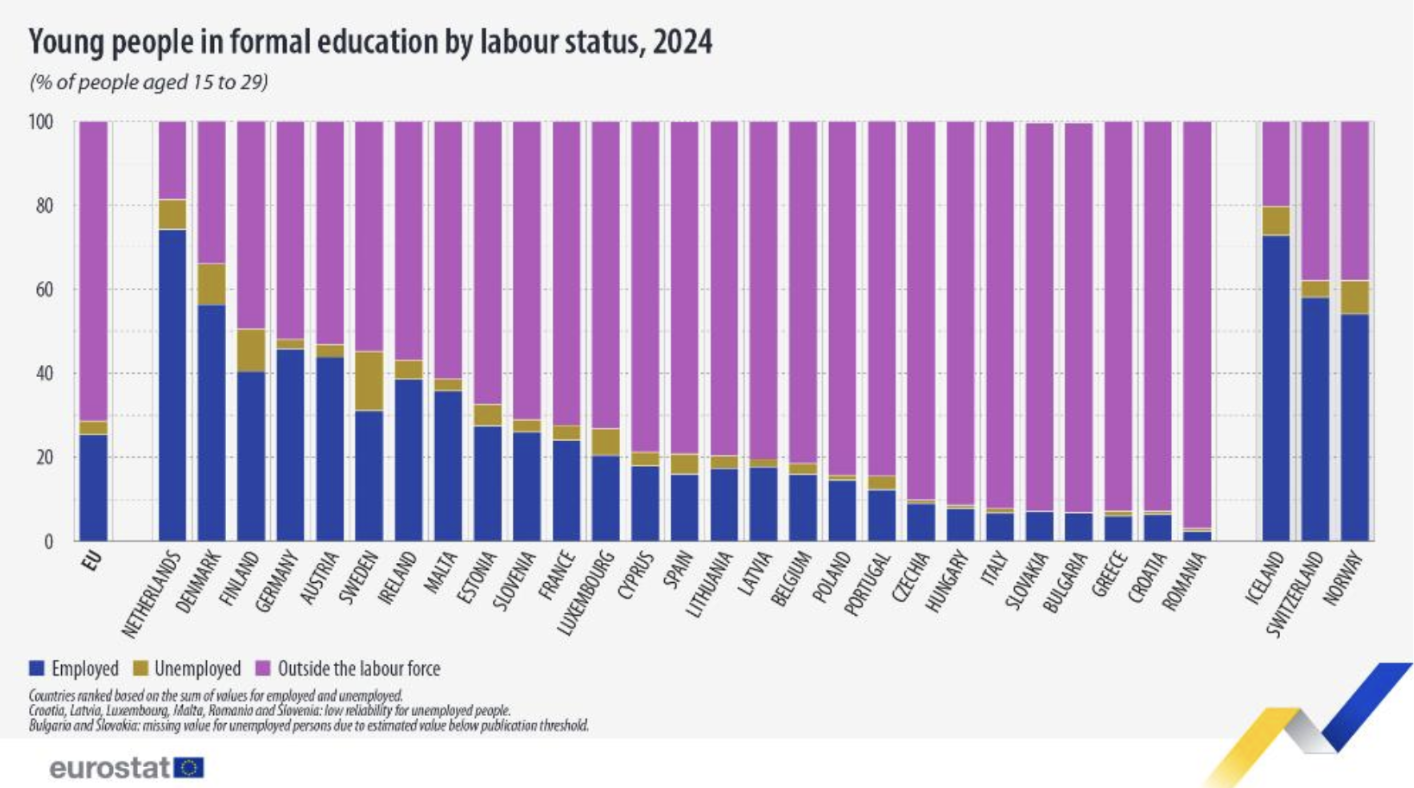
Ireland, in contrast to many countries, has relatively greater job access for students and a pro-working culture, and this should be celebrated. According to Eurostat, Ireland has 42 per cent of young people (15 to 29) in formal education in the labour force in 2024, ranking 7th in the EU, contrasting to 25 per cent of European young people. These statistics also suggest that student part-time jobs are the privileges that only high-income countries have.
For students who have family financial support, working provides a sense of independence and achievement, and also builds social networks outside the student circle and builds routine amidst a chaotic student life. Not to mention that the transferable skills you build through work advances career choices and life decisions after graduation. Above all, jobs pay money, and that makes life better.

Every student should be encouraged to have a part-time job, but the problem is that not everyone benefits from this part-time job culture the same. The satisfaction of the jobs is based on many factors, but most importantly, it is based on how dependent students are on their jobs. For the students who have a financial safety net, they can balance their work hours to prioritize their studies, afford to take days off when they need a holiday, and quit their job to go on an Erasmus. Whereas, for the students who significantly rely on that income to live and complete the study, they have to prioritise work before study and are more likely to remain in the toxic workplace. The part-time job could be a burden that potentially results in dropping out.
In the current framework of the SUSI grants scheme, students from low-income backgrounds are not encouraged to have a balanced work-study life. The SUSI covers the education and accommodation fee for the students who can’t afford that, based on an assessment of the gross income of the students’ family, which includes the wages students earn during their academic year. Basically, for the SUSI students, the extra income would reduce the grant they received, so if they work part-time and lose their jobs, that will lead to losing their living budget to finish their studies. Therefore, many SUSI students choose to live on minimal expenditure during their study period while receiving a higher grant, and sacrifice the holidays on wage jobs instead of travelling or unpaid internships that build career advantages.
This disincentive model has negative impacts on both the students and the welfare system. Students struggle more financially, while increasing the welfare budget’s deficit in the long run. Alternatively, introducing an encouraging policy on part-time jobs for students will decrease their dependency on the welfare system and even increase the budget through income taxation, especially given that the students who worked part time during college earn significantly more after graduation. In short, the SUSI grant shouldn’t assess the students’ part time earning wages as a part of their gross income.
Another barrier that stops students from employment is being unable to find suitable jobs. Many students’ jobs, like retail or waiter, require full-day availability; others require late-night shifts, like being a bartender. These jobs can be great for stable income and experience building, but they are time-consuming and build little professional skills. Especially for the international students and students who are not living in Dublin over the weekends, they have to either stay in Dublin to keep their jobs or commute long distances every weekend to work; either way leads to exhaustion and over-burning.
The ideal students’ jobs are those that can fill the gaps between classes, such as freelancing, remote work, and half-shift jobs. For example, language interpreters, teachers (both in person and online), tour guides, seasonal contract jobs, and commission-based jobs. Although these jobs don’t offer stable working hours for beginners, as the skill builds up, it will build into a consistent weekly cadence.
The salaries of these jobs are higher than average service jobs to compensate for the short working shift, which makes it perfect for students who want flexible work during the week days. Students are also desirable candidates for these roles, as most of the average labourers are looking for full employment these jobs can’t afford to pay, which often leaves a big vacancy in these areas.
Most students stop searching for jobs after they find one that meets their minimum threshold of expectation. For example, many students are working in restaurants when they are capable of educating younger generations. The satisfaction not only diminishes the quality of the students life, but also results in a poor allocation of the labour capital. Institutions like Trinity and the Trinity College Dublin Students’ Union (TCDSU), have the potential to improve the situation.
Here are some recommended policies that I think should be adopted. Trinity should implement an incentive model for students who successfully refer jobs to other students. Many of the jobs in Ireland are referred through personal connections, and a one-off financial reward would motivate students to refer their jobs when they leave to other students. TCDSU communication shall build a network with the businesses that have a desire for short-time student workers; this will largely reduce the time individuals spend on job searching and help selecting secure jobs.
Students should be encouraged to work, but not every student can work while balancing their life in the university. Having a regular part-time job as a university student is, in fact, a privilege that many students in the world do not have. In conclusion, I urge the SUSI grant to stop penalising the students for extra jobs they do during college, and implement a job posting and referral system in the university.