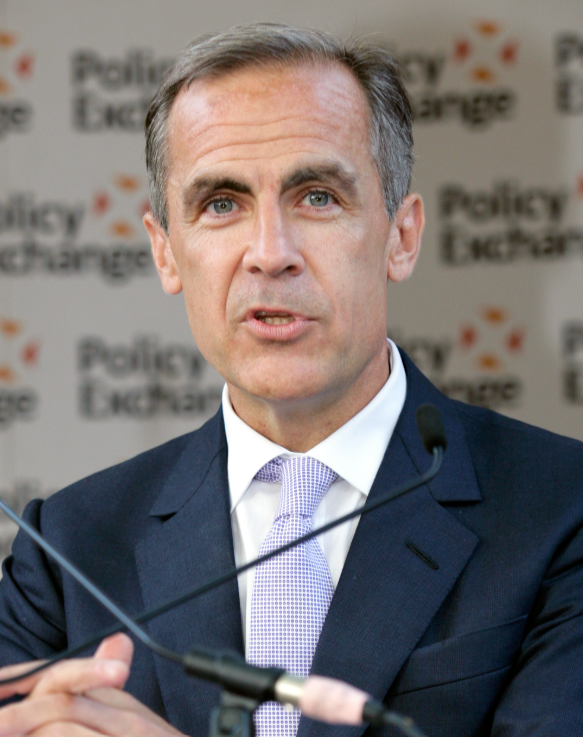

To call Canadian Prime Minister Mark Carney an odd poster-child for an anti-American pivot would be an understatement. Carney built his career as a walking billboard of the post-1991 liberal world order, having served as the unelected governor of first the Bank of England and then the Bank of Canada. Yet at Davos, his vocalization of what so many of our generation know and have known for the past decade felt vindicating and was rightly met with laudatory op-eds from every publication to the left of the Daily Mail. Yet that this was the man who was saying it, and that he was saying it at the Davos economic summit, perhaps the epitome of the elitist political world, was at the very least a cruel irony if not a clear sign of the times. Because Carney was not talking about Gaza. Carney was not tempering his hawkishness on Ukraine, his commitment to austerity, or his treatment of First Nations people in Canada which follows the same authoritarian playbook as the Trump administration’s treatment of minorities. He was talking about Greenland.
For those of us born in the 21st century, the concept of the liberal world order has always been wracked with dissonance and internal contradictions. We were too young to remember the beginning of the Global War on Terrorism and experience the surge of patriotic emotionality which spurred on this ill-defined forever-war which defined our earliest memories. When we were teenagers, the first election of Donald Trump and the precipitous rise of both far-right parties and their ideas felt inexplicable. When the pandemic started, it felt like the world was ending, directly followed by the murder of George Floyd and the movement which followed and the backlash to it all felt like a generational defining moment, only to see both amount immediately to very little structural change. The invasion of Ukraine, while traumatizing for many Eastern Europeans, was largely outside of the realm of American political thought: we’d always been told that Russia was bad and few of us could point out Ukraine on a map. Yet, we were told that we should care about the plight of the Ukrainian people as they suffered a brutal imperialistic invasion, justified by oligarchic greed and an imagined imperial past. Then, Gaza happened.
The dissonance between the Western responses to these two wars broke the last shreds of our generation’s faith in the idea of a liberal world order. Even as opposition mounted to the support of the Israeli genocide and our feeds were plastered with images far more harrowing than what we see from Ukraine, we were told that we weren’t seeing what we were seeing. We were wrong to equate one war with another, we were wrong to ask for peace, and if we were seeing what we were seeing, we were wrong to see it in the first place. When Trump was reelected, few in our generation were shocked and many even cheered. When America invaded Venezuela, fewer cheered but no one was shocked. We had grown up with war, we had been socialized by it, and no one sincerely expected any of our leaders to oppose it. So when America threatened to invade Greenland and Europe finally seemed ready to oppose the US, it first felt cathartic, before, at least for me, the taste in my mouth turned bitter.

But why Greenland? Why was this the straw that broke the moose’s back? This dissonance, between the anti-Atlanticism felt by the people of the West, who have spent the past two years calling for an end to the American–Israeli genocide in Gaza, and the political leaders who have routinely refused to answer those calls has never felt more stark than in the wake of Carney’s speech. It would be easy for those of us on the left to stand up on our respective digital soap boxes and say that this turn is solely because the Americans started to come after the imperial core! Many of us have. But while this may be a punchy rhetorical line, it’s important that we not mistake what sounds right from what is right. Long before Trump imposed tariffs on Europe over its refusal to relinquish Greenland to the US, he imposed tariffs on Canada for not submitting itself to annexation either. Why did the dam not break then? Carney rode that wave of outrage to his Liberal Party’s victory at the ballot box, but once in office he returned to the well-worn institutional instruments of civil dialogue and economic concessions
The illiberal and often outright criminal treatment of the people of Gaza, Venezuela, and Iran by the US was not the problem for Carney or for his audience at Davos. The change occurred the minute that that illiberalism and criminality appeared to be heading in their direction and unlike Trump’s earlier threats, there was a chance it wouldn’t stop. This is how Carney’s speech and the general European pivot away from Atlanticism must be seen: not as a principled moral stand against a belligerent America, but a recognition not just that it could, but would happen to them too. We’ve always known it would, they’ve just finally decided the sand they’ve stuck their heads in was getting a bit hot for their liking.