
While New York City first First Lady Rama Duwaji may be the first First Lady to have used the word Labubu, or the first to be described as a “Brooklyn baddie”, she is certainly not the first to be hailed as a fashion icon. From Martha Washington to Jackie Kennedy to Michelle Obama, the spouses of the United States’ presidents, while not having any Constitutional duties, have become culturally memorable, using their roles to influence fashion, politics, and American culture.
When George Washington was first elected, Martha Washington, the inaugural First Lady, originally planned on residing at her Mount Vernon estate. However, George Washington quickly summoned her to the White House and, in turn, into the public eye. The newly ordained First Lady was keen on establishing herself as non-monarchial, despite having no other precedent. In the United States’ effort to distance itself from the British monarchy, the First Lady herself insisted on a far less glitzy lifestyle than King George III’s wife, Queen Charlotte, across the sea. Feather Foster, author of The First Ladies: An Intimate Portrait of the Women Who Shaped America, points out this more matronly style as perfectly fitting the image of “mother of the nation”. A few presidents later, Dolley Madison, wife of James Madison, became the first “fashionista” First Lady . She adopted a different style than Washington, sporting low-cut dresses and imported turban hats. Madison was not only a trendsetter in her clothing but in her hosting skills, throwing opulent parties. These politically strategic shin-digs, often referred to as “Ms. Madison’s Wednesday nights” or “squeezes,” were fundamental in defining the social and cultural scene of Washington D.C. She juxtaposed her drab husband with a more cosmopolitan look and behavior. When Andrew Jackson ran for president after John Adams, newspapers questioned whether his wife was fit to head “the female society of the United States”, thus identifying the influence that the First Lady had on the culture and ultimately political persuasion of the country.
Eleanor Roosevelt, who adopted the role almost a century later, further transformed the title, but not just in the realm of fashion. She was extremely reluctant to obtain the role, since it had previously been defined by domesticity and passivity, adjectives that seemed far from Roosevelt’s ethos. Her predecessor, Lou Henry Hoover, had ended her feminist activism when she became First Lady, prioritising being available for her husband. Elenor’s distress was so severe that her biography was even subtitled “Reluctant First Lady.” After her husband, Franklin Delano Roosevelt, became sick with polio, she became both the First Lady and a de facto interim president. She travelled throughout the country managing her husband’s political affairs, appearing as his stand-in at meetings, and holding press conferences. She was a staunch advocate for civil rights, using her platform to fight against racial inequality at a time when it was politically dangerous, fighting both in her social circles, famously resigning from the Daughters of the American Revolution women’s group after they refused admittance to Black singer Marian Anderson, and in political ones, lobbying for anti-lynching laws and integrated civil rights legislation into her husband’s New Deal.

Eleanor Roosevelt utterly transformed the First Lady’s role from its subdued, reserved precedence into an opportunity to enact social change. She, like Rama Duwaji, was an artist and creative prior to her stint in the White House and she continued to write while in the role of First Lady. Jackie Kennedy Onassis, known more as a socialite status than social activist, also had a notable artistic prowess. She was known for her restoration of the White House,emphasising her knowledge in the arts and culture. Her tailored skirts and pillbox hats, now iconic features of First Lady style, were outsourced to Europe and from a variety of international brands, representing the era of internationalism and glamour that the US was heading into.
Michelle Obama, like Jackie, became a style icon from the beginning of her role, but in a very different way. Entering the office amid a financial crisis, Obama was known for displaying an accessible image, wearing brands like Target and J Crew. Einav Rabinovitch-Fox, author of Dressed for Freedom: The Fashionable Politics of American Feminism, describes Obama’s style as speaking “to her understanding of fashion as a representative of politics and identity, as well as how it could be used as a tool to advance her husband’s political agenda”. As a Black woman, Obama’s hair was often a subject of debate. She told People magazine in an interview that she avoided braids or her natural hair because she “Wasn’t sure whether the country was ready for it,” noting that The Crown Act (protecting employees from race-based discrimination) had yet to be passed, and she didn’t want her hair to define her. As Rabinovitch-Fox expertly puts it: “After leaving the White House, she literally let her hair down”.
Current FLOTUS Melania Trump was a fashion model before her role in the White House, making her familiar with clothes’ ability to send a message. This highlighted her questionable outfit choices during public appearances. On a visit to a migrant detention center in 2018, she wore a jacket saying “I really don’t care. Do u?”, a message that she later claimed was directed towards “left-wing media”. On a visit to a site of a natural disaster in Kenya, she famously sported a pith hat, a symbol of colonial rule.
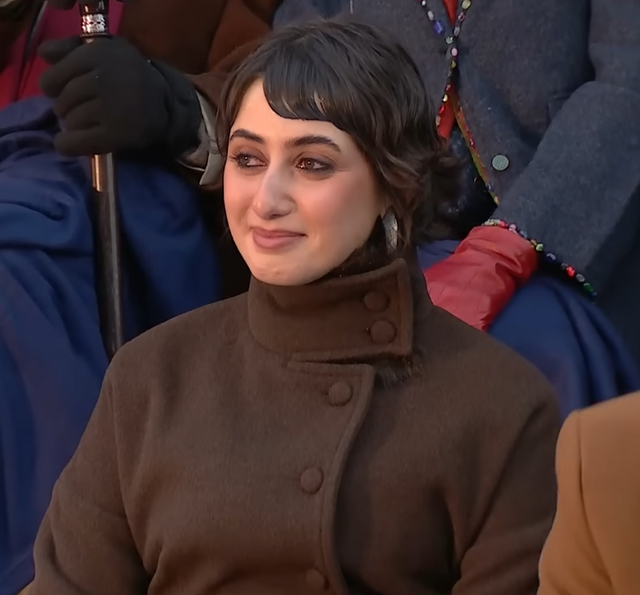
The classic archetype of First Lady , an amalgamation of pearls and tweed, finds no home in New York City First Lady Rama Duwaji’s closet. At the midnight swearing-in of her husband, Zohran Mamdani, she wore a rented Balenciaga coat from Albright Fashion Library and vintage gold earrings loaned from New York Vintage. Daisy Maldondo for InStyle notes that both items being on loan is “a detail that not only speaks to her appreciation for circular fashion, but also signals her generation’s appreciation for sustainability and ethical consumption.” Duwaji is also a respite from the bleak and, quite frankly, unfashionable incumbent First Lady. While the first First Lady, Martha Washington, made it clear that she didn’t want to image herself after a monarchy, the role of First Lady has still adopted connotations of a pseudo-princess, with a finger on the pulse and a word in the ear of the American people. The role may not have any official responsibilities, but presidential spouses have wielded the social and political power that comes with the title to influence popular American opinion, whether that is an extension of a certain agenda, or not.