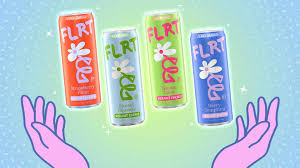
Why drink manly Monster when you can drink FLRT? A pastel-coloured, collagen-enriched, zero-sugar beverage for women! This is the narrative underpinning the marketing campaign for Monster Energy’s latest canned beverage, FLRT. The product is set to enter the market this March yet has already received criticism of employing patronising, gendered marketing tactics – placing it at the centre of current pink-marketing discourse.
Pink-marketing refers to female-focused advertising which uses stereotypically feminine aesthetics to sell products. It can often be predatory in nature in its attempt to make women feel insecure – whether about their health, beauty, or lifestyle – and then profit from this insecurity by offering a “quick and easy fix”. This model of marketing is commonplace in modern, patriarchal, and capitalist societies such as those in the West, as women have capital, and corporations know that this capital can be easily extracted through exploitative consumption-driven tactics. It is a fact that 85 per cent of consumer purchases are made by women, as Forbes reported in 2019. This translates to women having $20,000,000,000,000 of global purchasing power. This understood, it is no wonder that brands such as Monster seek to market so heavily towards women.
FLRT asserts itself to be “thoughtfully made with zero sugar and made to fit into your routine.” The drink claims to support immunity, as well as skin and hair health, and contains 200mg of caffeine. Flavours include Strawberry Fling, Sunset Squeeze, Guava Lava, and Berry Tempting – which sit in contrast to Monster’s traditional flavours, namely, Pacific Punch, Voodoo Grape, Khaotic, and Nitro Super Dry. The brand’s website states, “FLRT was born from a simple idea: energy should be as vibrant, fearless, and fun as those who drink it. Thoughtfully made with zero sugar and made to fit into your routine.”

The pink-marketing used for this product is undeniable. It should be noted, however, that most female-focused marketing tactics are not this blatant. The pink tax is an invisible financial burden that only gained mainstream acknowledgement in the mid-1990s. The pink tax describes how women’s products are sold at a higher price than the equivalent products for men. Cosmetic products such as razors, deodorant, and face wash are the typical examples used to illustrate this. A study by the Central Statistics Office (CSO) found that women’s cosmetics products were on average 17 per cent more expensive than their male equivalents.
The stationery brand Bic came under fire in 2012 for their “Bic for Her” product launch. This product was a pack of two pink and purple, bedazzled pens specifically designed to “fit comfortably in a woman’s hand”. Aside from the obvious critiques of sexist marketing, Business Insider reported that the Bic for Her pens were more expensive and smaller than non-gendered Bic pens with the same product specifications.
This phenomenon of the pink tax is applicable to Monster’s latest marketing campaign. The numbers show that traditional Monster has been shrinked and pinked, as the saying goes. Perhaps notable is the fact that original Monster is sold in 500 millilitre cans, whereas FLRT comes in 355 millilitre cans. Once FLRT hits the market, it will be interesting to see whether it comes in at a lower price than the original Monster considering the size difference; although, the track record of the pink-marketing industry suggests that it will not.
Also notable, is that Monster Energy is a subsidiary of Coca-Cola, which has been a target of the Boycott, Divestment, Sanctions (BDS) movement due to the company’s distribution centre being located on an illegal Israeli settlement. Trinity College Dublin has an ongoing long-term partnership with Coca-Cola, and hence sells Coca-Cola products in vending machines, as well as in the various Student Union shops and cafes around campus. This partnership has received immense backlash from the student body, and so steps have been taken by the Student Union and Trinity BDS to end the contract.
Speaking to the University Times, Chairperson of Trinity BDS Harry Johnston had this to say, “After the encampment Trinity agreed to end all contracts with companies complicit in human rights abuses in Palestine. Coca-Cola deprives Palestinian villages of water to operate a factory in an illegal settlement. Trinity must uphold its promise to students and end the Coke contract which is up for automatic review in August.”
FLRT will soon join its many “female beverage” counterparts — Poppi, Celsius, Alani, and the likes — on the shelf of your local corner shop, which begs the question – what genderless product will be shrinked and pinked next?