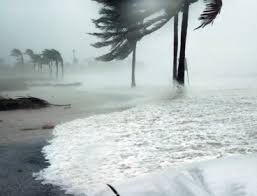

Storm Chandra was indiscriminate in not leaving any part of Ireland unscathed from its ferocious conditions. Last weekend roads were closed due to the mass floodings across Enniscorthy, creating much chaos across the area. In the town of Bridgetown, Wexford, several properties were destroyed due to flooding. As a result of Wexford being one of the counties impacted the most by Strom Chandra, the River Nore had dropped significantly in its water levels. However, the River Barrow had continued to increase in its water levels. According to Carlow County Council, the River Burren had hit almost record levels in its water capacity. Traffic travelling between the R683 and R684 could not make their way through due to the flooding.
The Electric Supply Board (ESB) had warned that there was pressure put on the Pulaphuca Reservoir because of the level of rainfall that had occurred. Because of this occurrence, there was a warning given that the additional pockets of water the dam was holding would need to be released for it to operate properly. In a statement given to RTÉ, ESB warned that, “Without the dam structures at Poulaphouca, this water would have proceeded through the Liffey from Wicklow into Kildare and ultimately Dublin, significantly increasing water levels all along the river over and above what has been already experienced.”
On the surface, the levels of rainfall, wind and floods that occurred would probably be reduced to being an unfortunate weather occurrence because of the time of year. Or at best, an inevitable result of climate change and that is it. Nevertheless, there are many problems with Ireland’s approach to weather events like this that have been brought back into public conversation again. One thing that must be noted is that as far as planning permissions are concerned, the risks of flooding are not one of the central matters that developers consider when first creating an infrastructure plan across the entire country.

In this case, the population of Ireland continues to steadily increase across many regions that would not have traditionally been epicentres of population growth such as the southeast. In the past, preventative measures by the government such as the Planning Act 2009 would have been necessary and crucial in making sure that the landscape and dangers that the environment brings coincide with the longevity of any housing proposals. But with the population increases not only being concentrated in cities across Ireland and areas that are more susceptible to flooding being subjected to this phenomenon, the government’s future plans for environmental policy is at a crossroads. Now, the policies that are being deliberated on should be more flexible and adaptable than just solely preventative.
In Ireland, Met Éireann does a general weather forecast for the counties across Ireland and the severity of the weather warning for those most affected by major weather events. In contrast to this, the UK provides a more in-depth weather warning for people, providing information about the severity of the weather by specifically looking at towns and rivers to give a more accurate reality of how bad situations like flooding will be.
What will be the deciding factor in Ireland making progress in the meteorology field for future weather events will be its willingness to adapt to new innovations to address significant weather events. In the Netherlands, for example, the strike of balance for supporting future technological progression and sustainability for the environment have been paramount in making them one of the most innovative states when it comes to addressing emergency weather situations such as floods. One of the tactics that the Netherlands has adopted to address flooding are floating wetlands. Floating wetlands have been crucial in being able to absorb water and slow the process of excess water reaching land. On top of that, while being a preventive tactic for flooding, they are also a positive benefit for the environment by acting as a habitat for various plants and species.
Whether the government favours bringing in policies more suitable to combat flooding or not, the responsiveness to implementing legislation in regards to such matters will be the catalyst for the determining success of the government’s response to extreme weather events. For example, Rathfarnham in Dublin was one of the most impacted areas during Storm Chandra. With its history of flooding around the Whitechurch Stream, plans were put into place to prevent any significant flooding from happening.
In 2020, South Dublin County Council received permission from An Bord Pleanála to construct flood walls along the Whitechurch Stream, which would be constructed by the Office of Public Works (OPW) and the local authority. Even though many were in favour of making a move on this plan, it was pushed back due to opposition from Ballyboden Tidy Towns over the desire to make the flood defence more environmentally based. The delay was extended even further by the judicial review that took place. If the judicial review was not as prolonged as it was, it would have been possible for the flood walls to have been built. Most importantly, the severity of the flooding that occurred because of Storm Chandra would not have been at the level that it was had it not been for the planning delays.
It can obviously be acknowledged that full judicial analysis is essential when it comes to development plans that affect both the natural landscape, creation of infrastructure and overall civilian life. Nonetheless, with climate change and extreme weather events acting as a present crisis, the duty to act with urgency when it comes to proposals on how to tackle matters of flooding should be broadly accepted by the wider government and judiciary as a paramount priority to immediately address. With such concerns surrounding the economic ramifications of such storms, by acting with such concern and historical knowledge surrounding places most susceptible to flooding, this pays off in the long run economically by just having to foot the bill for preventing what is bound to happen, not to pay the price for enabling the inevitable to occur in full course.