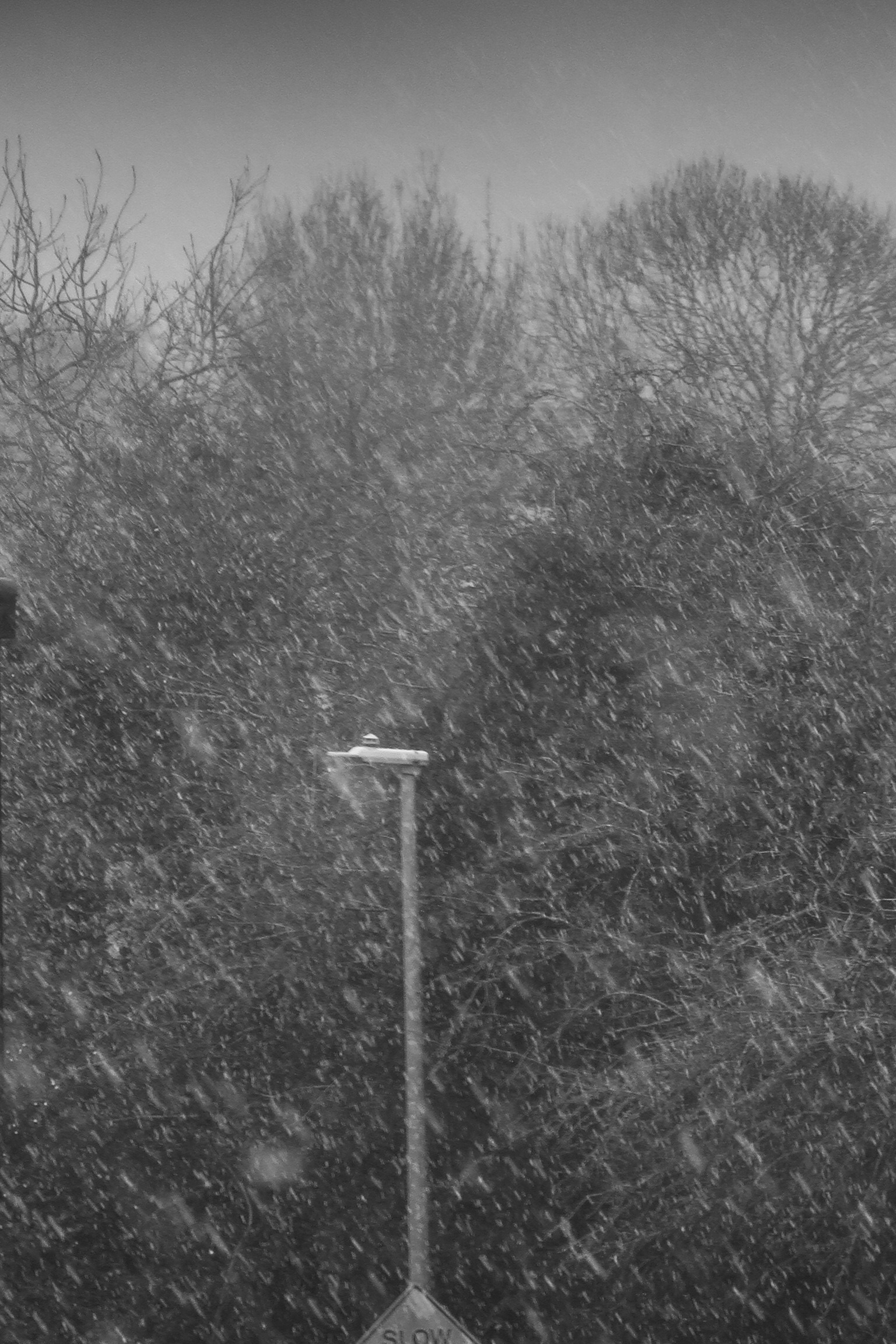

January blues escalated to new heights this Hilary term as blue skies vanished and students were instead left to battle the elements in what was Dublin’s second wettest January on record since 1948. Relentless downpours reached their peak as Storm Chandra, a low pressure system bringing heavy wind and rain, swept into Ireland on January 26th, with chaos erupting the following day. Despite a status yellow rain warning issued by Met Éireann to southeastern counties, and a nationwide status yellow wind warning, few could have imagined the scenes that would emerge across the country on January 27th. Water surged down residential hallways, up to 20,000 buildings lost power, submerged cars lay abandoned on roads and in driveways, and institutions and businesses were among those flooded, including Trinity’s very own Lloyd Institute. With rain falling on previously saturated ground and river banks already close to bursting, Storm Chandra had an atomic effect, causing rivers such as the River Slaney in Wexford and the River Dodder in Dublin to burst their banks. What ensued was a veritable nightmare across disrupted public transport systems, leaving several Trinity students to fend for themselves amidst the chaos.
Amongst the counties most affected by Storm Chandra was Wicklow, whose River Dargle also surpassed record water levels in recent years. Sadhbh Dempsey, a Senior Sophister Linguistics with German student and Kilmacanogue resident, described how the storm rendered her commute impossible, forcing her to miss a day at college: “The flooding in my area made it impossible to get into college for the entire day. The bus stop itself was knee-deep in water, and for the bus to even get to the bus stop in the first place it would have had to get through the huge backlog of traffic going the whole way down the N11, which was the result of cars only being able to pass through what was essentially a lake on the dual carriageway one at a time and at a snail’s pace.” While Sadhbh stated that “thankfully, the damage to property was minimal”, and that Wicklow County Council assisted in easing the floodwaters the next morning by clearing drains, she reported that “for that day (January 27th), the flooding caused massive disruption to commuters in the North Wicklow area, and for anyone trying to get into Dublin from the South”.
A similar experience was shared by Ali Duggan, a Senior Fresh Clinical Speech and Language Studies student who resides in Arklow, a lively town situated along the River Avoca. Describing the flooding as the worst she had “ever seen”, Ali clarified that while Arklow has previously experienced flooding due to its coastal location, the flooding brought about by Storm Chandra was unprecedented: “Being beside the sea and on a river, we’ve flooded before, but not like this.” Ali had observed the increasingly high water levels of the River Avoca in the days before Storm Chandra, and had correctly anticipated that the river would burst its banks. While Ali’s mother and brother were able to leave home without any issues on the morning of January 27th, Ali was not so lucky, describing how by noon “the road to my bus was all flooded […] the bus got cancelled obviously”, which left her in danger of missing a 3pm lecture. Fortunately, Ali’s sister was able to drop Ali to the DART Station at Bray, where she boarded a train and made it to her lecture by the skin of her teeth. The journey to Bray was far from smooth, with Ali describing how the two “had to take the back roads to Bray as the motorway was flooded around the Kilmacanogue area”. Like Sadhbh, Ali reported little damage in the way of properties, stating that “no one I know had their homes flooded”; however, she did note that residents in neighbouring towns like Aughrim were among those whose houses were affected by floodwaters.

Disruption was not only limited to the Wicklow area, with Louth also among the counties who suffered the brunt of Storm Chandra’s impact. Luke Harrison, a Senior Sophister History and Philosophy student and Duleek resident who commutes along the Drogheda line daily, faced delays in getting both to and from college, having to wait almost an additional hour for his train to Dublin on January 28th. Luke’s journey home was later disrupted by a fallen tree obscuring the tracks, which resulted in the cancellation of his train from Connolly. While Luke noted that an alternative bus service was provided which “for sure helped”, he described how “overall the delays pretty much added on an additional one to two hours to my commute time for the day. The delays just make it super tiring, especially when the commute is already long enough”. Further obstacles to Luke’s commute presented themselves on January 30th, when services between Drogheda and Skerries were suspended following a tragic accident on the line. While whether or not the fatality was related to the storm remains unclear, Luke stated that those on board the train were shockingly “forced to get off at Skerries with no alternative transport provided”, causing his journey home to amount to a staggering four hours in total. While Luke stated that “generally most services were delayed for me, even if by a little”, he voiced his frustration particularly at the events that unfolded on January 28th and 30th, describing them as “hours of wasted time”.
Sadhbh, Ali, and Luke are among countless other students who face significant barriers in commuting to college during adverse weather conditions, and whose stories illuminate the vulnerability of this country’s transport systems. In an opinion piece for The Irish Times, Trinity’s Brian Caufield, Professor in Transportation in the Department of Civil, Structural and Environmental Engineering, criticised the weaknesses in Ireland’s transport infrastructure, stating that the disruption and backlog caused by Storm Chandra highlighted how “in an era of increased extreme weather events, our infrastructure is not fit for purpose”. Indeed, meteorologists at Met Éireann have established that the devastation Storm Chandra left in its wake can be directly attributed to climate change, as intense downpours are arising due to the moisture retained in the atmosphere as the planet warms. With these torrents of rain wreaking havoc not only on both individual and communal properties but on the daily lives of students, developments in infrastructure should assume a top priority as we prepare to face the ultimate battle that is climate change.