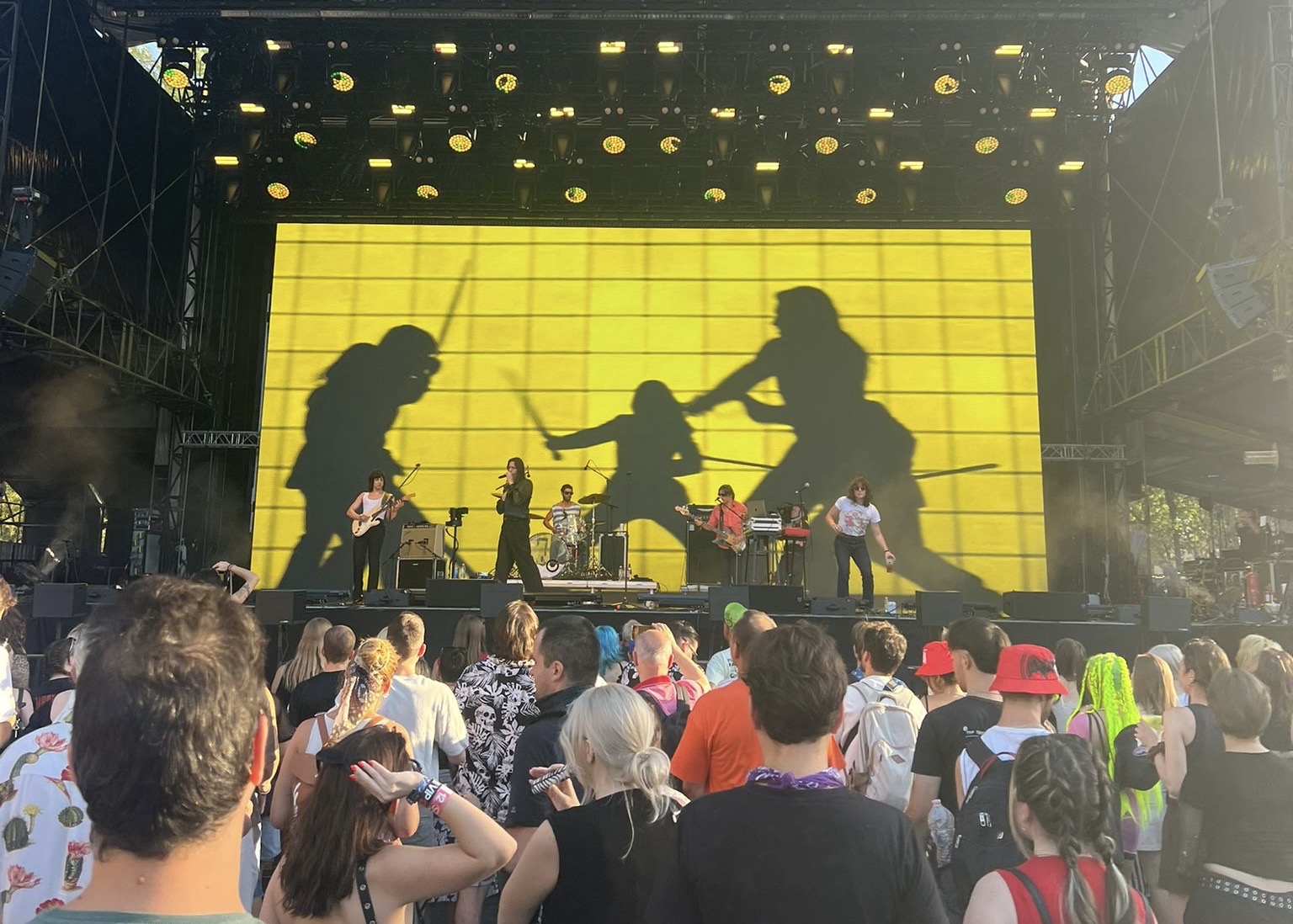

The moment you step out of the security check tent at Sziget Festival, you enter into another dimension for the next five days. The atmosphere is reminiscent of childhood summer camps where your biggest worry is choosing the perfect colours for your friendship bracelet (combined with drunken mumbling in various European languages).
The first notable artist of the festival was none other than the personification of a popstar Barbie, the Swedish-born singer Zara Larsson. Her concert was beyond refreshing in a world where all things girly are often dismissed. The concert made the impression that she was fighting patriarchal expectations one rhinestone at a time. Her songs, stage setup and costume, combined with the dancers and the all-female band (all of whom Larsson gave frequent shout-outs to), created a wonderfully safe and upbeat atmosphere for dancing, singing and being unselfconscious about enjoying colour and sparkle. This was apparent not only in the unrestrained enjoyment of the girls and women in the crowd, most of whom were dressed similarly to Larsson, but in the male audience as well. It was especially heartwarming to see a group of incredibly tall Dutch guys link arms and scream “Midnight Sun” from the top of their lungs.
While Zara Larsson gave a great welcome to the festival, the organisers may have underestimated her popularity. “Usually, the biggest names are the last performers on the main stage. They should have put her last. The second-to-last is most often someone big, but within a niche category. ” Zsófi, a seasoned Sziget-goer, tells me. Indeed, the line to enter the festival before Larsson’s concert was crowded with furious, sweaty people pushing against each other. It took around an hour to get inside, whereas there were no such lines any other day. It was intense to the point that the organisers decided to close off one of the two lines to enter the main Sziget entrance, to control the flow of festivalgoers.

The final act, Sombr, certainly appreciated Larsson’s popularity. His concert began with a live feed of him and Larsson arriving in a limousine, cosmopolitans in hand. They strutted together backstage, arms linked, toasting cocktails multiple times. When the time came for the younger performer to take the stage, he dropped to his knees and bowed to Larsson multiple times, as if waiting for a blessing. Whatever magic she passed on to him seemed to work, as Sombr gave an energetic performance as well. While it was challenging sometimes to put aside his youthfulness and his uncanny resemblance to a gangly fawn wearing leather pants, Sombr’s concert was also enjoyable to non-fans, due to his earnestness, palpable enjoyment and gratitude to be performing.
The saga of magic continued during the week with the indie band Florence and the Machine also performing at the main stage. It is commendable how much Florence Welch is committed to her witch persona. She fluttered onto the stage in a flowy red gown, wavy hair reaching her waist alongside her backup dancers who could have been plucked out of the Outlander intro and proceeded to dance barefoot for the whole 1.5-hour show. If there ever was a concert for swaying and dancing with your hands in the air, this was it. While most songs were full of energy, the singer’s soft-spoken nature infused a contrasting, introspective calm into the summer night.
The Twenty One Pilots performance the day before was a surprisingly great complement to the friendly neighbourhood witch when it came to magnetism. The duo, consisting of singer Tyler Joseph and drummer Josh Dun, acted as a pleasant surprise for me, someone who has only ever heard their songs on the radio. This was a well thought-out, thoroughly choreographed and intentional show, right down to the moment of Josh Dun shedding his T-shirt — the move that got possibly the loudest ovation of the whole festival — and the countless outfit changes of his fellow bandmate. It was not only their presence that demanded the audience to be on their toes, but the strategic effects and routines during and between songs, such as both of them climbing up on platforms within the audience pit or high-fiving fans and putting on their prop glasses and tiaras. The most heartwarming part of the concert came during their hit song “Ride”, when they asked a burly security guard named Ákos to come up on stage and sing along. This man, who looked like he would have no problem bench-pressing twenty-one literal pilots, was the most wholesome and shy individual to ever step on a stage. He blushed through his lines with a small smile and was clearly taken aback by the attention. In this moment, and throughout the whole concert, it was palpable that these performers think about their fans, consider what would make the best experience for them, and try to shape their performances accordingly.
What I learned from the week’s experience (besides various tactics for sneaking in alcohol and the fact that dust can make literally everything turn black) is that there are countless ways of putting on worthwhile performances. The beauty of music festivals lies in being transported into different perspectives and worlds within a short timeframe, and Sziget creates an atmosphere that does this exactly. I would very much recommend everyone who hasn’t yet experienced Sziget to make their way over to Budapest next year — my only advice would be to bring a bandana with you if you don’t want to cough up a lung a week after the event, as I am currently doing writing this article!