
On April 13th, 2026, at 09:14am, a Soviet Scud missile was launched from the studio of Radio Kerry on Maine Street, Tralee, County Kerry. The missile, with a bearing of 61°, flew exactly 260.31 kilometres due north-east, in just 0.87 milliseconds, before crashing into Agriculture House, Kildare Street, Dublin 2, causing catastrophic damage to the office of the Minister of State, at the Department of Agriculture, Food and the Marine with special responsibility for Forestry, Horticulture and Farm Safety, then occupied by one Michael Healy-Rae.
Or at least, these were the terms used by Michael Healy-Rae in a recent RTÉ documentary, describing the explosive interview given by his brother Danny Healy-Rae to Radio Kerry, wherein Danny, lamenting the Government response to April’s Fuel protests, called for the Taoiseach and Táiniste to be ousted from their respective parties. These comments effectively forced Michael Healy-Rae to resign from the aforementioned ministry and caused a public rift between the brothers, with Michael refusing to sit with his brother in the Dáíl, or even to speak to him.
Until this fracturing, the Healy-Rae political machine had been the most successful dynasty in the history of Irish politics, beginning with Jackie Healy-Rae’s election to the Dáíl in 1997, and now encompassing his two sons representing Kerry in the Dáíl and three lesser Healy-Raes on Kerry County Council. At least one Healy-Rae has held a seat in the Dáíl for the past 30 years, and over the last 10 years, more Kerry TDs have been Healy-Raes than of any other political affiliation. The success of the Healy-Raes in Kerry is comparable only to that of the Kennedys in Massachusetts. One may find themselves asking how exactly this was achieved, and this article argues that it is due to the unique rhetoric employed by the Healy-Raes.

“They thought that because a man wore a cap, that he had nothing in his head.”
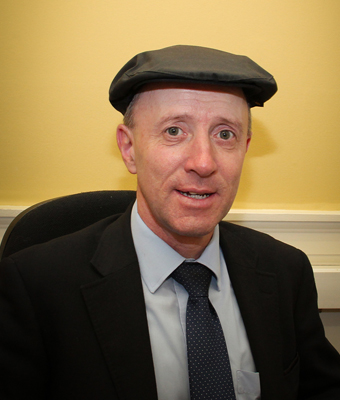
This aphorism, espoused by Jackie Healy-Rae following his 1997 victory, effectively surmises the rhetoric that fuels the Healy-Rae machine. They claim to represent the rural, working people of Ireland, “The people who eat their dinner in the middle of the day”, as Jackie Healy-Rae put it. The Healy-Raes, with their thick Kerry accents, flat caps and oft-professed love for the farm, fit a certain stereotype of rural people to a tee — this stereotype being that rural people are inarticulate, loud, belligerent fools who know nothing of life beyond the farm. The Healy-Raes are no doubt aware of this and shrewdly use it to their advantage, through what I christen as The Healy-Rae Cycle, which goes as follows: A Healy-Rae will make a beautifully moronic statement, such as seeking the implementation of a drink-driving permit for rural motorists, or for the army to be deployed to tackle the spread of rhododendron in a Killarney park, or “to hell with the planet and the fellas that say we must save the planet”. Dublin politicians and media will mock and laugh at said idiotic statement for its idiocy, allowing the Healy-Raes to turn to their electorate and cry that “We’re ridiculed for that quite simply because we’re rural people and because we’re so far removed from Dublin” and “If people in certain sections of society want to laugh at or insult me they’re insulting the people that support me as well”.
This echoes the historical neglect of rural areas by the State and reinforces the notion that the establishment views the people of rural Ireland as beneath them and only the Healy-Raes can be trusted to represent their interests. The Healy-Raes are then re-elected, and the cycle continues. The most infamous instance of the Healy-Rae Cycle occurred in 2019, when ex Fine Gael Minister turned TV presenter Ivan Yates slammed his fist on the desk in frustration at a rather smug Micheal Healy-Rae as he roared:
“It was a craven leprechaun performance from you today, and I was embarrassed for you that a member of our parliament would be so obsequious to someone who was not answering questions!… It was craven, and it was leprechaun because you just want a few quid for a few goalie nets in Kerry!”
Yates was referencing Michael Healy-Rae’s defence of now-disgraced ex-FAI CEO John Delaney, as he refused to answer questions from an investigatory Oireachtas committee in relation to a loan of € 100,000 he had given to the FAI under the table. (It would later emerge that Delaney had molested FAI finances such that it had accrued €55 million worth of liabilities, while Delaney incurred nearly €1 million in personal and luxury expenditures charged to or covered by the FAI over a five-year period). Healy-Rae did not pose a single question to Delaney about his handling of FAI finances, instead defending Delaney, arguing “..if [Delaney] was guilty of anything it was working too hard for the FAI”, as well as promising him “the mother of all welcomes when he comes to Kerry…”. Such steadfast allegiance to Delaney could be explained by the development of Georgie O’Callaghan Park in Kerry, which Delaney’s FAI helped to fund. Healy-Rae even claimed “…that if it wasn’t for John Delaney and the FAI, that park wouldn’t be being opened at the end of this month.” Yates’ criticism of Healy-Rae, although well founded, was eclipsed by the word “leprechaun” and his patronising, lordly demeanour, which played into the Healy-Rae Cycle.
Through observing this instance of the Healy-Rae Cycle, we can clearly note its effects.
Firstly, to the Healy-Raes’ credit, their constituents are looked out for. Despite their posturing as political outsiders, the Healy-Raes have spent most of their time in politics actively supporting the government, either through confidence and supply or by going into government. And while constituents benefit in the short term, roads being re-tarmacked and football parks built, their rhetoric relies on these systemic shortfalls, not on preventing them. Despite being elected due to the perception that the government privileges their own urban interests over running public services equitably, Michael Healy-Rae has no problem turning a blind eye to John Delaney’s financial chicanery, which, in the eyes of many, has ruined Irish football for the foreseeable future, provided that he did something good for Kerry.
And while Jackie Healy-Rae supported the government of his day in order to get better infrastructure for Kerry, in doing so he allowed the government to implement crippling austerity measures on not only the people of Kerry, but the entire nation in the wake of the 2008 recession, which led to further dereliction and inequity. And this contradiction makes sense, for if the government could be trusted to eliminate these systemic inequities, why would anyone feel the need to vote for a Healy-Rae?
While we are unlikely to see the Healy-Raes enter government any time soon due to the political fallout from the aforementioned Scud Missile, we will continue to see independent populist politicians who operate in a similar manner. And while they may claim to be out for the “working people of Ireland”, one question arises: If we increasingly elect politicians who only look out for themselves and their corner of this island, then who will look out for the country?