
The circumstances surrounding the emergence of the Irish republic are somewhat bizarre. Whilst 1922 is pinpointed as the year in which the first Irish sovereign state came about, it was nearly three decades later when Éire would shake off the last ties that shackled it to its historical oppressor. By 1948, Ireland held almost complete autonomy from Britain but was symbolically restricted by the authority of the monarchy over its external relations. However, on a visit to Canada that year, Taoiseach John A. Costello announced unexpectedly that Ireland was to leave the Commonwealth completely to become its own republic. Allegedly, what provoked this shock announcement was an incident during an official dinner in which symbols of Northern Ireland (most famously a replica of the “Roaring Meg” cannon used in the siege of Derry) had been placed in front of Costello, which, after a few drinks, did not sit well with the Taoiseach and motivated him to make an impromptu declaration of independence. Thus, less than a year later, the Ireland Act was passed by the Oireachtas and a truly independent Ireland was formalised. This was ultimately inevitable, but it had nonetheless been catalysed by an ill-judged political gesture.
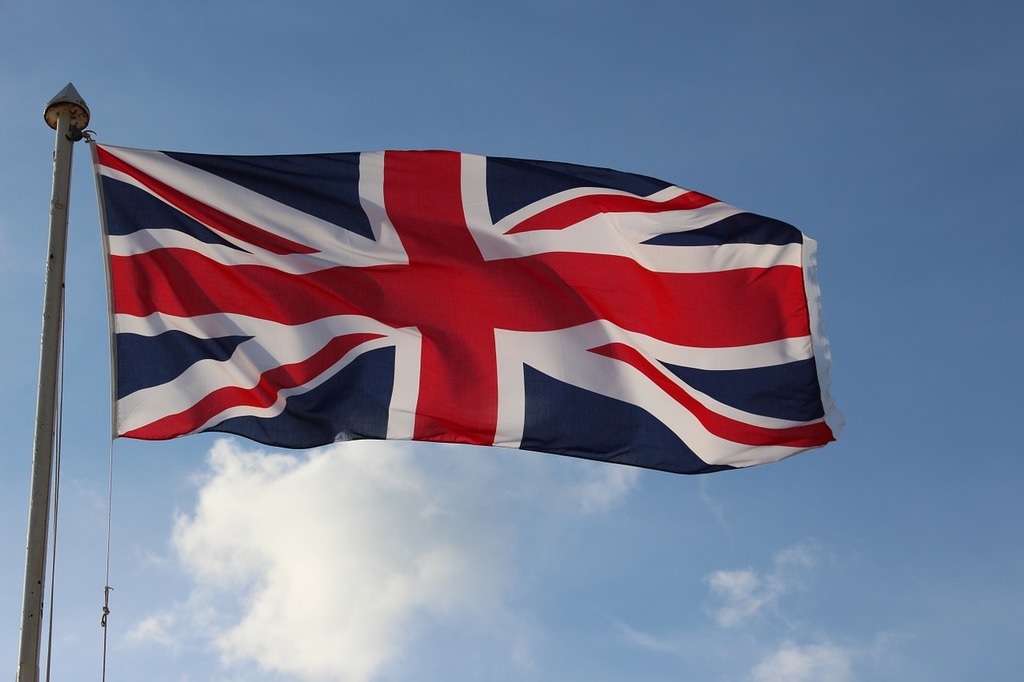
And it would appear that a sovereign fever has penetrated all four corners of the United Kingdom in similar circumstances recently, as the First Ministers of Scotland, Wales, and Northern Ireland signed a Memorandum of Understanding last Monday, declaring that Westminster had no right “to block democracy” with regards to future secession of the Celtic states. The so-called Cardiff Agreement appears to have come after recent comments by British Prime Minister Andy Burnham in which he rejected the idea of Irish unity or Scottish independence arriving anytime soon. The significance of the event is marked by the very fact that it is the first time in the UK’s history that the leaders of the devolved countries have called for complete independence (although it should be said that Emma Little-Pengelly, the DUP Deputy First Minister for Northern Ireland, was not present for obvious reasons), a poignant point for the new PM. This comes after historic elections in the Welsh Senedd in May, in which Ap Iorwerth was elected Wales’ first non-Labour First Minister as well as the continued popularity of the pro-independence Scottish National Party and Sinn Féin in Scotland and Northern Ireland, respectively.
Whilst a formal process exists for Northern Ireland to separate from Britain (in the form of a united Ireland), no such mechanism exists for the other two states. The Good Friday Agreement established that the British Secretary of State is under an obligation to establish a border poll if it appears likely that a majority of the population wishes to form a united Ireland (a referendum would also be required in the Republic). However, no such parallel process exists for Wales or Scotland, and independence referendums are therefore completely at the behest of Westminster. For example, the Scottish independence referendum in 2014 only came about after the British government legislated to grant powers to the Scottish government to do so. This goes against the very principle of self-determination but nonetheless benefits Burnham and the protection of the United Kingdom. That being said, memorandum aside, a number of recent events has made the issue certainly more salient. Talks of a united Ireland have heightened in recent months as Fine Gael announced it would publish a blueprint for a 32 county republic at the party’s Ardfheis in November. Furthermore, on his golfing excursion last weekend, President Trump stated he believed a united Ireland was inevitable, later doubling down by calling the idea “very cool”. But what really ignited the sparks of independence was Burnham’s own aforementioned hardline stance on the issue, which incited an emphatic response from across the islands.

It is not clear why the Prime Minister felt the need to so brazenly reject the idea of any sort of secession from the UK. He argued a border poll for a united Ireland would be divisive, and a focus was needed on the day-to-day issues faced by the people of Northern Ireland. Whilst perhaps there is some logic to this reasoning, Burnham’s bluntness overshadowed his central message, even when he affirmed shortly after that he would respect the Good Friday Agreement. Perhaps the PM knows that once Northern Ireland says slán to the UK, the dominos would begin to fall into place. But, rather than containing the fire in a more pragmatic and political manner, Burnham has elected to pour on kerosene in an attempt to quell the flames. It is never a good look when a historical colonial power so unabashedly attempts to shut down talks of self-determination, and more so when that power happens to be the British. The Prime Minister undoubtedly does not wish to be responsible for the collapse of the United Kingdom, but his approach just may do that.
Words hold a tangible presence in the world of politics. This is becoming increasingly relevant in a world dominated by the 24-hour news cycle, where the press obsessively picks apart politicians’ sentences and statements. A poorly calculated comment carries a butterfly effect which can result in seismic shockwaves through the political sphere, especially when it comes from the mouth of one of the world’s most powerful leaders. Just like the Canadians with Costello, Burnham has set off a series of events that could ultimately lead to the dissolution of a centuries old union. By aiming his own Roaring Meg at the issue of separatism, the matter has instead blown up in his face and he is now struggling to pick up the pieces. The Prime Minister’s mistake serves as a valuable lesson for anyone wishing to enter the political arena: words are good, but silence is golden.