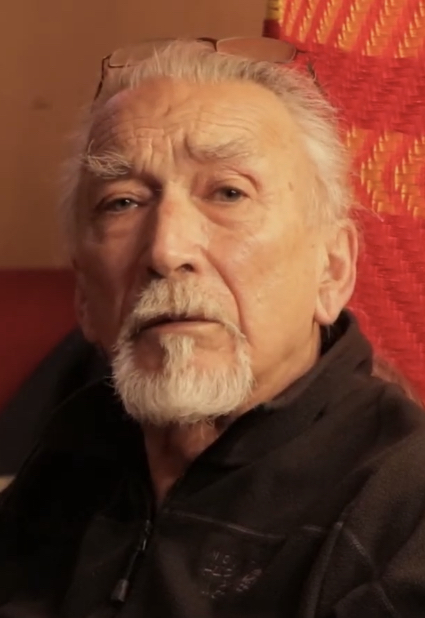

This week, M John Harrison won the 2026 Booker Prize with his book “The End of Everything”. At 81, he now holds the record for oldest person winning the Prize, beating Margaret Atwood, who was 79 years old when she won the 2019 Booker Prize.
The Booker Prize Chief Executive praised Harrison’s work as “the first Booker winner to have emerged from the bona fide [Sci-Fi] world”, and Chair of the jury board Mary Beard reported that Harrison’s novel was crowned winner by the jury unanimously. Harrison went home with a trophy and £50,000.

There were six shortlisted authors:
Marlon James is a Jamaican 55 year old, previous Booker Prize winner (when it was still the “Man Booker Prize”).
Luke Kennard, 41 years old, with a debut novel.
Rebecca Perry, 39–40, with a debut novel.
Elizabeth Strout, 70 years old, already shortlisted in 2022.
Douglas Stuart, 50 years old, Booker Prize 2020 win.
M John Harrison, 81 years old.
While I do not believe to have a better ability than Mary Beard to judge a novel, it is worth it to stop and think what does it mean to assign a monetary prize like The Booker Prize is.
If the award of The Booker Prize is as high as £50,000, it is utopic and naive to think that the only criterion to assign it, implicitly or explicitly, can be the quality of the novel. Once money becomes the award, the award itself becomes political. It could be said that anything, really, is political, as even if there was no pecuniary remuneration the winner would receive media coverage and ability to sell their book; but this is ever truer with money being the award.
It needs to be taken into account who, balanced with the quality of their book, would benefit most from those £50,000.
The Booker Prize could be assigned to any book written in the English language — as long as it was published either in the UK or in Ireland; that gives quite the width of choice to shortlist. And yet, the shortlist is made of two previous winners and two previously nominated, and only two debut novels (which does not mean debut writers, but rather the first time that those two writers wrote a novel rather than, for example, a collection of poetry). The Booker Prize is not an emergent writer prize, but it also cannot become a Lifetime Achievement award — surely not if the prize is such a high amount of money. Finding that most authors shortlisted are already affirmed writers, with a lifetime of writing experience, and even a previous The Booker Prize trophy on their shelves is quite discouraging not only to young writers, but also to all those middle-ground writers who fought and are still fighting for their spot on bookstores’ shelves.
This can come off as an ageist discourse, or as a hyper-progressive “let’s keep the old white man out” kind of idea. But it is not. Rather, it is extremely practical. The fact that, ultimately, it was the eldest out of the batch that got it, is also focal to this point. What is the point of assigning £50,000 to an 81-year-old author? What can he really do with that amount of money, when a younger author could actually sustain themselves while they make their way through the arts world, or invest it in their future writing? The best thing Harrison could do with that much money is to devolve it to schools, education, or writing programmes.