
Political anger is hardly difficult to understand in principle, only becoming considerably so when it ceases to respect the boundaries of individuals’ lives. There is, after all, a difference between sympathising with the grievances that motivate a protest and accepting the means by which such objection is expressed. When public dissatisfaction manifests as disruption, and disruption turns into destruction, it can appear as though the legitimacy of the cause absolves the egregious actions carried out in its name. Yet, it would be equally convenient to dismiss a protest on the grounds of its disorderliness without considering why.
Political protest is not made illegitimate by inconvenience, nor are governments entitled to mistake compliance for contentment. Widespread dissatisfaction with democratic institutions suggests that public discontent cannot be dismissed as the product of a few disruptive individuals. According to Pew Research Center polling: 69 per cent of respondents in France are dissatisfied with how democracy is working this year, 68 per cent in Spain, 62 per cent in Italy, and 69 per cent in the United States. Such figures also suggest that dissatisfaction is not necessarily confined to those who demonstrate. There may be considerable public discontent among people who never attend a protest, whether through indifference or the belief that doing so would make little difference. The difficulty then is to determine what forms of protest are necessary to make people’s discontent consequential, and at what point the means employed begin to undermine the ends they are intended to achieve.
The recent protests in France and Ireland offer a useful comparison in this very distinction. Both have emerged from public dissatisfaction with the cost of living, yet the methods by which it has been communicated differs considerably. Even more so given the tendency to measure political commitment by the apparent ferocity of its expression. The perception of Irish people as politically passive, especially in comparison to its French counterpart, is not entirely new. During Ireland’s financial crisis, The Guardian reported that the Irish were more likely to express their frustrations through radio phone-ins than take to the streets. That said, the recent public-sector strike may call this assumption into question.

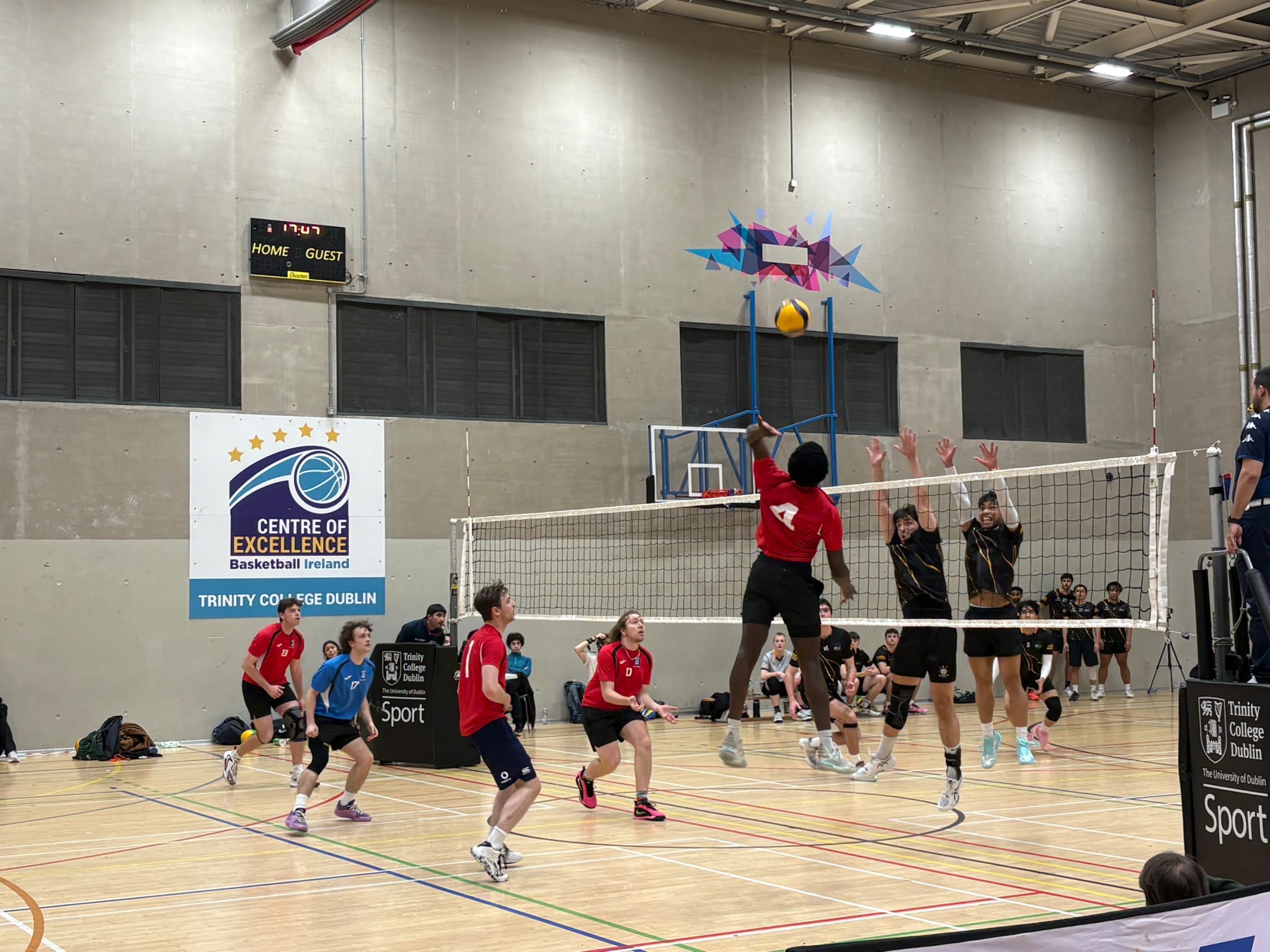
In Ireland, public sector workers have resorted to industrial action; withdrawing their labour in an attempt to compel the government to address their grievances. More than 300,000 workers took part in a strike across the country on October 14th; the streets were lined with demonstrators wrapped in heavy coats, holding aloft signs. In a peaceful show of solidarity, the protest allowed them to put pressure on the government to act accordingly, and their demands did not fall on deaf ears.
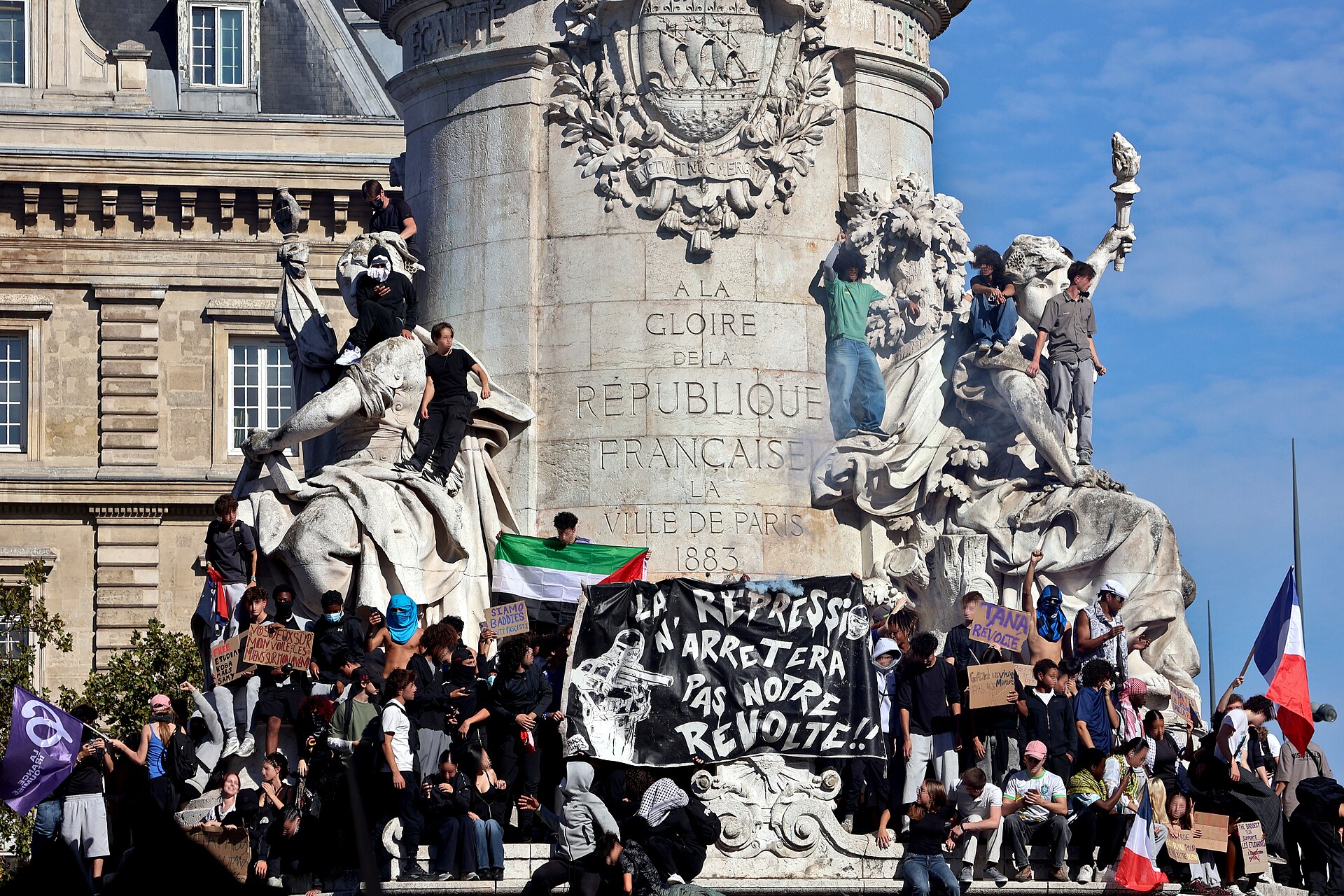
In France, rather, protests have turned violent, with clashes between demonstrators and police drawing attention away from the issues that sparked the unrest in the first place. Incidents of vandalism and damage to public and private property have also divided public perception. This has given politicians an opportunity to exploit a harmful narrative, blaming migrants and minority groups. According to President Trump, France has been “conquered, looted, and burned to the ground by migrants, jihadists, and communists”. Such rhetoric only fuels anti-immigrant sentiment and shifts the point of political debate. And so, it is important to distinguish between those who take to the streets to demand political change and those who exploit the circumstances to engage in destruction. The actions of the latter should not automatically define the former.
Nevertheless, the methods employed by protesters are not politically neutral. When destruction occurs in the wake of a political uproar, politicians can condemn the damage, promise tougher policing and declare the restoration of order a victory, all without meaningfully responding to the provocation of the demonstrations. This, however, is not to suggest that protests must remain peaceful regardless of the circumstances. Self-defence is not equivalent to indiscriminate destruction, and a blanket condemnation of violence risks placing those protecting themselves on the same moral footing as those inflicting harm upon them.
I reiterate: the distinction, then, is not between a passive Ireland and a politically engaged France; it is between the methods through which political change can be realistically achieved. A protest is not an end in itself; it is a means of negotiation. Gordana Rabrenovic, with Northwestern University, argues that non-violent movements can build coalitions by encouraging those outside the immediate struggle to identify with its demands. A coalition’s political strength depends on whether it can make those disagreements part of a common demand, rather than allowing the most destructive participants to determine what it represents. A protest that leaves no room for that process may express the depth of public anger, but it offers little way to resolve the conflict that produced it.
Ireland’s strike is not a model that every movement could simply reproduce. Different degrees of state intervention demand different responses. Nevertheless, it challenges the assumption that the seriousness of a movement can be measured by the extent of the disruption it causes. There is little value in confronting authority if nothing changes as a result.